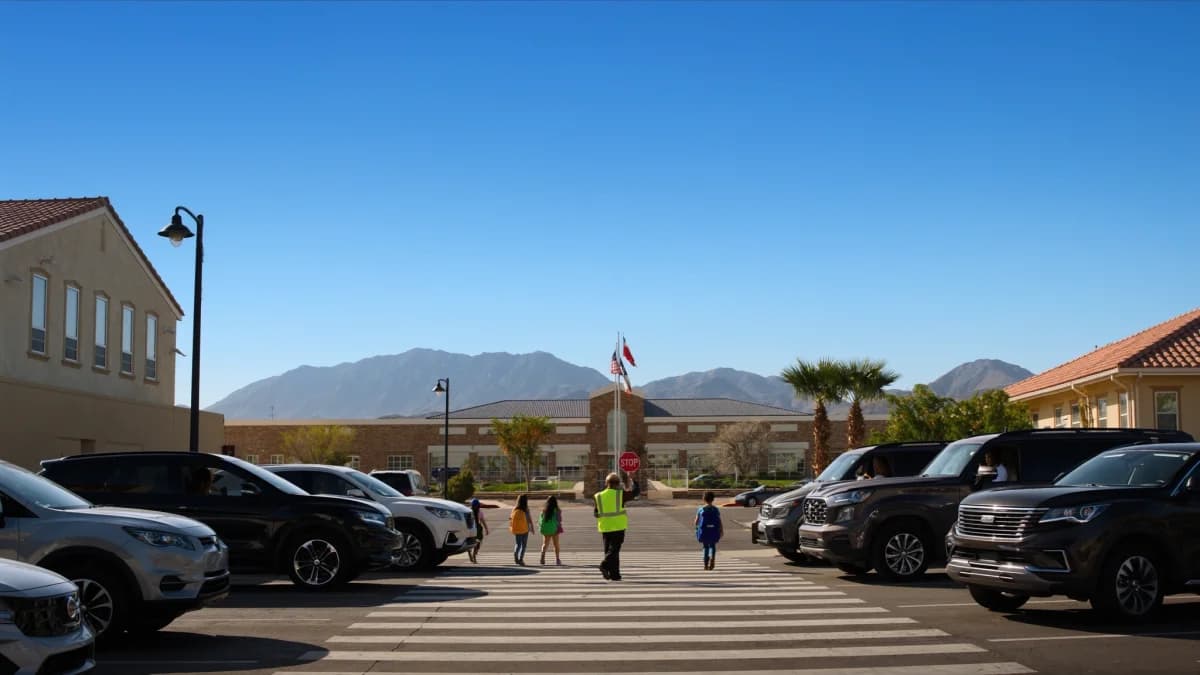
El primer lunes de agosto en El Paso trae una especie de caos organizado. Las filas de autos para llevar a los ninos a la escuela se extienden desde la acera de Coronado High School hasta media cuadra por Walton Drive. Los padres esperan en SUVs de tres filas en Edgemere Boulevard hasta que suene la campana de Eastwood Middle. Los guardias de cruce trabajan turnos dobles en las intersecciones que alimentan a Andress, Franklin y Bel Air. Y dentro de cada uno de esos vehiculos, un conductor esta revisando la hora, escaneando el espejo retrovisor y buscando a su hijo en un mar de mochilas.
Este es el mes mas peligroso en las calles de El Paso, y la mayor parte no tiene nada que ver con los letreros de limite de velocidad en zonas escolares que usted ya conoce. La ola de accidentes de agosto es un problema de comportamiento, no legal. Es lo que sucede cuando 175,000 estudiantes, 100,000 padres conductores y unos cientos de rutas de autobuses escolares llegan a las mismas calles en las mismas dos ventanas del dia por primera vez en tres meses. Si usted va al trabajo, deja a un nino, recoge a un nino o simplemente pasa por una escuela en El Paso este mes, esto es lo que necesita saber.
Por Que el Trafico de El Paso Aumenta Cada Agosto
Los tres distritos escolares mas grandes de nuestra region comienzan todos con aproximadamente una semana de diferencia. El Distrito Escolar Independiente de El Paso, Ysleta ISD y Socorro ISD juntos inscriben aproximadamente 175,000 estudiantes. Si suma Canutillo, Clint, San Elizario, Tornillo, las escuelas charter y privadas, y los campus satelite de UTEP y El Paso Community College, los patrones de trafico de la manana y la tarde cambian de la noche a la manana.
Lo que cambia:
Volumen. Decenas de miles de vehiculos que no estaban en la carretera en julio de repente lo estan. La ventana de hora pico matutina se extiende aproximadamente de 6:45 a 8:30 a lo largo de la ciudad, y el patron de salida de la tarde dura de 2:30 a 4:00.
Rutas. Los padres conductores toman atajos por calles residenciales para evitar las arterias principales. Los autobuses escolares se despliegan por los vecindarios en rutas que la mayoria de los conductores nunca ven durante el verano. El resultado es que los accidentes ocurren en calles e intersecciones que estaban tranquilas dos semanas antes.
Distraccion. Los padres estan enviando mensajes de texto a los maestros, revisando aplicaciones para actualizaciones del horario de campana y estirando el cuello para ver a sus hijos. Los conductores adolescentes que van a sus propias clases llegan tarde. Los conductores que van al trabajo y no estan acostumbrados a los nuevos patrones de trafico se frustran y se vuelven agresivos.
Densidad peatonal. Decenas de miles de ninos caminan, andan en bicicleta o son entregados cerca de las escuelas. Incluso los conductores cuidadosos pueden pasar por alto a un nino pequeno que sale de entre dos SUVs estacionados.
El Departamento de Transporte de Texas rastrea la frecuencia de accidentes por mes, y agosto se clasifica consistentemente entre los meses con mas accidentes en los condados urbanos de Texas. En El Paso, la ola de trafico del regreso a clases es el unico factor mas importante de esa clasificacion.
Las Primeras Dos Semanas Son las Mas Peligrosas
Dentro de la ola de agosto, el peligro no se distribuye uniformemente. Las primeras dos semanas de clases producen la concentracion mas alta de accidentes, por una razon simple: nadie ha aprendido los nuevos patrones todavia.
Los conductores no saben que carriles se convierten en carriles de recogida. Muchas escuelas convierten temporalmente los carriles de estacionamiento o las calles interiores en zonas de entrega durante la llegada y la salida. Los conductores que no conocen el nuevo patron se detienen en carriles activos de trafico, retroceden inesperadamente o cruzan el trafico para llegar a una acera.
Los conductores de autobuses todavia estan aprendiendo las rutas. Incluso los conductores de autobuses experimentados reciben rutas nuevas cada agosto. Las paradas nuevas significan nuevas zonas de motoristas distraidos que los siguen.
Los guardias de cruce todavia se estan entrenando. Muchos guardias de cruce son contratados recientes o voluntarios. Las primeras dos semanas son cuando estan aprendiendo el ritmo de los semaforos, los patrones de comportamiento de los estudiantes y los peligros especificos de su esquina.
Los estudiantes todavia estan aprendiendo a caminar a la escuela. Los ninos de kindergarten y nuevos transferidos aun no conocen el camino mas seguro. Los ninos mayores que solian ser llevados ahora caminan. Las primeras dos semanas producen mas situaciones cercanas a accidentes que el resto del ano escolar combinado.
Si puede ser paciente en cualquier lugar de El Paso durante las primeras dos semanas de agosto, sea paciente cerca de una escuela. El mismo accidente que seria solo un golpe en octubre es mucho mas probable que involucre a un nino a mediados de agosto.
Accidentes en Carriles de Entrega: Un Riesgo de Responsabilidad de Locales Subestimado
La mayoria de los padres no piensan en el carril de entrega escolar como un lugar donde ocurren accidentes graves. Las velocidades son bajas. Los conductores son otros padres. El carril esta en propiedad escolar. Que podria salir mal?
Mucho. Los accidentes en carriles de entrega en El Paso incluyen:
- Colisiones por alcance cuando un padre se detiene repentinamente para que su hijo baje
- Roces laterales cuando un vehiculo sale del carril y vuelve al trafico
- Colisiones en reversa cuando un conductor retrocede despues de pasarse de la acera
- Atropellos peatonales cuando un nino cruza entre vehiculos fuera del camino marcado
- Caidas en la acera cuando un padre abre una puerta contra otro vehiculo o un nino tropieza con pavimento mal mantenido
El angulo legal de estos accidentes es diferente al de un accidente en zona escolar publica, y es uno que la mayoria de las familias desconocen. Debido a que el accidente ocurre en propiedad escolar, la ley de responsabilidad de locales puede aplicar junto con la negligencia automotriz estandar. Un distrito escolar que disena un carril de entrega con pocas lineas de vision, flujo de trafico poco claro, falta de senalizacion o supervision inadecuada puede compartir responsabilidad por los accidentes resultantes.
Las entidades gubernamentales tienen inmunidad limitada a traves de la Ley de Reclamos Contra el Estado de Texas, pero esa inmunidad no es absoluta. La ley de Texas permite reclamos contra los distritos escolares en circunstancias especificas, particularmente cuando se involucran vehiculos motorizados propiedad u operados por empleados del distrito, o cuando la condicion negligente de la propiedad del distrito causo el dano. Estos reclamos tienen plazos cortos y requisitos de notificacion especificos, por lo que los padres que se lastimen en un carril de entrega deben hablar con un abogado rapidamente.
Conductores Padres Distraidos y la Prisa del Horario de Campana
La otra caracteristica definitoria del trafico del regreso a clases en El Paso es lo distraidos que estan todos. La campana de la manana crea un tipo especifico de presion de tiempo que convierte a conductores normalmente cuidadosos en peligros.
Lo que vemos en los casos que vienen a nuestra oficina en agosto:
Conductores enviando mensajes al grupo de carpool mientras se acercan a un cruce peatonal. El telefono esta en el regazo, el conductor mira hacia abajo y se pierde al nino que pisa la acera.
Padres saliendo de la acera de entrega mientras estan volteados mirando el asiento trasero. Un segundo de inatencion al fundirse con una calle residencial de 30 mph produce un impacto lateral.
Conductores adolescentes que llegan tarde a la primera hora en Coronado, Franklin o Americas. La combinacion de inexperiencia, velocidad y angulo de luz matutina poco familiar en Mesa Street y Edgemere causa una proporcion desproporcionada de accidentes de conductores adolescentes en agosto. Este patron es parte de lo que cubrimos en nuestro articulo sobre accidentes de conductores adolescentes durante los 100 dias mas mortiferos.
Conductores que simplemente ya no estan acostumbrados a conducir en trafico escolar. Los desplazamientos de verano son predecibles. Los desplazamientos de agosto no lo son. Los conductores que normalmente toman la I-10 al trabajo son desviados a Yarbrough o Lomaland para evitar una zona escolar, y las calles desconocidas producen accidentes.
Si usted normalmente conduce por Mesa Street, Montana Avenue, Edgemere Boulevard, Yarbrough, Lomaland o cualquiera de las vias de acceso al Loop 375, espere que las primeras dos semanas de agosto agreguen 10 a 20 minutos a su desplazamiento normal. Incluya ese margen. Lo unico mejor que puede hacer para reducir su propio riesgo de accidente es salir mas temprano.
Que Hacer Despues de un Accidente del Regreso a Clases en El Paso
Si ocurre un accidente, los pasos que tome en la primera hora importan tanto para la seguridad de su hijo como para cualquier reclamo legal que pueda necesitar presentar.
-
Llame al 911 incluso si el accidente parece menor. Los oficiales crearan un reporte escrito. Ese reporte se convierte en la base de cualquier reclamo futuro de seguros o legal. Si un nino estuvo involucrado, solicite una ambulancia.
-
Obtenga atencion medica rapidamente. Lleve a su hijo a una sala de emergencias, no solo a urgencias. Las lesiones pediatricas pueden presentarse horas despues del impacto. Las conmociones cerebrales, lesiones internas y lesiones del cinturon de seguridad en ninos son faciles de pasar por alto sin una evaluacion completa.
-
Documente todo. Fotos de las posiciones de los vehiculos, placas de licencia, danos visibles, la escena circundante, los dispositivos de control de trafico y cualquier escombro. Fotos desde adentro del carril de entrega de la escuela si ahi fue donde ocurrio el accidente.
-
Obtenga la informacion de contacto de los testigos. Otros padres en la fila de carpool son a menudo los mejores testigos. Los guardias de cruce, los maestros en servicio y el personal escolar tambien son valiosos. Obtenga nombres y numeros de telefono antes de que se vayan.
-
No de una declaracion grabada. Los ajustadores de seguros llamaran dentro de 24 a 48 horas. Rechace cortesmente dar una declaracion antes de hablar con un abogado. Cualquier cosa que diga puede usarse para reducir su reclamo.
-
Anote la hora y el horario de campana. Los accidentes cerca de una escuela a menudo estan conectados con la presion del horario de campana. Si el accidente ocurrio a las 7:43 AM y la primera campana de la escuela suena a las 7:45 AM, ese momento es evidencia de las condiciones que produjeron el accidente.
-
Contacte a un abogado de lesiones personales. Los accidentes del regreso a clases pueden involucrar multiples polizas de seguro, reclamos gubernamentales y plazos cortos de notificacion. Un abogado experimentado de El Paso puede actuar rapidamente para preservar evidencia y proteger los derechos de su familia.
Como Lovett & Murray Ayuda a las Familias de El Paso Despues de Accidentes del Regreso a Clases
Por mas de 30 anos, Lovett & Murray ha representado a familias de El Paso despues de todo tipo de accidente, desde volcaduras en la autopista I-10 hasta pequenos golpes en los carriles de entrega de escuelas primarias. Los casos del regreso a clases necesitan particular velocidad porque los plazos de notificacion gubernamental pueden ser tan cortos como seis meses, y porque los recuerdos de los testigos de una fila ocupada de carpool se desvanecen rapido.
Ofrecemos consultas gratuitas. Trabajamos por contingencia, lo que significa que usted no paga nada a menos que ganemos su caso. Tenemos un equipo bilingue que puede comunicarse con cada familia en El Paso en ingles o espanol. Nuestros socios Rob Lovett y Russell Murray personalmente revisan cada caso del regreso a clases que llega al despacho. Y nuestra oficina principal esta aqui en El Paso, no en un centro de llamadas corporativo en otro estado.
Si su hijo ha sido lesionado en un accidente del regreso a clases, o si fue golpeado por detras camino a dejar a sus hijos en la escuela, contactenos hoy para una evaluacion gratuita y sin compromiso de su caso. Llamenos al 915-757-9999 o use nuestro formulario en linea. El ano escolar acaba de comenzar. No deje que una compania de seguros lo convenza de aceptar un acuerdo antes de saber cuanto vale realmente el reclamo de su familia.
Vea nuestros artículos con más frecuencia en Google.