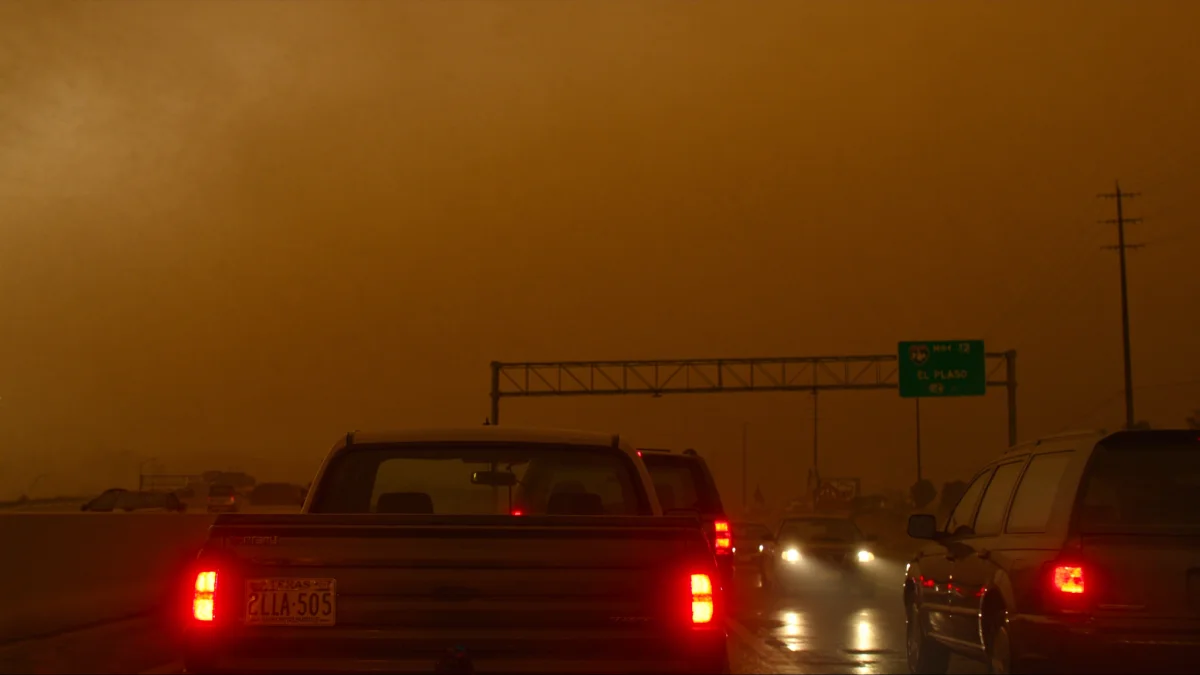
Cuando los presentadores de noticias en Phoenix hablan de un haboob golpeando la ciudad, los habitantes de El Paso tienden a asentir y revisar las ventanas. Nosotros tambien los recibimos. El monzon de verano que rueda sobre el Desierto de Chihuahua desde finales de julio hasta septiembre levanta cortinas de arena que pueden elevarse 5,000 pies hacia el cielo y barrer a traves de la Interestatal 10 con la velocidad de una tormenta electrica. La mayoria de los anos hay al menos un dramatico choque en cadena de multiples vehiculos en el Lado Este o cerca de la linea Texas-Nuevo Mexico durante agosto. Algunos anos hay varios.
Si usted vive a lo largo del corredor de la I-10, conduce entre El Paso y Las Cruces o va a su trabajo por el tramo de Anthony, probablemente ha conducido hacia una pared de arena marron en algun momento. Los conductores que salieron del otro lado sin un accidente tuvieron suerte, tomaron la decision correcta, o ambas. Este articulo presenta la ciencia del haboob, las autopistas de El Paso donde causan el mayor dano, el protocolo de seguridad del Departamento de Transporte de Texas que usted ya deberia conocer, y que hacer legalmente si un accidente de tormenta de arena lo derriba.
Que Es Realmente un Haboob y Por Que El Paso los Recibe
La palabra "haboob" viene del arabe y originalmente describia las dramaticas tormentas de arena de Sudan. Meteorologicamente, un haboob es el borde principal de un limite de corriente de salida de una tormenta electrica colapsada. Cuando la corriente descendente de la tormenta golpea el piso del desierto, se extiende horizontalmente y levanta material suelto de la superficie en una pared vertical de arena que viaja de 30 a 60 millas por hora.
Las condiciones que producen haboobs son comunes en la cuenca del Desierto de Chihuahua donde se sienta El Paso:
Suelo suelto y seco. Decadas de pastoreo de ganado, perturbacion agricola y descomposicion natural del pavimento desertico han producido miles de millas cuadradas de material fuente que se levanta facilmente en el aire.
Altas temperaturas de superficie en verano. Las temperaturas del suelo exceden regularmente los 130 grados en julio y agosto, produciendo fuerte conveccion y desarrollo explosivo de tormentas electricas.
Flujo de humedad del monzon. El monzon norteamericano atrae aire humedo del Golfo de California y el Golfo de Mexico al Suroeste cada verano. Cuando esa humedad golpea el desierto seco, las tormentas se forman rapidamente.
Geografia de cuenca. La cuenca de El Paso entre las Montanas Franklin, las Montanas Hueco y la Sierra Juarez crea un canal natural que canaliza las salidas de tormentas a lo largo del corredor de la I-10.
Desierto abierto al norte y al sur de la autopista. Los tramos de la I-10 entre Las Cruces y el centro de El Paso, y desde El Paso al este hacia Fort Hancock, cruzan cientos de millas de terreno plano sin obstrucciones. No hay rompevientos para desacelerar la arena.
El resultado es que una tormenta electrica formandose sobre las Montanas Organ al norte de Las Cruces al final de la tarde puede producir un haboob que golpee el Lado Oeste de El Paso dentro de una hora. Los conductores que disfrutaban de visibilidad clara unos minutos antes se encuentran en condiciones de visibilidad cero a 75 millas por hora.
Los Tramos de la I-10 Donde Ocurren los Accidentes por Tormentas de Arena
No todas las secciones de las autopistas de El Paso estan igualmente expuestas. Los corredores de alto riesgo son:
I-10 Este de Anthony al Loop 375. Este tramo de 20 millas cruza desierto abierto en ambos lados de la autopista. Las salidas de Vado, Anthony, Anthony-Vado y Berino son puntos comunes para detenerse durante las tormentas, pero la autopista corre recta y rapida a traves de terreno que no ofrece refugio.
I-10 Oeste de Sunland Park Drive a la linea estatal. Las cinco millas entre la salida de Sunland Park Drive en El Paso y la linea estatal de Nuevo Mexico cruzan la planicie de inundacion del rio con campos agricolas abiertos en el lado sur. Las salidas de tormentas que vienen de las Montanas Franklin barren regularmente arena a traves de este segmento.
Loop 375 / Cesar Chavez Border Highway. El tramo de la Border Highway entre Sunland Park y el area de Tom Mays Park esta especialmente expuesto durante eventos de salida de oeste a este. La arena que cruza el Rio Grande desde los campos agricolas en el lado mexicano reduce la visibilidad dramaticamente.
US-54 (Patriot Freeway) cerca de las salidas Diana / Hercules. Las salidas Diana y Hercules en la US-54 pasan por areas industriales donde la construccion y las operaciones de grava contribuyen con particulas adicionales en el aire.
El tramo individual mas peligroso es la I-10 Este entre Anthony y Vado, donde un haboob de 2014 produjo un choque en cadena de 21 vehiculos que lesiono a 12 personas y mato a una. Esa seccion ve incidentes recurrentes casi cada temporada de monzon.
Las zonas de construccion de la I-10 agravan el peligro porque los carriles estrechados dan a los conductores menos margen para accion evasiva cuando la visibilidad cae.
Campana del TxDOT Hagase a Un Lado y Mantenase Vivo
El Departamento de Transporte de Texas y el Servicio Meteorologico Nacional han promovido el mismo protocolo de seguridad para tormentas de arena durante mas de una decada. A pesar de la campana, la mayoria de los conductores atrapados en un haboob todavia lo hacen mal.
El protocolo oficial cuando usted entra a una tormenta de arena:
-
Salga del camino tan lejos a la derecha como pueda con seguridad. Llegue al acotamiento o, mejor aun, salga de la autopista completamente si hay una rampa cerca.
-
Apague todas las luces del vehiculo. Este es el paso que la mayoria de los conductores omiten y que causa la mayoria de los choques en cadena. Dejar los faros o luces traseras encendidas senala a los conductores que siguen que hay un vehiculo moviendose en el carril, y siguen sus luces directamente hacia su auto detenido.
-
Retire el pie del freno. Las luces de freno tambien senalan al trafico que sigue.
-
Ponga el vehiculo en estacionamiento. Esto evita que el vehiculo ruede si es golpeado.
-
Mantenga el cinturon de seguridad abrochado. Puede ser golpeado incluso fuera del acotamiento si la visibilidad es lo suficientemente severa.
-
Espere a que pase la tormenta. Los haboobs tipicamente se mueven en 10 a 30 minutos. No salga de su vehiculo para mirar alrededor. Las tormentas de arena han matado a peatones que salieron de autos detenidos.
Si no puede detenerse con seguridad, reduzca a 25 millas por hora o menos y use su bocina periodicamente para senalar su posicion. No se detenga en el carril activo de trafico con las luces encendidas. El auto detenido con luces encendidas es el escenario clasico de accidentes de haboob.
Quien Es Responsable de un Choque en Cadena por Tormenta de Arena
Los choques en cadena de multiples vehiculos durante un haboob pueden involucrar 10 o mas vehiculos y docenas de polizas de seguros. La responsabilidad es mas compleja que un choque por alcance estandar.
El conductor que mantuvo velocidad de autopista. La Seccion 545.351 del Codigo de Transporte de Texas requiere que los conductores operen a una velocidad "razonable y prudente" para las condiciones. Un conductor que continuo a 70 u 80 millas por hora hacia visibilidad reducida es negligente independientemente de lo que lo golpeo.
El conductor que se detuvo con las luces encendidas. Un conductor que se detuvo pero dejo las luces iluminadas creo un peligro que contribuyo a la reaccion en cadena. Aplican las reglas de culpa comparativa. Para una explicacion de como Texas asigna la culpa entre multiples partes, vea nuestro articulo sobre culpa comparativa en Texas.
Responsabilidad comercial de camiones. Muchos choques en cadena de haboob involucran camiones comerciales porque el corredor de la I-10 es una ruta principal de carga este-oeste. Las companias camioneras tienen limites mas altos de seguros comerciales, regulaciones federales sobre operaciones relacionadas con el clima y datos del dispositivo electronico de registro que pueden documentar las decisiones del conductor en los minutos antes de un accidente. Para informacion mas amplia sobre accidentes de camiones, vea reclamos por accidentes de camion.
Responsabilidad gubernamental. Generalmente limitada. Texas conserva la inmunidad para la mayoria de las decisiones discrecionales de operacion de autopistas. Hay excepciones estrechas cuando el TxDOT o la ciudad ignoraron una condicion peligrosa especifica conocida, pero la mayoria de los casos de accidentes de haboob proceden contra conductores privados y sus aseguradores.
Fabricantes de vehiculos y llantas. Cuando un componente del vehiculo como una llanta, un freno o un sistema de direccion fallo durante la accion evasiva requerida por una tormenta de arena, un reclamo de responsabilidad del producto puede estar disponible contra el fabricante.
Un abogado experimentado resuelve los multiples demandados, multiples aseguradores y multiples polizas de seguros tipicas de los casos de choques en cadena por haboob dentro de las primeras semanas despues del incidente.
Que Hacer Si Lo Atrapa un Haboob
Si una tormenta de arena lo atrapa mientras conduce:
- Reduzca la velocidad inmediata y constantemente. No golpee los frenos. Frene agresivamente solo lo suficiente para evitar que lo golpee por detras el trafico detras de usted.
- Muevase al acotamiento derecho si puede hacerlo con seguridad. Si no puede, reduzca a 25 millas por hora o menos en el carril derecho.
- Apague todas las luces una vez detenido en el acotamiento. Frene, luego ponga en estacionamiento, luego apague las luces.
- Quedese en el vehiculo con el cinturon de seguridad abrochado. No salga ni siquiera para revisar a otros. La visibilidad afuera del auto es cero.
- Espere a que la tormenta se aclare. La mayoria de los haboobs pasan dentro de 30 minutos.
Despues de un accidente, los pasos:
- Llame al 911. Solicite tanto al DPS de Texas como una ambulancia incluso si las lesiones parecen menores.
- Quedese en su vehiculo hasta que lleguen los respondedores de emergencia. Caminar en una autopista durante o despues de un choque en cadena por tormenta de arena es una de las cosas mas peligrosas que puede hacer.
- Documente las condiciones inmediatamente. Tome fotos de la arena, la hora del dia, el camino y su vehiculo. Las condiciones cambian rapido y la evidencia de cuan espesa era la arena desaparecera dentro de minutos de que pase la tormenta.
- Obtenga la informacion de los demas conductores. Intercambio estandar con cada conductor involucrado.
- Note quien estaba detenido con las luces encendidas y quien se estaba moviendo. Esto se convierte en evidencia de culpa comparativa.
- Busque atencion medica rapidamente. El latigazo cervical, conmocion cerebral y problemas respiratorios por inhalacion de arena pueden presentarse horas despues.
- Preserve el video de la camara del tablero y solicite el video de la camara de trafico. Las camaras del TxDOT y el video de la camara corporal de la policia son evidencia critica. Se sobrescriben rapidamente.
- Contacte a un abogado de lesiones personales dentro de dias. La evidencia en casos de haboob es inusualmente sensible al tiempo.
Como Lovett & Murray Ayuda a los Conductores de El Paso Despues de Accidentes por Tormentas de Arena
Por mas de 30 anos, Lovett & Murray ha representado a familias de El Paso lesionadas en la I-10, US-54, Loop 375 y Border Highway. Los choques en cadena por tormentas de arena necesitan abogados que entiendan la meteorologia local, la geografia de los corredores de alto riesgo, los protocolos del TxDOT y la asignacion compleja de responsabilidad tipica de choques en cadena de multiples vehiculos.
Ofrecemos consultas gratuitas. Trabajamos por contingencia. Nuestro equipo bilingue maneja cada paso en ingles o espanol. Nuestros socios Rob Lovett y Russell Murray personalmente revisan cada caso de accidente de multiples vehiculos. Nuestra oficina principal esta en El Paso, donde hemos sido testigos de los haboobs del monzon de primera mano por tres decadas.
Si usted o un miembro de la familia fue lesionado en un accidente por tormenta de arena en la I-10 o cualquier otra autopista del Oeste de Texas, contactenos hoy para una evaluacion gratuita y sin compromiso. Llamenos al 915-757-9999 o use nuestro formulario en linea. Mientras mas espere, mas evidencia desaparece.
Vea nuestros artículos con más frecuencia en Google.