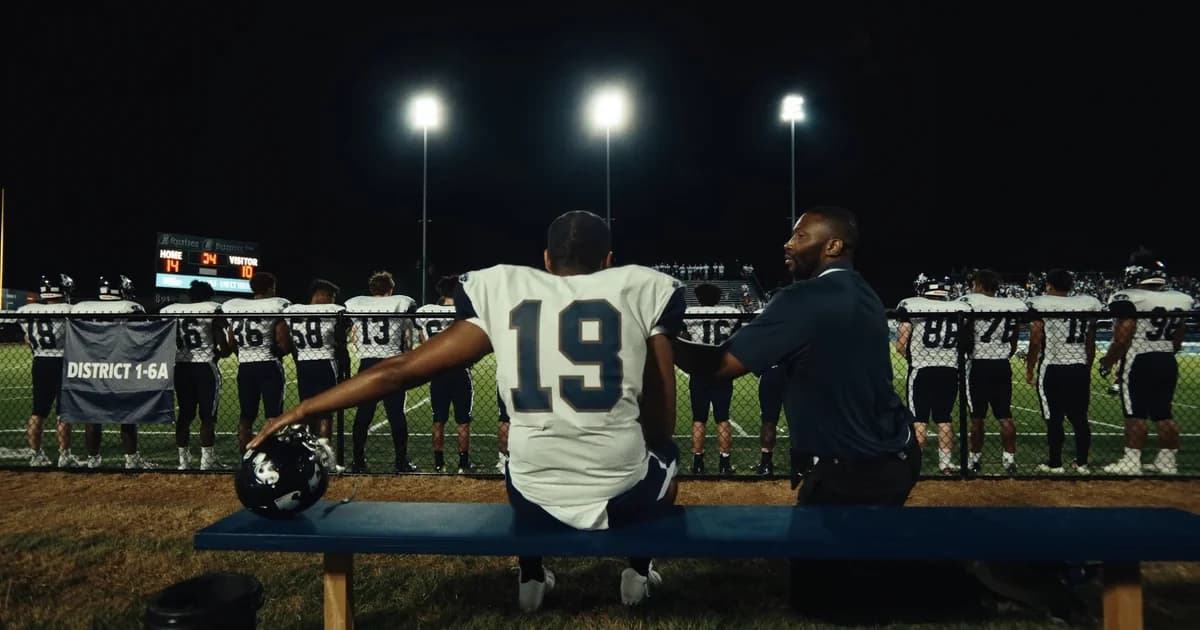
Friday nights in El Paso belong to high school football. The Socorro Independent School District, the Ysleta Independent School District, and the El Paso Independent School District fill stadiums from the far east side out past Zaragoza Road to the campuses along Mesa Street and Montana Avenue. September is when it all starts, when the heat is still sitting on the turf at kickoff and the season feels like it will last forever.
Most of what happens on that field is exactly what everyone signed up for. Football is a contact sport, Texas courts know it, and a hard clean tackle that breaks a collarbone is not a lawsuit. But some injuries are not part of the game. A player sent back onto the field after showing concussion symptoms. A helmet that failed in a way it was not supposed to fail. A team van crash on the way back from a road game in Las Cruces. Those are different, and Texas law treats them differently.
The law in this area is also more restrictive than most parents expect, and the deadlines are far shorter. Below is an honest map of who can and cannot be held responsible for a Texas high school football injury, what the state's concussion statute actually requires of your child's school, and what to preserve immediately if your family may have a claim.
Texas Law Makes Claims Against a Public School District Very Narrow
Start with the hardest truth, because it changes everything else. Texas public school districts are governmental units, and governmental units are generally immune from lawsuits unless the Legislature has waived that immunity. The waiver lives in the Texas Tort Claims Act, and for school districts the waiver is unusually narrow. The Act does not apply to a school district except as to motor vehicles.
In practical terms:
- A team bus or district van crash on the way to or from a game can support a claim against the district.
- A student struck by a district vehicle in a parking lot or on a practice field can support a claim.
- An injury from a hit during practice or a game, a fall on the field, a heat illness, or a coaching decision generally cannot be brought against the district itself, no matter how avoidable it looks.
That does not mean nothing can be done. It means the claim has to be aimed correctly, at an equipment manufacturer, a reconditioner, a private facility owner, a non employee medical provider, a driver of another vehicle, or another third party who is not shielded by governmental immunity. Building the case against the wrong defendant wastes the one deadline you get.
The Concussion Protocol Texas Schools Are Required to Follow
Texas Education Code Chapter 38 sets real, specific duties on school districts around concussions, and every parent of a Texas athlete should know them.
Every district must have a concussion oversight team. It has to include at least one physician, and where the district employs them, athletic trainers, licensed health care professionals, and the coaching staff involved.
Removal is mandatory and immediate. If a coach, trainer, physician, or licensed health care professional believes a student may have sustained a concussion during practice or competition, the student must be removed right then.
No same day return. A student removed under that rule cannot return to practice or competition the same day. That is not a judgment call.
Return requires written clearance. The student may only return after being evaluated by a treating physician, receiving written clearance from that physician, and after the student and parent sign the required acknowledgments and follow the district's return to play protocol.
Knowing this matters even when the district itself cannot be sued, for two reasons. First, the paperwork the protocol generates is evidence. The incident report, the trainer's notes, the removal documentation, and the physician clearance form tell the real story of what happened and when. Second, a protocol failure can be highly relevant to a claim against someone who is not immune, including a private clinic or a non employee provider who cleared your child too soon.
Ask for those records in writing, and ask early. Request them before memories and files get reorganized at the end of a season.
When a Coach or Athletic Trainer Can Be Personally Liable
Parents often want to hold a specific coach responsible, and Texas makes that hard on purpose. Texas Education Code section 22.0511 immunizes professional school employees from personal liability for acts incident to or within the scope of their duties that involve the exercise of judgment or discretion. Play calling, conditioning decisions, and roster choices sit squarely inside that protection. The statute's clearest carve out involves the operation or use of a motor vehicle.
What can still matter:
Conduct outside the scope of employment. An act that is not part of the job at all is analyzed differently than a coaching decision made during a practice.
Non employees. Volunteer trainers, outside camp staff, independent contractors, and private clinics may not have the same statutory protection that a district employee does.
Motor vehicle use. A coach driving players in a personal or district vehicle is in the one area where the immunity statutes clearly bend.
This is a fact intensive analysis and it is not a good place for guesswork. If a coaching or training decision preceded a serious injury, have a lawyer look at the specific facts rather than assuming the door is closed or open.
Helmets, Pads, and Product Liability Claims
Equipment manufacturers have no governmental immunity, which makes product liability one of the most viable routes after a catastrophic football injury in Texas. A product liability claim can rest on a design defect, meaning the product was unreasonably dangerous as designed, a manufacturing defect, meaning this particular unit departed from the intended design, or a marketing defect, meaning the warnings or instructions were inadequate.
Reconditioners matter too. Most high school programs do not buy new helmets every year. Used helmets are sent out to be inspected, repaired, and recertified, and that reconditioning company is a separate business with its own duties and its own insurance.
If a head, neck, or spine injury happened in your child's equipment, do these things now:
- Do not let the school take the helmet back. Ask, politely and in writing, that the specific helmet and shoulder pads be preserved and not reconditioned, repaired, discarded, or returned to the equipment pool.
- Photograph the certification and reconditioning stickers, including any dates and serial numbers inside the shell.
- Save the fitting records and any notes about size changes, air bladder adjustments, or prior repairs.
- Preserve video of the play. Sideline film, broadcast footage, and phone video from the stands all disappear or get overwritten faster than families expect.
The physical helmet is the case. Once it goes back into the bin, the claim usually goes with it.
Private Schools, Camps, and Outside Facilities Play by Different Rules
Governmental immunity protects government. It does not protect private schools, seven on seven organizations, private training facilities, summer camps, or the businesses that host tournaments. Those defendants are analyzed under ordinary Texas negligence and premises liability principles.
Under Texas premises liability rules, the duty a property owner owes depends on the visitor's status as an invitee, licensee, or trespasser, with the highest duty owed to invitees, which is generally the category a paying camp participant or ticketed spectator falls into. Unsafe field conditions, exposed sprinkler heads, unpadded goal posts, inadequate water and shade in September heat, and unqualified staffing are all ordinary negligence questions when a private entity is running the event.
Waivers and participation agreements complicate this, and parents assume they end the discussion. They often do not. Texas courts scrutinize the language of a release closely, and enforceability depends on how it was written and what conduct it purports to cover. Do not treat a signed form as the end of your options without having someone read it.
The Deadlines That Quietly End These Cases
Texas personal injury claims generally carry a two year statute of limitations, and our overview of the Texas statute of limitations walks through how that clock works. For a child, the limitations period on the minor's own claim is generally tolled until the child turns 18. Parents frequently hear that and relax.
They should not, for three reasons.
Claims against governmental units are governed by a notice deadline, not just limitations. The Texas Tort Claims Act requires formal written notice of a claim far sooner than two years, commonly six months, and some governmental entities impose even shorter notice periods under their own charters. Miss it and the claim can be over before it starts.
The parents' own claim is not tolled. A parent's claim for a child's medical expenses is the parent's claim, and it runs on the ordinary schedule.
Evidence does not wait for a deadline. Helmets get reconditioned. Video gets overwritten. Coaching staff move to other districts. The most important reasons to act quickly are practical, not legal.
Talk to Lovett & Murray About Your Child's Injury
If your child was seriously hurt playing football in El Paso, you need someone who will tell you straight whether there is a claim and against whom. Sometimes the honest answer is that a hard hit was part of the game. Sometimes it is that a helmet failed, a protocol was ignored, or a private facility cut corners, and your family has real rights that are running out on a short clock.
For more than 30 years, Lovett & Murray has handled catastrophic injury cases across El Paso County, including head, neck, and spine injuries with lifelong consequences. We offer free consultations. We work on contingency, so there is no attorney fee unless we win your case. Our team is bilingual in English and Spanish. And we are here in El Paso, so we can move quickly to send preservation letters before equipment and video are gone.
If you are not sure whether you have a case, that is exactly the call to make. Contact us for a free evaluation, or call 915-757-9999. If you want to understand the process first, our guide on how to file a personal injury claim in El Paso is a good place to start.
See our articles more often on Google.