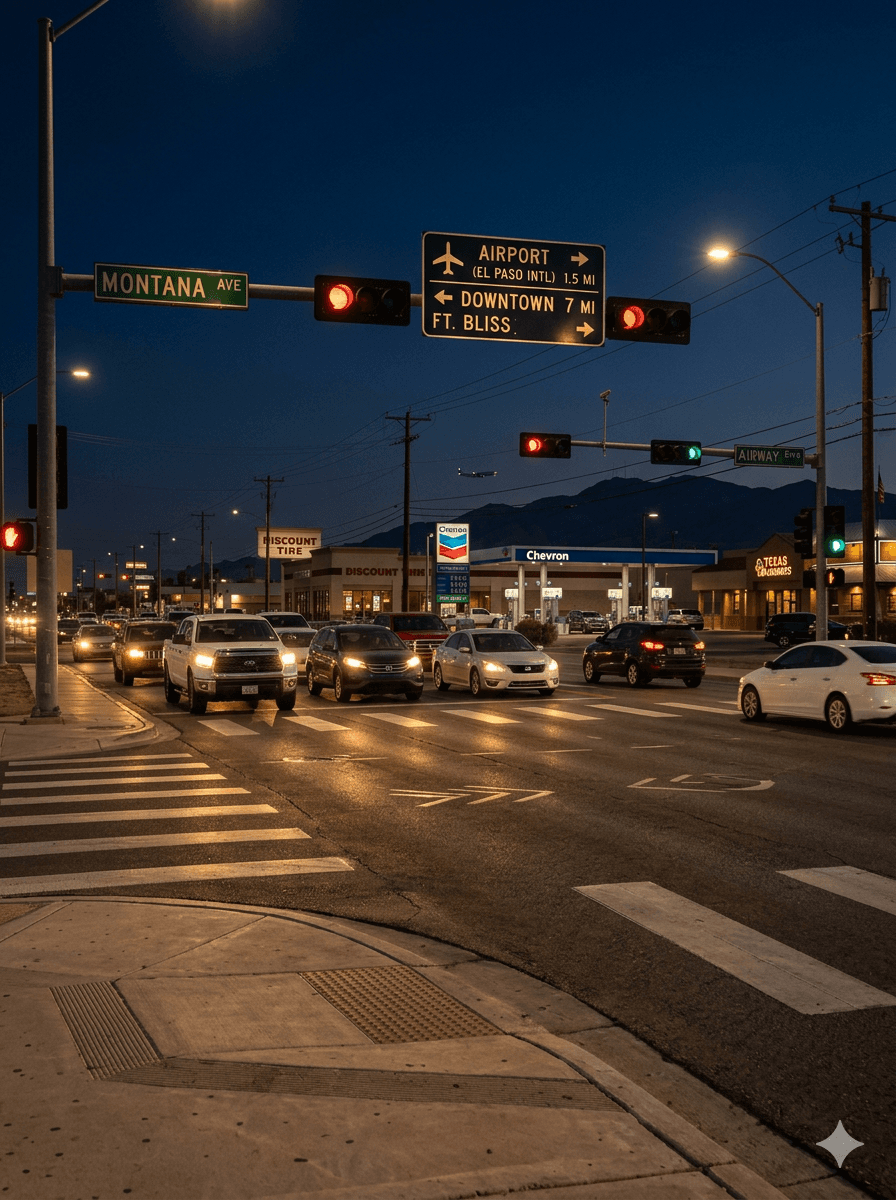
The intersection of Montana Avenue and Airway Boulevard sits at the heart of East-Central El Paso, just south of El Paso International Airport. Thousands of drivers pass through this crossing every day, heading to and from the airport, the Gateway East shopping centers, and the commercial corridors that line both roads. It is one of the most collision-prone intersections in the city, and the crashes that happen here tend to be severe because of the speed and volume of traffic converging from multiple directions.
If you have been injured in a crash at Montana and Airway, understanding what makes this intersection dangerous and knowing how to protect your rights can make the difference between a denied claim and the full compensation you deserve.
What Makes Montana and Airway So Dangerous
This is not a simple four-way crossing. Montana and Airway is a wide, multi-lane intersection with several design and traffic characteristics that increase crash risk.
Massive traffic volume. Montana Avenue is one of El Paso's primary east-west arterials, carrying commuters between Downtown and the Far East Side. Airway Boulevard serves as a major north-south connector linking the airport, I-10, and the Montana corridor. The result is a constant stream of vehicles from every direction, particularly during the morning and evening rush hours.
Airport-related traffic. El Paso International Airport sits just north of the intersection. Travelers unfamiliar with local roads, rental car drivers checking GPS directions, and rideshare vehicles making sudden stops all add unpredictability to an already busy crossing.
Commercial truck traffic. Distribution centers and warehouses near the airport generate steady truck traffic along Airway Boulevard. Large trucks need longer stopping distances and wider turning radii, and collisions involving commercial vehicles often result in catastrophic injuries for occupants of smaller passenger cars.
Surrounding retail centers. The Gateway East shopping area draws heavy consumer traffic. Drivers turning in and out of parking lots just before or after the intersection create merge conflicts and sudden braking that catch following vehicles off guard.
Multiple turning lanes. Both roads have dedicated left-turn lanes and signals, but the sheer number of turning movements increases the chance of conflict. Drivers who misjudge a turn arrow or try to squeeze through on yellow are a constant source of left-turn collisions.
Common Crash Types at Montana and Airway
The geometry and traffic patterns at this intersection produce several recurring types of collisions.
Left-turn collisions. The most common serious crash here is the left-turn collision, often called a T-bone. A driver turning left onto Airway from westbound Montana may not see an oncoming vehicle at full speed. The turning vehicle absorbs a direct side impact, and occupants on the struck side are especially vulnerable to serious injuries including broken ribs, pelvic fractures, and traumatic brain injuries.
Rear-end crashes during rush hour. Backed-up traffic during peak commute times leads to frequent rear-end collisions. Drivers watching the signal instead of the car ahead slam into stopped vehicles, causing whiplash and cervical spine injuries.
Pedestrian accidents. Pedestrians face long crossing distances across multiple lanes of traffic. Drivers making right turns on red often fail to check for pedestrians, and left-turning drivers focused on oncoming traffic may not see a person in the crosswalk.
Sideswipe crashes. Drivers who realize they are in the wrong lane for their intended turn attempt aggressive last-moment lane changes, resulting in sideswipe collisions that are especially common during heavy traffic.
Recent Crash Trends at This Intersection
Traffic volume at Montana and Airway has increased steadily as East El Paso continues to grow. New residential developments east of the airport have added commuter traffic, and expanded retail near Gateway East draws more shoppers through the crossing daily.
Road modifications including signal retiming and turn-lane extensions have aimed to improve flow but have not eliminated the fundamental conflict created by high volume and complex geometry. Construction projects along Montana Avenue periodically compress traffic into fewer lanes, increasing merge-related crashes. Without significant infrastructure changes, collision numbers at this intersection are unlikely to decline.
Who Is at Fault in a Montana Avenue Intersection Crash?
Determining fault at a busy intersection like Montana and Airway requires careful investigation. Texas follows a modified comparative fault system, which means you can recover compensation as long as you are less than 51 percent responsible for the crash. Your award is reduced by your percentage of fault, so every detail matters.
Evidence that matters in an intersection fault determination includes:
- Traffic signal records that establish whether a driver ran a red or entered after the turn arrow expired
- Surveillance and traffic camera footage from the intersection and nearby businesses
- Vehicle damage patterns that tell engineers about the angle and speed of impact
- Witness statements from other drivers and pedestrians who saw the collision
- Police crash reports documenting road conditions, driver behavior, and cited violations
An experienced El Paso car accident attorney will gather this evidence quickly, before footage is overwritten or witnesses' memories fade. In crashes involving commercial vehicles or bicyclists, additional investigation into driver logs and vehicle maintenance records may be necessary.
Steps to Protect Your Claim After a Montana Avenue Crash
If you are involved in a crash at Montana and Airway or anywhere along the Montana Avenue corridor, take these steps to strengthen your personal injury claim.
Stay at the scene. Leaving an accident involving injury is a criminal offense in Texas. Wait for police to arrive and file a report.
Call 911 immediately. Request police and EMS. Having medics evaluate you on-scene creates an official record tying your injuries to the crash.
Document the intersection. Photograph traffic signals, turn-lane markings, your vehicle's position, damage to all vehicles, and any skid marks or debris. Capture wide-angle shots showing the full intersection layout.
Get witness information. Intersection crashes often come down to conflicting accounts. An independent witness can tip the scales, so collect names and phone numbers from anyone who saw the collision.
See a doctor within 72 hours. Soft tissue injuries, concussions, and internal bleeding may not show symptoms at the scene. Prompt treatment documents the connection between the crash and your injuries.
Do not accept a quick settlement. Insurers frequently offer lowball settlements before the full extent of injuries is known. If you were hit by an uninsured or underinsured driver, your own UM/UIM policy may provide coverage, but the process can be complex. Speak with an attorney before signing anything.
Crashed at Montana and Airway? Call Lovett & Murray
The Montana and Airway intersection is dangerous by design, and the people who get hurt there deserve a legal team that knows how to build intersection crash cases. At Lovett & Murray, we have spent over 30 years fighting for injured clients across El Paso. We know how to gather the evidence, challenge insurance companies, and take your case to trial if necessary.
Contact us today for a free consultation. You pay nothing unless we win your case. Call 915-757-9999 to speak with an experienced El Paso personal injury attorney who will evaluate your claim at no cost.
See our articles more often on Google.