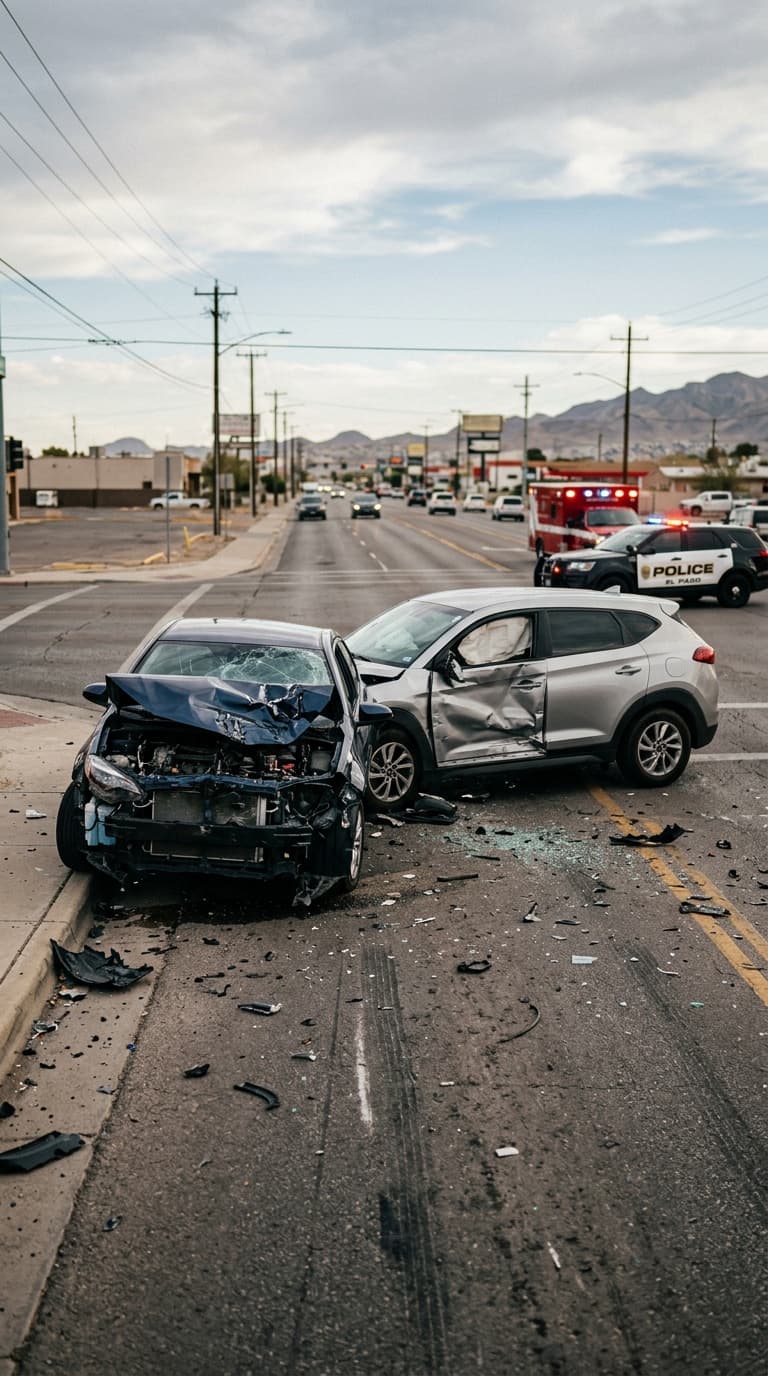
Northeast El Paso stretches from the Diana Drive corridor through the Dyer Street commercial strip and up against the boundaries of Fort Bliss, one of the largest military installations in the country. If you live, work, or commute through this part of the city, you already know the traffic can be intense. Military convoys merging onto US-54, commercial delivery trucks navigating narrow side streets, and residential neighborhoods sandwiched between high-speed arterials create a recipe for collisions that happen far too often.
Understanding where and why these crashes occur can help you stay safer on the road. And if you have already been hurt in a Northeast El Paso accident, knowing your rights is the first step toward getting the compensation you deserve.
Why Northeast El Paso Has Higher Crash Rates
Several factors combine to make Northeast El Paso one of the most collision-prone areas in the city.
Fort Bliss military traffic. Fort Bliss generates tens of thousands of daily commuters, many of them young soldiers driving personal vehicles on unfamiliar roads. Shift changes create traffic surges on Dyer Street, Fred Wilson Avenue, and Cassidy Drive that overwhelm the existing infrastructure. The gates at Chaffee Road and Cassidy Drive funnel traffic into bottlenecks where rear-end crashes are common.
The Dyer Street commercial corridor. Dyer Street between Hondo Pass and Transmountain Road is lined with strip malls, restaurants, auto shops, and gas stations. Drivers constantly enter and exit driveways and parking lots, cutting across lanes. Left turns without dedicated signals are a leading cause of T-bone crashes along this stretch.
US-54 and the Patriot Freeway. US-54 carries high-speed traffic through the northeast side, connecting to Loop 375 and Transmountain Road. Merging at speed differentials near the Diana Drive interchange leads to rear-end and sideswipe accidents. Construction zones frequently shift lane patterns with little warning.
Railroad crossings. Several at-grade railroad crossings near Dyer Street and Fred Wilson Avenue force traffic to stop unexpectedly. Distracted drivers who fail to notice stopped vehicles ahead cause chain-reaction rear-end crashes.
Most Dangerous Northeast El Paso Roads and Intersections
If you drive through Northeast El Paso regularly, these are the roads and intersections where you need to be especially alert.
-
Dyer Street and Hondo Pass Drive — This intersection handles heavy cross-traffic from both commercial and residential areas. Drivers turning left onto Hondo Pass from Dyer frequently misjudge gaps in oncoming traffic, resulting in broadside collisions.
-
Diana Drive and US-54 — The interchange where Diana Drive meets the Patriot Freeway sees frequent merging accidents. Drivers accelerating onto US-54 southbound often encounter slower traffic unexpectedly, especially during the morning rush.
-
Fred Wilson Avenue and Cassidy Drive — Located near a main gate to Fort Bliss, this intersection experiences peak congestion during military shift changes. Rear-end collisions spike during the early morning and late afternoon.
-
Transmountain Road (Loop 375) — The winding stretch between the Northeast and West Side is dangerous in any weather, but especially during high winds and rain. Speed-related crashes and rollovers are common here.
-
Gateway Boulevard near Spur 601 — Commercial truck traffic heading to distribution centers along Gateway Boulevard creates hazardous conditions for passenger vehicles, particularly during lane changes.
Common Crash Types in Northeast El Paso
The road design and traffic patterns in Northeast El Paso produce specific types of collisions.
Rear-end crashes on US-54. High-speed traffic that suddenly slows at interchange ramps and construction zones causes a significant number of rear-end collisions on the Patriot Freeway. These crashes often result in whiplash, herniated discs, and serious spinal injuries because of the speed differential at impact.
Sideswipe accidents on Dyer Street. Drivers weaving between lanes to reach driveways and parking lots along Dyer Street cause frequent sideswipe collisions. These are especially dangerous for motorcyclists and smaller vehicles that can be forced off the road entirely.
Pedestrian accidents near Fort Bliss. Soldiers and military families often walk or jog along Dyer Street, Fred Wilson Avenue, and the residential streets adjacent to the base. Inadequate sidewalks, poorly lit crosswalks, and distracted drivers create dangerous conditions for pedestrians, particularly after dark.
Left-turn collisions at uncontrolled intersections. Many of the side streets feeding into Dyer and Diana Drive lack dedicated turn signals. Drivers attempting left turns across multiple lanes of traffic misjudge oncoming speed and distance, leading to violent T-bone crashes.
Special Considerations for Military Personnel in Car Accidents
Northeast El Paso is home to a large active-duty population, and military personnel face unique circumstances after a car accident. If you are stationed at Fort Bliss and were injured in an off-base crash, you have the same right as any civilian to file a personal injury claim in Texas courts.
However, there are nuances that matter. Deployment schedules can complicate discovery timelines, TRICARE has specific subrogation rules that affect how medical bills are handled in a settlement, and service members reassigned to another installation may need representation that can handle their case remotely.
At Lovett & Murray, we have represented military personnel from Fort Bliss for decades. We understand the intersection of military life and Texas personal injury law, and we make sure your service to the country does not put you at a disadvantage in your car accident claim.
What to Do After a Northeast El Paso Accident
If you are involved in a collision on Dyer Street, US-54, or anywhere in Northeast El Paso, take these steps to protect your health and your legal rights.
-
Move to safety. If your vehicle is drivable, pull off the road and out of traffic. Turn on your hazard lights.
-
Call 911. Texas law requires you to report any crash involving injury or property damage over $1,000. A police report from the El Paso Police Department documents the scene and provides critical evidence for your claim.
-
Document everything. Use your phone to photograph vehicle damage, the intersection or road where the crash occurred, traffic signals, skid marks, debris, and any visible injuries. Write down the names and contact information of witnesses.
-
Seek medical attention within 72 hours. Even if you feel fine at the scene, adrenaline can mask injuries like whiplash, concussions, and internal bleeding. A prompt medical evaluation creates a documented link between the crash and your injuries that insurance companies cannot easily dispute.
-
Contact an El Paso car accident attorney before speaking to insurance. Insurance adjusters work for the insurance company, not for you. Before giving a recorded statement or accepting a quick settlement, speak with a lawyer who can evaluate the full value of your case and negotiate on your behalf.
Injured in Northeast El Paso? We Know These Roads
The attorneys at Lovett & Murray have been representing accident victims across El Paso for over 30 years. We know the trouble spots on Dyer Street and US-54, and we understand the challenges military families face after a crash. When you hire us, you get a legal team that knows your neighborhood and fights aggressively for the compensation you deserve.
Contact Lovett & Murray today for a free consultation. We work on a contingency fee basis -- you pay nothing unless we win your case. Call 915-757-9999 to get started.
See our articles more often on Google.