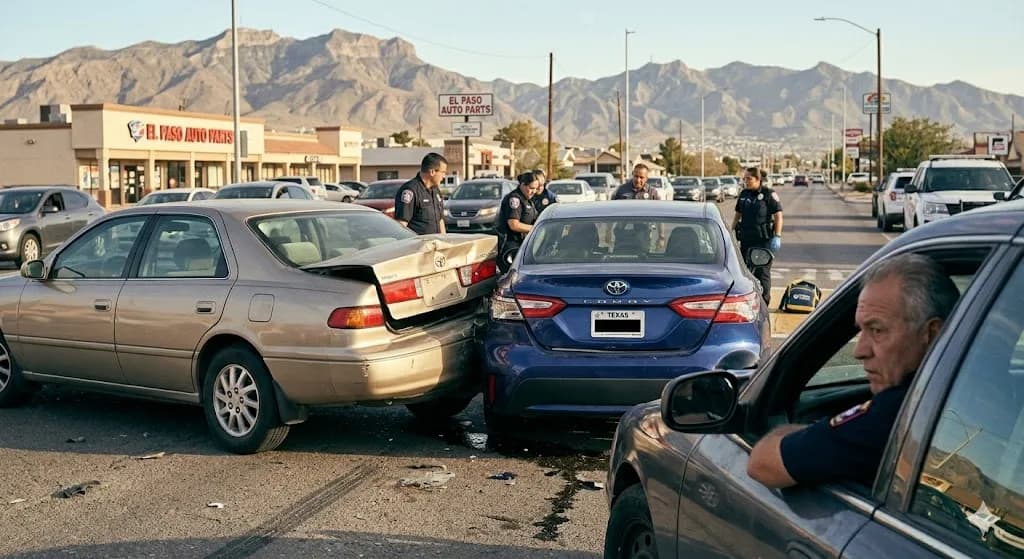
Si alguna vez ha estado en el trafico intermitente de la I-10 a traves del Downtown de El Paso, conoce la sensacion. Las luces de freno se encienden adelante, usted se detiene y contiene la respiracion esperando que el conductor detras de usted este prestando atencion. En Mesa Street durante el viaje vespertino a casa, en Montwood Drive durante las horas de zona escolar, en la rampa de la US-54 a la I-10, las colisiones traseras son el tipo mas comun de accidente de auto en El Paso y en todo Texas.
La mayoria de las personas asumen que el conductor de atras siempre tiene la culpa. En la mayoria de los casos, eso es cierto. Pero la ley es mas compleja que eso, y entender las excepciones puede hacer una diferencia significativa en su reclamo. Ya sea que lo chocaron por detras o que lo estan culpando por un choque trasero, saber como funciona la culpa en Texas protege sus derechos y su recuperacion.
La Presuncion de Culpa Contra el Conductor de Atras
La ley de Texas requiere que cada conductor mantenga una distancia segura de seguimiento y este preparado para detenerse cuando el vehiculo delante reduce la velocidad o se detiene. Esto esta codificado en la Seccion 545.062 del Codigo de Transporte de Texas, que establece que un conductor debe mantener una distancia libre asegurada entre su vehiculo y el vehiculo de adelante.
Debido a este deber legal, hay una fuerte presuncion de que el conductor de atras tiene la culpa en una colision trasera. La logica es directa: si estaba siguiendo a una distancia segura y prestando atencion, deberia haber podido detenerse a tiempo.
Las compañias de seguros dependen fuertemente de esta presuncion. Si lo chocaron por detras en el tramo congestionado de la I-10 entre Sunland Park Drive y las salidas del Downtown, la aseguradora del otro conductor tipicamente aceptara la responsabilidad rapidamente. Sin embargo, incluso en casos claros, las aseguradoras aun intentan minimizar la cantidad que pagan. Aceptar la culpa no es lo mismo que pagar una compensacion justa.
Cuando el Conductor de Atras No Tiene la Culpa
Aunque la presuncion favorece al conductor delantero, varias situaciones pueden cambiar la culpa parcial o totalmente:
Frenado brusco intencional. Si el conductor delantero freno intencionalmente de manera brusca para intimidar o castigar al conductor de atras, este comportamiento agresivo puede cambiar la responsabilidad. Las grabaciones de dashcam son particularmente valiosas para probar el frenado intencional. Los incidentes de ira al volante a lo largo de la I-10 y US-54 frecuentemente involucran esta tactica peligrosa.
Cambios de carril repentinos. Un conductor que se mete en su carril y frena inmediatamente no le da oportunidad de mantener una distancia segura de seguimiento. Si alguien se metio delante de usted en Mesa Street o Montwood Drive y se detuvo abruptamente, el conductor que cambio de carril puede tener la culpa.
Luces de freno que no funcionan. Si las luces de freno del vehiculo delantero no estaban funcionando, el conductor de atras no tenia advertencia visual de que el vehiculo de adelante estaba reduciendo la velocidad. Esta falla mecanica cambia la culpa al conductor delantero por no mantener su vehiculo.
Choques en cadena de multiples vehiculos. Los choques en cadena complican significativamente la culpa. Si lo empujaron contra el vehiculo de adelante porque un tercer vehiculo lo golpeo por detras, usted no tiene la culpa del impacto delantero. Estos choques en cadena son comunes en la I-10 durante tormentas de polvo y lluvia fuerte, cuando la visibilidad cae repentinamente y las distancias de frenado aumentan.
Retroceso repentino. Un conductor que inesperadamente pone su auto en reversa en el trafico o en un semaforo tiene la culpa si retrocede contra el vehiculo detras de el. Esto sucede en estacionamientos, en autoservicios y cuando los conductores se pasan de un giro.
Condiciones peligrosas del camino. Aunque esto no absuelve completamente al conductor de atras, caminos mal mantenidos, señalizacion faltante o confusion en zonas de construccion pueden ser factores contribuyentes que distribuyen la responsabilidad a la entidad gubernamental responsable del mantenimiento vial.
Lesiones Comunes por Choques Traseros
La fisica de una colision trasera es particularmente dura para el cuerpo humano. Cuando su vehiculo es golpeado por detras, su torso es empujado hacia adelante por el asiento mientras su cabeza se queda atras, creando un movimiento violento de latigo. Incluso impactos a baja velocidad pueden causar lesiones significativas:
El latigazo cervical afecta los musculos, tendones y ligamentos del cuello y la espalda superior. Los sintomas incluyen dolor y rigidez en el cuello, dolores de cabeza que comienzan en la base del craneo, mareos, vision borrosa y fatiga. Los sintomas del latigazo cervical a menudo no aparecen hasta 24 a 48 horas despues del choque, por lo que la evaluacion medica inmediata es critica.
Las hernias y abultamientos de disco ocurren cuando la fuerza del impacto comprime la columna vertebral, empujando material del disco contra los nervios espinales. Esto causa dolor que se irradia, adormecimiento y hormigueo en los brazos o piernas. Las lesiones de disco pueden requerir cirugia y resultar en dolor cronico.
Las conmociones cerebrales y lesiones traumaticas del cerebro pueden resultar de que su cabeza golpee el volante, el reposacabezas o la ventana, o simplemente de las fuerzas violentas de aceleracion y desaceleracion. Este atento a dolores de cabeza persistentes, confusion, problemas de memoria y cambios en el humor o personalidad.
Las lesiones de hombro y espalda incluyendo desgarros del manguito rotador, distensiones musculares y lesiones de la columna toracica son comunes cuando el cuerpo es sacudido y el conductor agarra fuertemente el volante al momento del impacto.
Las lesiones de muñeca y mano ocurren cuando los conductores se apoyan contra el volante en el momento del impacto. Las fracturas, esguinces y daño nervioso en las manos y muñecas frecuentemente se pasan por alto en las consecuencias inmediatas.
Como Proteger Su Reclamo Despues de una Colision Trasera
Los pasos que tome despues de un choque trasero afectan directamente la fortaleza de su reclamo:
Llame al 911 y obtenga un reporte policial. Incluso para choques que parecen menores, un reporte oficial de accidente documenta los hechos mientras estan frescos. El reporte anotara las condiciones del camino, señales de trafico y las observaciones del oficial sobre la culpa.
Documente todo en la escena. Tome fotos del daño vehicular desde multiples angulos, la posicion de los vehiculos, las condiciones del camino, señales de trafico y cualquier lesion visible. Capture la placa del otro conductor, informacion del seguro y datos de contacto.
Busque atencion medica dentro de 72 horas. Aunque se sienta bien en la escena, muchas lesiones por colision trasera son tardias. Vea a un doctor, describa el accidente y todos los sintomas, y siga cada tratamiento recomendado. Las interrupciones en el tratamiento medico le dan municion a las compañias de seguros para devaluar su reclamo.
No de una declaracion grabada a la aseguradora del otro conductor. El trabajo del ajustador de seguros es minimizar lo que pagan. Cualquier cosa que diga puede usarse para reducir su reclamo. Deje que su abogado maneje la comunicacion con la compañia de seguros.
Preserve la evidencia. No repare su vehiculo hasta que haya sido inspeccionado y fotografiado por el equipo de su abogado o un ajustador independiente. Guarde todos los registros medicos, facturas y documentacion de salarios perdidos.
Disputas de Seguros en Casos de Colision Trasera
Incluso en casos donde el conductor de atras claramente causo el choque, las compañias de seguros usan varias tacticas para reducir su pago:
Condiciones preexistentes. Si tenia algun problema previo de cuello o espalda, la aseguradora argumentara que sus lesiones existian antes del accidente. Un abogado experimentado puede contrarrestar esto con evidencia medica que muestre que el choque agravó o empeoro su condicion.
Defensa de impacto a baja velocidad. A las aseguradoras les encanta argumentar que el choque fue demasiado menor para causar lesiones reales. Contrataran expertos biomecanicos para testificar que las fuerzas involucradas fueron demasiado bajas. La evidencia medica cuenta la verdadera historia, y los abogados de accidentes de auto que manejan casos traseros saben como contrarrestar estas tacticas de defensa.
Reclamos de culpa comparativa. Incluso cuando el conductor de atras fue claramente culpable, su aseguradora puede intentar asignarle algun porcentaje de culpa, por ejemplo argumentando que usted se detuvo repentinamente o que sus luces de freno no funcionaban. Bajo las reglas de culpa comparativa modificada de Texas, cualquier culpa asignada a usted reduce su recuperacion proporcionalmente.
Acuerdos rapidos y bajos. La compañia de seguros puede ofrecerle un acuerdo rapido antes de que entienda completamente el alcance de sus lesiones. Nunca acepte un acuerdo sin consultar a un abogado, especialmente si aun esta recibiendo tratamiento medico.
¿Lo Chocaron por Detras en El Paso? Obtenga la Compensacion que Merece
Las colisiones traseras pueden parecer directas, pero las lesiones que causan y las batallas con los seguros que siguen son todo menos simples. Ya sea que lo golpearon en el intercambio de la I-10, a lo largo de Mesa Street en el Westside, o en un estacionamiento en Montwood Drive, usted merece compensacion completa por sus lesiones, su dolor y la interrupcion en su vida.
Lovett & Murray tiene mas de 30 años de experiencia luchando por victimas de colisiones traseras en todo El Paso, el oeste de Texas y el sur de Nuevo Mexico. Sabemos como contrarrestar las tacticas de las compañias de seguros, probar el alcance completo de sus lesiones y negociar o litigar por la compensacion que merece.
Trabajamos por contingencia. Usted no paga nada a menos que ganemos.
Contacte a Lovett & Murray hoy para una consulta gratuita. Llame al 915-757-9999 o comuniquese en linea. Nuestro equipo bilingue evaluara su caso y le ayudara a entender sus opciones legales.
Vea nuestros artículos con más frecuencia en Google.