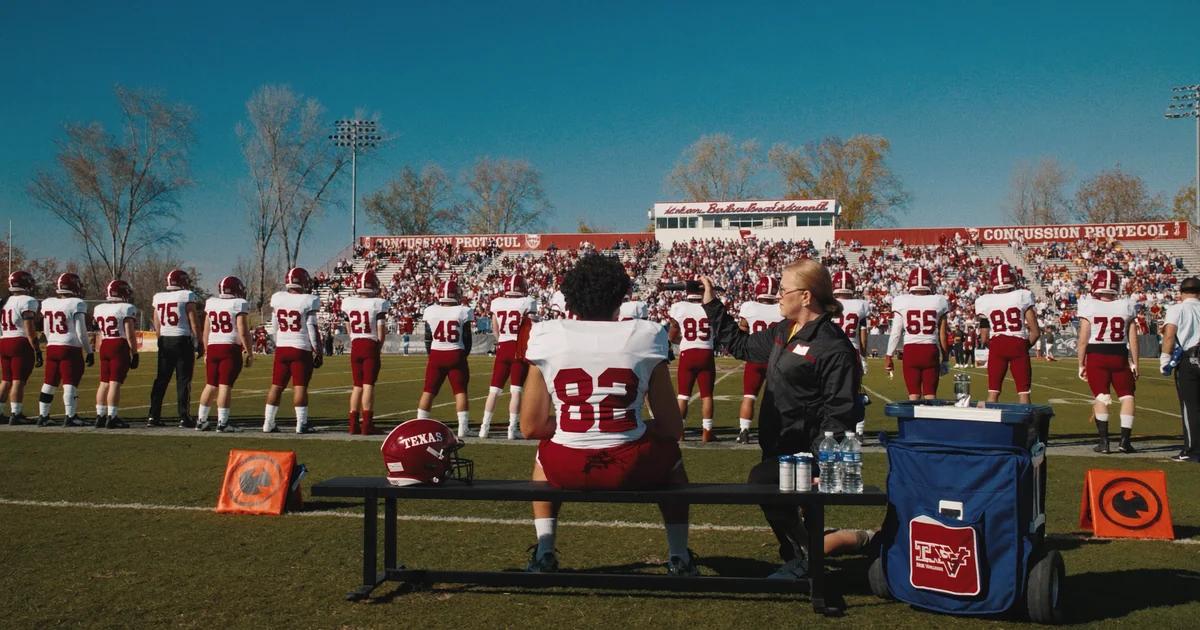
Friday nights in El Paso belong to high school football. The stands fill up at campuses across the east side, the northeast, and the valley. Middle school teams play on weekday afternoons. Youth leagues run on Saturday mornings on fields all over the city. For a lot of families here, this season is one of the best parts of the year, and nothing in this post is meant to take that away.
But every fall, some families end up in a different situation. A kid takes a hit, gets up slowly, and finishes the drive. He seems foggy on the ride home. A week later the headaches have not stopped, the schoolwork is hard in a way it never was, and a parent starts asking questions about what happened on the field and who made the call to send him back in.
If you are in that situation, you deserve clear information rather than either reassurance or alarm. This post explains what Texas law actually requires when a student athlete may have a concussion, why the answer to who is responsible is more complicated in Texas than in most states, and what a serious head injury claim actually requires.
What a Concussion Is, and Why Repeat Injuries Are the Real Concern
A concussion is a traumatic brain injury. It does not require a loss of consciousness, and the overwhelming majority of concussions do not involve one. It does not show up on a standard imaging scan, which is one reason families are sometimes told everything is normal when it is not.
The symptoms parents notice most often are headaches, sensitivity to light or noise, trouble concentrating, changes in sleep, unusual irritability or sadness, dizziness, and a feeling of being slowed down or in a fog. In children and teenagers, the sign is frequently academic before it is medical. Grades drop, homework takes twice as long, and nobody connects it to a hit two weeks earlier.
The central medical concern is not a single concussion. Most single concussions in young athletes resolve with proper rest and a supervised return. The concern is what happens when a young athlete returns to contact before the brain has recovered. A second injury during that window can produce a much worse outcome than either injury would have alone, and in rare cases can cause catastrophic swelling known as second impact syndrome.
That is the entire reason removal from play rules exist. They are not about preventing the first hit, which no rule can do in a contact sport. They are about preventing the second one.
What Texas Law Requires: Removal From Play and Written Clearance
Texas addressed this directly through provisions of the Texas Education Code often called Natasha's Law. The requirements apply to public school districts and open-enrollment charter schools, and they are specific.
A concussion oversight team. Each district or charter school must establish one, made up of qualified personnel, and it must adopt a return to play protocol based on current medical guidance.
Immediate removal. A student must be removed from practice or competition immediately if a coach, physician, licensed health care professional, or the student's parent or guardian believes the student may have sustained a concussion.
No same day return. A student removed under that rule may not return to practice or competition on the day of the suspected injury.
Written clearance before return. The student may not return until a treating physician provides written authorization, the student has completed the district's return to play protocol, and the student and a parent or guardian have signed an acknowledgment.
Training requirements. Coaches, athletic trainers, and other covered personnel are required to complete concussion training.
Those requirements are clear, and when they are followed the system works reasonably well. When a coach leaves a kid in because the game is close, or a program treats the written clearance step as paperwork rather than a medical gate, families should know that the school was not following the law.
Why a Violation of the Return to Play Law Is Not Automatically a Lawsuit
Here is where families are often given a misleading picture, and where we would rather be direct.
The return to play statute establishes duties. It does not create a private right to sue a school district for money damages, and it says so plainly. The statute states that it does not waive any immunity from liability that a school district, charter school, or its officers and employees otherwise have.
That matters because Texas public school districts are governmental entities protected by governmental immunity. Under the Texas Tort Claims Act, a school district's immunity is generally waived only for claims arising from the operation or use of a motor vehicle. A concussion sustained during a football practice is not a motor vehicle claim.
Individual school employees have their own protection. Texas law grants professional school employees immunity from personal liability for acts within the scope of their duties that involve the exercise of judgment or discretion, with narrow exceptions.
The honest summary is this: a negligence claim against a Texas public school district or its coaching staff over a football concussion faces serious legal obstacles. Any lawyer who tells a family otherwise without looking closely at the facts is not doing them a favor. That does not mean nothing can be done, and it does not mean no one is responsible. It means the analysis has to look further than the school.
Where Responsibility Can Actually Fall
Youth football in El Paso is not only school football.
Private schools and non-school programs. A private school, an independent club or select league, a camp, a 7 on 7 organization, or a tournament operator is generally a private entity, not a governmental one. Governmental immunity does not protect them, and ordinary negligence principles apply. If a private program had no concussion protocol at all, ignored the one it had, or let an obviously symptomatic child return to contact, that is a very different legal picture.
Helmet and equipment manufacturers. Texas product liability law recognizes claims for manufacturing defects, design defects where a safer alternative design was feasible, and marketing defects such as inadequate warnings. Reconditioned helmets, helmets that were out of certification, and equipment that failed in a way it was not supposed to are all worth examining. Preserve the helmet. Do not return it to the program. A product liability claim usually depends on having the actual item.
Medical providers. A physician or other provider who cleared an athlete to return without an adequate evaluation, or who ignored reported symptoms, may face a health care liability claim. Those claims are governed by their own chapter of Texas law, with a pre-suit notice requirement and a mandatory expert report early in the case. They are not claims to start late.
What a Concussion Claim Actually Requires
Serious head injury cases succeed on documentation, not on outrage. If you believe your child was hurt because of how an organization handled a head injury, the following is what a claim needs.
A medical record that starts early. The most valuable document is a same-day or next-day evaluation by a physician. A gap of weeks between the hit and the first medical visit is the single biggest weakness in these cases, because it lets the other side argue the injury came from something else.
Documentation of the injury event. Ask the school or program in writing for the incident report, the concussion oversight team's protocol, training records, the removal documentation, and the written return to play authorization. Requesting in writing creates a record of the request, which matters if the documents turn out not to exist.
Evidence of the return decision. Game and practice video, sideline photos, team communications, roster and play participation records, and the accounts of other parents and players. Video of a child going back in after an obvious hit is powerful.
A symptom record. Keep a simple daily log: headaches, sleep, mood, screen tolerance, school performance, missed days. Ask teachers to document what they are seeing in the classroom. This is the evidence that shows how the injury actually affected your child's life, and nobody else will create it.
Expert medical opinion. In a serious case, a neurologist or neuropsychologist will need to connect the injury to the ongoing symptoms and to the child's prognosis. Neuropsychological testing is often central.
A realistic assessment of who is legally responsible. This is the step families cannot do alone, and it is where the analysis in the sections above comes in. Our serious injury practice handles this kind of evaluation, and part of that job is telling families honestly when a claim is not viable.
Deadlines, and Why a Child's Case Works Differently
Texas generally allows two years from the date of injury to file a personal injury lawsuit. For a minor, the limitations period is usually tolled during childhood, meaning the clock on the child's own claim generally does not start until they turn 18.
Please do not treat that as permission to wait. Several things are not tolled.
- Notice deadlines for claims involving a government entity are much shorter, often six months or less under the Texas Tort Claims Act, and some cities require notice even faster.
- A parent's own claim for medical expenses paid on behalf of a child is treated separately from the child's claim.
- Evidence does not wait. Video is deleted, staff leave, protocols are revised, and memories fade. A case built four years later is a much weaker case than the same facts documented in the first month.
If you want a general picture of how a personal injury case moves through the Texas system, our post on how long a personal injury case takes in Texas covers the timeline.
Talk to Lovett & Murray About Your Child's Head Injury
If your child was hurt playing football in El Paso and you are trying to figure out whether anyone should have done something differently, our team will look at the facts and give you a straight answer. Sometimes that answer is that a claim exists and should be pursued. Sometimes it is that the law protects the organization involved. Either way, you are entitled to know rather than to wonder.
Lovett & Murray has represented El Paso families for more than 30 years. Consultations are free, and there is no obligation. We work on a contingency fee, which means you pay nothing unless we win your case. Our team is bilingual in English and Spanish, so both parents can be part of every conversation.
Contact us today or call 915-757-9999. If your child is still symptomatic, the most important thing you can do this week is medical, not legal. Get the evaluation, follow the restrictions, and keep the records.
See our articles more often on Google.