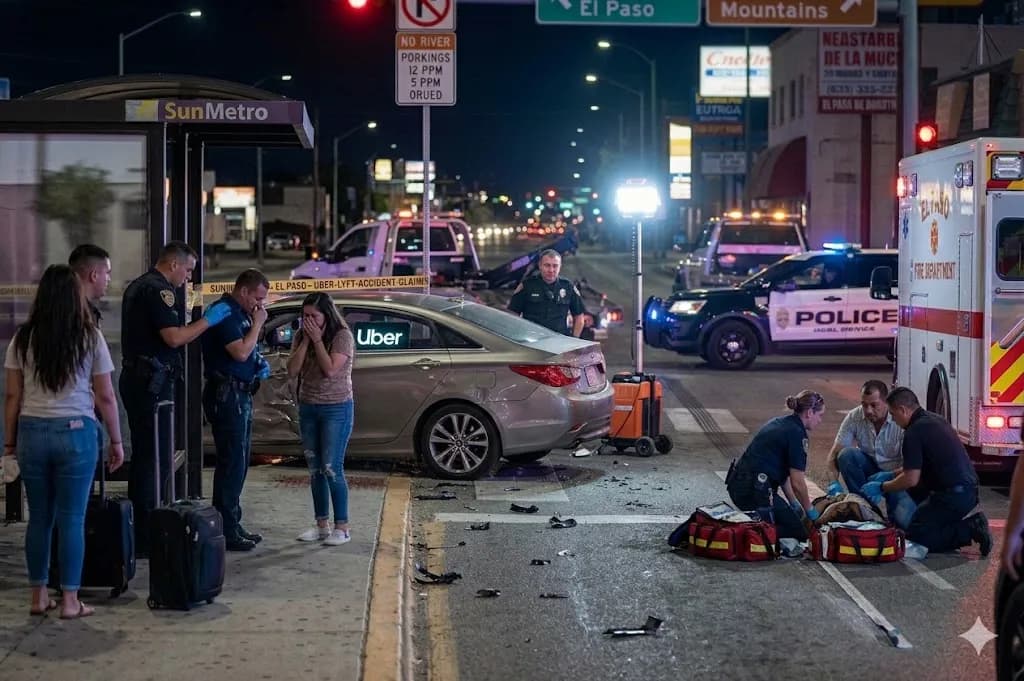
Usted pide un Uber desde un restaurante cerca del campus de UTEP. El conductor lo recoge en North Mesa Street y se dirige hacia la I-10. En la rampa de acceso, otro auto se incorpora agresivamente y golpea la parte trasera de su vehículo. El Uber gira bruscamente, y usted se golpea contra la puerta. Está lesionado, aturdido e inmediatamente confundido sobre una cosa: ¿quién es responsable de sus gastos médicos?
Los accidentes de rideshare en El Paso son cada vez más comunes a medida que Uber y Lyft se han convertido en el transporte predeterminado para todo, desde salidas nocturnas en el Downtown hasta viajes al aeropuerto y traslados diarios. Los corredores alrededor de UTEP, Downtown, el Aeropuerto Internacional de El Paso y la zona de entretenimiento del Westside ven tráfico constante de rideshare. Cuando ocurre un accidente, la pregunta de quién paga se vuelve sorprendentemente complicada.
Las Tres Capas de Seguro en Accidentes de Rideshare
La cobertura de seguro disponible después de un accidente de rideshare depende completamente de lo que el conductor estaba haciendo al momento del choque. Uber y Lyft operan un sistema de seguro escalonado con tres fases distintas:
Fase 1: Aplicación Apagada
Cuando el conductor de Uber o Lyft tiene la aplicación apagada, es simplemente un conductor regular. Solo aplica su seguro personal de auto. La compañía de rideshare no proporciona ninguna cobertura durante esta fase.
Fase 2: Aplicación Encendida, Esperando una Solicitud de Viaje
Cuando el conductor tiene la aplicación encendida y está disponible pero aún no ha aceptado un viaje, Uber y Lyft proporcionan cobertura de responsabilidad limitada:
- $50,000 por persona por lesiones corporales
- $100,000 por accidente por lesiones corporales
- $25,000 por daños a la propiedad
Esto es significativamente menos que la cobertura disponible durante un viaje activo. Si el seguro personal del conductor niega el reclamo porque estaba usando la aplicación para propósitos comerciales, esta cobertura contingente llena el vacío.
Fase 3: En Camino a Recoger o Transportando un Pasajero
Aquí es donde aplica el seguro completo de rideshare. Desde el momento en que el conductor acepta una solicitud de viaje hasta que el pasajero sale del vehículo, Uber y Lyft proporcionan:
- $1 millón en cobertura de responsabilidad a terceros
- $1 millón en cobertura de motorista sin seguro/con seguro insuficiente
- Cobertura contingente integral y de colisión para el vehículo del conductor
Esta póliza de $1 millón es la cobertura principal para la mayoría de los reclamos por accidentes de rideshare que involucran pasajeros.
Escenarios Comunes de Accidentes de Rideshare en El Paso
Los accidentes de rideshare toman varias formas, y la parte responsable difiere en cada una:
Usted es Pasajero y su Conductor de Rideshare Causa el Accidente
Si su conductor de Uber o Lyft se pasa una luz roja, choca por detrás a otro auto o conduce imprudentemente y usted resulta lesionado, el reclamo se presenta contra la póliza de seguro de $1 millón de la compañía de rideshare. Este es el escenario más directo porque usted claramente no tiene culpa como pasajero.
Usted es Pasajero y Otro Conductor Golpea su Vehículo de Rideshare
Si un conductor tercero causa el accidente, su seguro personal de auto es el principal responsable. Si ese conductor no tiene seguro o su cobertura es insuficiente, la cobertura de motorista sin seguro de la compañía de rideshare puede cubrir el déficit hasta $1 millón.
Usted Conduce su Propio Auto y un Conductor de Rideshare lo Golpea
Si un conductor de Uber o Lyft golpea su vehículo, el seguro que aplica depende de si tenían un pasajero o estaban esperando una solicitud de viaje. Si estaban en un viaje activo, aplica la póliza de $1 millón. Si solo estaban esperando, la cobertura contingente menor puede ser todo lo disponible.
Usted es Peatón o Ciclista Golpeado por un Conductor de Rideshare
Los peatones y ciclistas golpeados por conductores de rideshare tienen el mismo acceso a la cobertura de seguro de la compañía de rideshare que otras víctimas de accidentes. La fase de actividad de la aplicación del conductor determina el nivel de cobertura. Los accidentes peatonales cerca de UTEP, Downtown y las áreas de recogida del aeropuerto son particularmente comunes.
Por Qué los Reclamos por Accidentes de Rideshare Son tan Complejos
Varios factores hacen que los reclamos por accidentes de rideshare sean más complicados que los casos estándar de accidentes de auto:
Múltiples pólizas de seguro: Un solo accidente de rideshare puede involucrar el seguro personal del conductor, la póliza comercial de la compañía de rideshare, el seguro del otro conductor y su propia cobertura UM. Cada aseguradora intentará trasladar la responsabilidad a las otras.
Clasificación de contratista independiente: Uber y Lyft clasifican a los conductores como contratistas independientes, no empleados. Esto protege a las empresas de responsabilidad directa en muchas situaciones y crea obstáculos legales para los reclamantes.
Disputas sobre datos de la aplicación: La compañía de rideshare puede disputar en qué fase estaba el conductor al momento del accidente. Determinar si la aplicación estaba encendida, si se aceptó un viaje y si había un pasajero en el vehículo requiere obtener datos de la compañía de rideshare, lo que típicamente requiere acción legal.
Vacíos de cobertura: Si el seguro personal del conductor excluye la actividad comercial y la cobertura contingente de la compañía de rideshare no se ha activado, puede haber un vacío de cobertura que deja a la persona lesionada buscando compensación desesperadamente.
Proteger su Reclamo Después de un Accidente de Rideshare
Siga estos pasos para proteger sus derechos y maximizar su recuperación:
- Llame al 911 y obtenga atención médica: Su salud es lo primero. Un reporte policial y registros médicos son evidencia esencial
- Capture pantalla de los detalles de su viaje: Abra la aplicación de Uber o Lyft y capture la información del viaje, nombre del conductor, detalles del vehículo y estado del viaje. Esta evidencia puede desaparecer de la aplicación
- Documente la escena: Fotografíe todos los vehículos, la intersección o carretera, señales de tráfico, sus lesiones y cualquier daño visible
- Obtenga información de contacto de testigos: Otros conductores, peatones y pasajeros pueden proporcionar testimonio crítico
- Reporte a través de la aplicación: Tanto Uber como Lyft tienen reportes de accidentes dentro de la aplicación. Hágalo, pero mantenga su descripción breve y factual
- No acepte ninguna oferta de acuerdo rápido: La aseguradora de la compañía de rideshare puede contactarlo con una oferta baja. No acepte ni firme nada sin asesoría legal
- Contacte a un abogado con experiencia en reclamos de rideshare: Las capas de seguro son demasiado complejas para navegar solo
¿Lesionado en un Accidente de Rideshare? Sabemos Cómo Manejar Estos Casos
Los reclamos por accidentes de rideshare involucran complejidades de seguro que la mayoría de las personas e incluso muchos abogados no conocen. La diferencia entre la cobertura de Fase 2 y Fase 3 puede significar la diferencia entre una póliza de $50,000 y una póliza de $1 millón. Hacerlo bien importa.
Lovett & Murray tiene más de 30 años de experiencia representando a residentes lesionados de El Paso, y hemos manejado toda la gama de escenarios de accidentes de rideshare. Sabemos cómo obtener datos de la aplicación, identificar la cobertura de seguro correcta y luchar por la compensación máxima disponible. Trabajamos con honorarios de contingencia, así que usted no paga nada a menos que ganemos.
Contáctenos hoy para una consulta gratuita o llame al 915-757-9999. Clasificaremos las capas de seguro y lucharemos por cada dólar que merece.
Vea nuestros artículos con más frecuencia en Google.