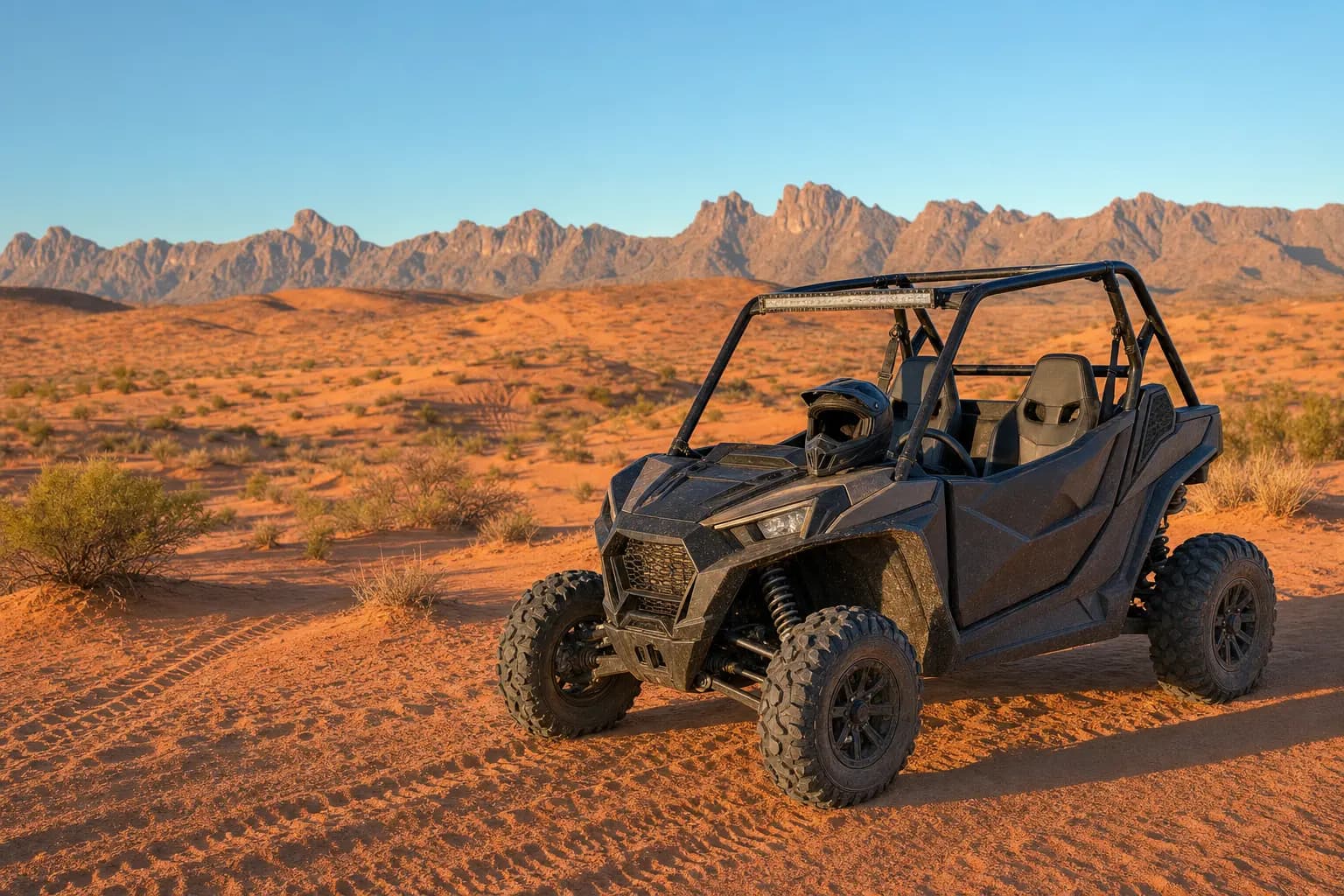
The desert and mountains around El Paso draw riders all summer. Hueco Tanks. The flats south of Anthony. Trails in the Franklin Mountains where they are permitted. Bureau of Land Management areas across the West Texas borderlands. ATVs and UTVs (side-by-sides) are central to that recreation. They are also one of the leading causes of serious recreational injuries in the region, and the legal questions they raise are different from anything that happens on the highway.
If an off-road crash has hurt you or someone in your family, the path to recovery runs through Texas premises liability law, product liability law, and traditional negligence claims. Acting quickly preserves evidence in environments that change with every storm.
Where El Paso Area ATV and UTV Crashes Happen
Hueco Tanks State Park & Historic Site. Designated ATV areas only. The park is primarily a climbing and historic preservation site, with limited motorized recreation.
Franklin Mountains State Park. Motorized off-road use is prohibited in most areas. Some access roads allow conventional vehicles. Riders who enter prohibited areas face both legal consequences and elevated injury risk.
Bureau of Land Management areas. Large areas south and east of El Paso, including the borderlands, allow regulated off-road use. Rules vary by area and by season.
Private land. Many cases involve riders on private property, either with or without permission. Premises liability rules vary based on the rider's status.
El Paso County dunes and flats. Areas near Horizon City, Socorro, and east toward Hudspeth County see regular use.
Cross-border New Mexico. Riders crossing into New Mexico to access more permissive areas. Cross-jurisdictional issues arise in any crash that happens or involves people from both states.
Common Crash Patterns and Injuries
Rollovers. The leading cause of serious injury and death in off-road vehicles. Rough terrain, slopes, and inexperienced operators combine to flip vehicles, often pinning riders underneath. Crush injuries, head trauma, and spinal injuries are common.
Passenger ejection. Modern UTVs are designed with door nets and safety bars, but riders without proper restraint are still ejected in rollovers.
Tree, rock, and barrier strikes. Riders losing control and striking obstacles at speed.
Collisions with other vehicles. ATV-to-ATV collisions, UTV collisions with conventional vehicles on access roads, and occasional collisions with horses or cattle.
Mechanical failure crashes. Brake failures, steering failures, throttle stuck wide open. These can support product liability claims against manufacturers.
Heat-related collapses. Riders overcome by heat exhaustion while operating in 100-degree-plus conditions. Falls from moving vehicles produce additional injuries.
Dust visibility crashes. Limited visibility in dust clouds, particularly when groups ride close together.
Injury patterns include traumatic brain injuries (often despite helmets), spinal cord injuries, severe orthopedic injuries to legs and arms, internal injuries, and burns from fuel-related fires after crashes.
Texas Law on ATV and UTV Use
Texas has a patchwork of rules governing off-road vehicle use.
Registration. ATVs operated on public lands must be registered with the Texas Parks and Wildlife Department in many circumstances. UTVs have separate registration requirements depending on use.
Helmets. Required for operators and passengers under 14. Older riders are not legally required to wear helmets but can lose civil recovery if not wearing one when injured.
Public roads. ATVs and UTVs generally cannot be operated on public roads in Texas, with limited exceptions for farm use and certain types of registered vehicles.
Operator age. Texas requires safety training certification for operators under 14. Younger riders must be supervised.
Alcohol. Texas's DWI laws apply to operation of motor vehicles broadly. ATV and UTV operators can face DWI charges and civil liability for impaired operation.
For broader DWI framework on Texas roads, see our coverage of Texas DWI laws and penalties.
Liability in Off-Road Crash Cases
Several parties can be liable in a serious off-road crash.
The other operator. Negligent operation supports a personal injury claim like any vehicle crash. Common patterns include excessive speed, reckless maneuvering, and impaired operation.
The vehicle owner. Owners who allowed an unqualified or impaired person to operate the vehicle can face liability under negligent entrustment.
The property owner. Premises liability applies to landowners who allowed off-road use on their property. The landowner's duty depends on whether the rider was invited, licensed, or trespassing. Our broader coverage of premises liability in El Paso walks through the framework.
Rental companies. Commercial operators who failed to provide proper safety training, functional equipment, or supervised areas can be liable to injured renters.
Equipment manufacturers. Defective ATVs and UTVs support product liability claims. Common defects include brake systems, steering, rollover protection, and fuel systems.
Tour operators and guides. Companies that lead group rides can be liable for negligent route selection, inadequate safety briefings, or failure to respond to emerging hazards.
What to Do After an Off-Road Crash
The remote location of most off-road crashes complicates everything.
- Call 911 if possible. Cell coverage is spotty in many off-road areas. If no signal, send a rider out for help. Note GPS coordinates if available.
- Stabilize the injured rider. Do not move riders with possible spine injuries unless required for immediate safety. Off-road environments often require evacuation by helicopter.
- Document the scene. Photographs of the vehicle, the terrain, any equipment failures visible, helmet and safety gear condition, and the surrounding area. GPS coordinates if your device shows them.
- Preserve the vehicle. Have it transported by tow rather than ridden out if a defect is suspected. A vehicle that has been operated after the crash is less useful as evidence.
- Identify witnesses. Other riders, group members, and any third parties who saw the crash.
- Get medical attention promptly. Off-road crashes often produce internal injuries that initially feel minor.
- Do not give recorded statements before consulting an attorney.
- Call Lovett & Murray at 915-757-9999 for a free consultation.
Damages Available in Off-Road Crash Cases
Texas law allows the full range of damages.
- Past and future medical expenses
- Lost wages and lost earning capacity
- Property damage
- Pain and suffering
- Mental anguish
- Disfigurement, particularly significant in burn cases
- Loss of consortium for spouses
- Punitive damages in cases of gross negligence
For fatal cases, Texas wrongful death law provides recovery to surviving family. Traumatic brain injury and spinal cord injury cases often produce substantial damages reflecting lifetime care needs.
Injured Off-Road in El Paso? Lovett & Murray Is Here to Help
Off-road crash cases combine technical complexity with the practical challenges of remote evidence preservation. Tracks fade. Vehicles get moved. Witnesses scatter. The right legal team moves quickly to preserve everything from the GPS log on a victim's phone to the rollover protection system on the involved vehicle.
Lovett & Murray has spent more than 30 years representing accident victims across El Paso, West Texas, and Southern New Mexico. We handle off-road vehicle cases, premises liability claims, product liability cases against manufacturers, and wrongful death claims. We work with accident reconstructionists, off-road vehicle engineering experts, and medical specialists in brain and spinal injuries.
We work on a contingency fee. You pay nothing unless we recover compensation for you.
Contact Lovett & Murray today for a free consultation. Call 915-757-9999 or reach out online. Our bilingual team is ready to help your family.
See our articles more often on Google.