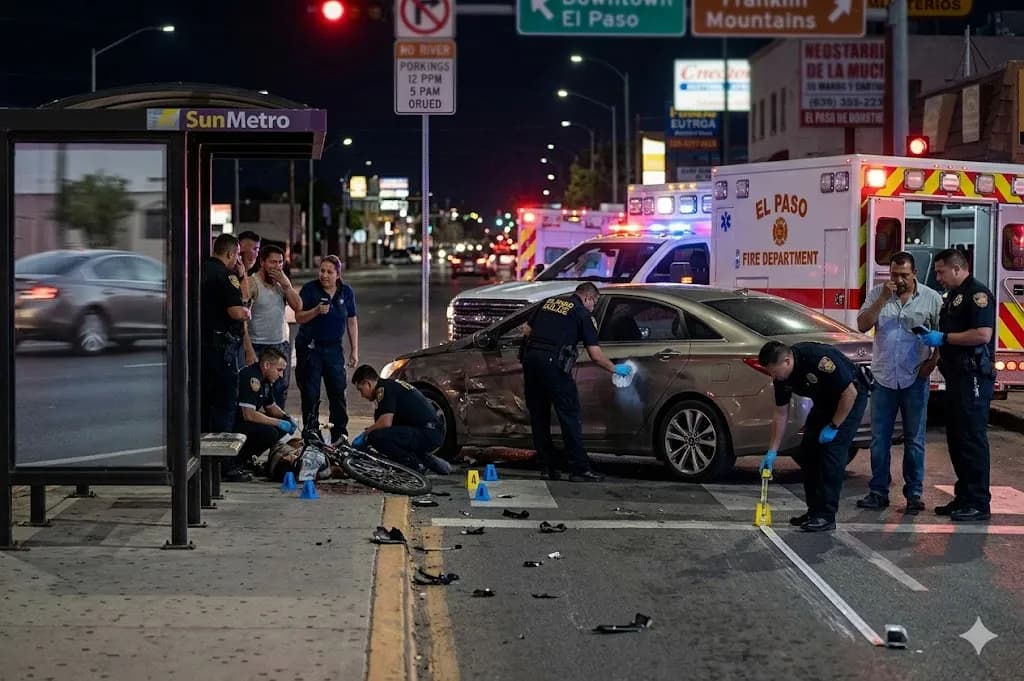
El Paso's wide boulevards, sunny weather, and flat desert terrain make it a natural city for cycling. More residents are commuting by bike, riding the trails along the Rio Grande, and taking advantage of the city's growing network of bike lanes along streets like Mesa, Stanton, and Oregon. But the reality on the ground is that El Paso's roads were built for cars and trucks, and cyclists face serious dangers every time they ride.
When a two-ton vehicle collides with a cyclist who has no airbags, no seatbelt, and no metal frame for protection, the results are devastating. If you or a family member has been injured in a bicycle accident in El Paso, understanding your rights is the first step toward getting the compensation you need to recover.
Bicycles Are Vehicles Under Texas Law
This is the single most important legal fact every El Paso cyclist and driver needs to understand. Under Texas Transportation Code Section 551.101, a bicycle is legally classified as a vehicle. That means cyclists have the same rights and duties as motorists when riding on public roads.
Cyclists have the right to:
- Use full travel lanes, not just the shoulder or gutter
- Ride on any road where bicycles are not specifically prohibited, such as certain limited-access highways
- Signal and execute turns from the appropriate lane
- Be treated with the same respect and caution that drivers owe other motor vehicles
Cyclists also have duties: obeying traffic signals, riding in the same direction as traffic, using lights at night, and signaling turns. But a cyclist's failure to follow every rule does not give a driver the right to hit them. Under Texas's modified comparative fault system, even a cyclist who was partially at fault can recover compensation as long as their fault was 50% or less.
Common Causes of Bicycle Accidents in El Paso
Most bicycle accidents are caused by motorists who fail to see or yield to cyclists. The most frequent collision types include:
Dooring
A driver or passenger opens a car door directly into the path of a cyclist riding in a bike lane or along the right side of the road. Dooring is especially common in Downtown El Paso and along Mesa Street near UTEP, where on-street parking runs adjacent to bike lanes and travel lanes.
Right Hook
A driver passes a cyclist and then immediately turns right, cutting across the cyclist's path. This happens at intersections throughout El Paso, particularly on busy commercial streets like Montana Avenue, Dyer Street, and North Mesa where drivers are focused on finding businesses and not watching for bikes.
Failure to Yield at Intersections
Drivers turning left across oncoming traffic frequently fail to see approaching cyclists. Cyclists are smaller and harder to spot than cars, especially at dusk or dawn. Intersections along Schuster Avenue, Rim Road, and the Downtown grid are common locations for these crashes.
Unsafe Passing
Drivers passing cyclists too closely, or attempting to squeeze past in a lane that is too narrow to share, force cyclists into curbs, parked cars, or off the road entirely. This is a problem on narrow roads like Scenic Drive, where cyclists and cars share a single lane in each direction with no shoulder.
Distracted Driving
A driver looking at a phone for even three seconds at 35 miles per hour travels over 150 feet without watching the road. That is more than enough distance to drift into a bike lane or fail to see a cyclist at an intersection. El Paso's long, straight roads can create a false sense of security that makes distracted driving even more dangerous.
Dangerous Areas for Cyclists in El Paso
While bicycle accidents can happen anywhere, certain El Paso roads and areas see a higher concentration of crashes.
- Scenic Drive: Beautiful but narrow, with no dedicated bike infrastructure, sharp curves, and vehicles traveling faster than the posted limit
- Mesa Street from UTEP to Sunland Park: Heavy traffic, frequent turns into businesses, and bike lanes that disappear and reappear unpredictably
- Downtown El Paso: Dense traffic, on-street parking, one-way streets, and distracted drivers navigating unfamiliar routes
- Montana Avenue east of Airway: High-speed traffic, wide intersections, and minimal cycling infrastructure
- Dyer Street: Commercial traffic, frequent turning vehicles, and limited visibility at driveways
- North Mesa near I-10 interchange: High-volume merging traffic where drivers are focused on highway ramps rather than cyclists
El Paso has been investing in cycling infrastructure, including protected bike lanes and the Paso del Norte Trail system, but many of the city's busiest corridors still lack safe accommodations for cyclists.
Common Injuries in Bicycle Accidents
Because cyclists are exposed, injuries from vehicle collisions tend to be severe even at moderate speeds.
- Traumatic brain injuries: Even with a helmet, the force of a vehicle collision can cause concussions, skull fractures, and brain bleeds
- Fractures: Broken collarbones, wrists, arms, legs, and pelvic fractures are extremely common
- Road rash: Skin abrasion injuries that can require skin grafts when severe
- Spinal injuries: Herniated discs, compression fractures, and in catastrophic cases, paralysis
- Internal injuries: Organ damage from blunt force impact with the vehicle or the road surface
- Facial and dental injuries: Broken jaws, lost teeth, and lacerations requiring reconstructive surgery
These injuries often require extensive medical treatment, lengthy rehabilitation, and time away from work. Many result in permanent limitations that affect the victim's ability to ride, work, and enjoy daily life.
What to Do After a Bicycle Accident in El Paso
- Get to safety and out of the roadway if you are physically able to move
- Call 911 and request police and medical response. An official police report is critical evidence
- Document the scene with photographs of your injuries, your bicycle, the vehicle, the road conditions, any traffic signs or signals, and the driver's license plate
- Get witness contact information from anyone who saw the crash
- Seek medical attention immediately, even if you feel your injuries are manageable. Adrenaline masks pain, and head injuries can have delayed symptoms
- Do not negotiate with the driver or their insurance at the scene or afterward without legal guidance
- Contact a personal injury attorney who handles bicycle accident cases. Evidence like traffic camera footage and vehicle dash cam recordings can disappear quickly
Remember, Texas gives you two years from the date of the accident to file a personal injury lawsuit. But the sooner you act, the stronger your case will be.
Get Help From an El Paso Personal Injury Attorney
Bicycle accident victims deserve the same aggressive representation as anyone injured in a motor vehicle crash. At Lovett & Murray, we have more than 30 years of experience representing injured people across El Paso and West Texas. We understand the unique challenges cyclists face, from biased assumptions about fault to insurance companies that undervalue cycling injuries.
We handle car accidents, motorcycle accidents, pedestrian crashes, and bicycle accidents with the same commitment to our clients.
Your consultation is free, and you pay nothing unless we win your case. Call 915-757-9999 or contact us online to discuss your bicycle accident today.
See our articles more often on Google.