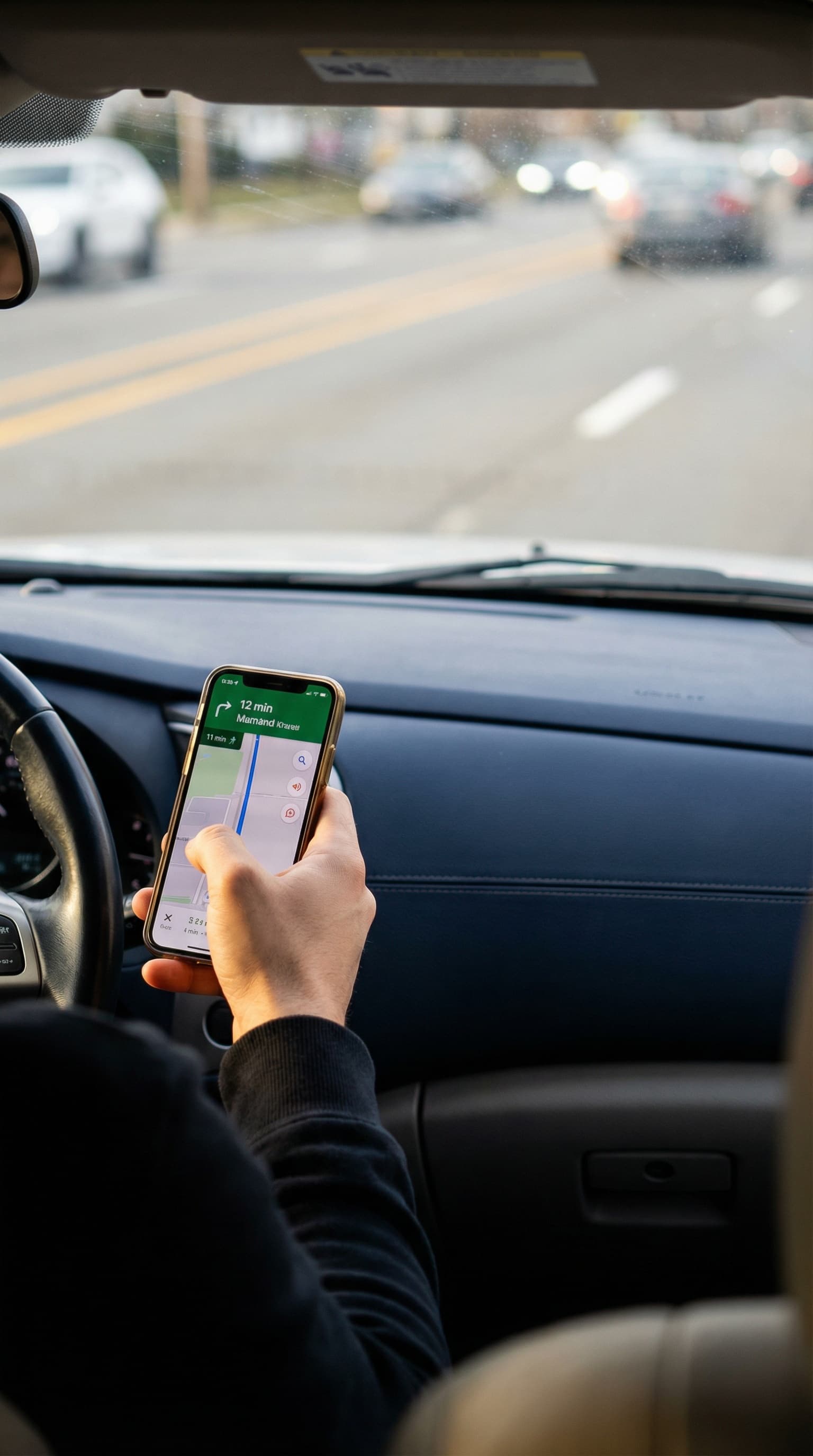
Usted está detenido en un semáforo en rojo en Montwood Drive cerca de Pebble Hills. El tráfico se mueve de nuevo. Avanza, y de la nada, un conductor se estrella contra la parte trasera de su vehículo. Ni siquiera tocó los frenos. La razón se hace evidente cuando ve el teléfono todavía en su mano.
Este escenario se repite todos los días en las calles de El Paso. Desde Lee Trevino Boulevard hasta North Mesa, desde las zonas escolares a lo largo de Montwood hasta el congestionado intercambio en la I-10 y US-54, la conducción distraída se ha convertido en una de las principales causas de accidentes de auto prevenibles en la Sun City. Si usted ha resultado lesionado por un conductor que estaba enviando mensajes de texto, navegando en el teléfono o simplemente no prestando atención, tiene opciones legales.
Leyes de Texas Sobre Enviar Mensajes de Texto al Conducir
La Sección 545.4251 del Código de Transporte de Texas hace ilegal leer, escribir o enviar un mensaje electrónico mientras opera un vehículo motorizado. Esto incluye enviar mensajes de texto, correos electrónicos y usar aplicaciones de redes sociales mientras está detrás del volante.
Una primera ofensa es un delito menor con multas de hasta $99. Las ofensas repetidas conllevan multas de hasta $200. Pero aquí es donde las consecuencias escalan bruscamente: si enviar mensajes de texto al conducir causa lesiones corporales graves o muerte, la ofensa se convierte en un delito menor Clase A sancionable con hasta $4,000 en multas y hasta un año de cárcel.
Texas también tiene reglas más estrictas en situaciones específicas:
- Zonas escolares: Usar cualquier dispositivo electrónico de mano está prohibido mientras conduce a través de una zona escolar activa, incluso llamadas manos libres
- Conductores novatos: Los conductores menores de 18 años tienen prohibido usar cualquier dispositivo inalámbrico mientras conducen
- Operadores de autobuses escolares: No pueden usar un teléfono celular mientras operan un autobús escolar con menores presentes
Estas leyes existen porque los datos son claros. Según el Departamento de Transporte de Texas, la conducción distraída contribuyó a miles de choques en todo el estado el año pasado, resultando en cientos de muertes y miles de lesiones graves.
Tipos de Conduccion Distraida
Mientras que enviar mensajes de texto recibe la mayor atención, la conducción distraída viene en tres categorías, y todas son peligrosas:
Las distracciones visuales quitan los ojos del camino. Mirar la pantalla del teléfono, ajustar el GPS, leer una valla publicitaria o mirar con curiosidad otro accidente son ejemplos. A 60 mph, mirar hacia otro lado por solo cinco segundos significa recorrer la longitud de un campo de fútbol americano esencialmente con los ojos vendados.
Las distracciones manuales quitan las manos del volante. Comer, beber café, alcanzar algo en el asiento trasero o ajustar la radio cuentan como tal. Cada vez que retira aunque sea una mano del volante, su tiempo de reacción y capacidad para hacer correcciones de emergencia disminuyen dramáticamente.
Las distracciones cognitivas quitan la mente de la conducción. Soñar despierto, tener una conversación telefónica intensa (incluso manos libres), discutir con un pasajero o estar emocionalmente alterado pueden afectar su capacidad para procesar lo que está sucediendo en la carretera a su alrededor.
Enviar mensajes de texto se considera la forma más peligrosa de conducción distraída porque involucra los tres tipos de distracción simultáneamente. Los ojos, las manos y la mente del conductor están fuera de la tarea de conducir.
Puntos Criticos de Conduccion Distraida en El Paso
Ciertas áreas en El Paso ven un número desproporcionado de choques por conducción distraída debido a sus patrones de tráfico y características viales:
Las zonas escolares a lo largo de Montwood Drive y Edgemere Boulevard son especialmente peligrosas durante la llegada por la mañana y la salida por la tarde. Los padres que revisan sus teléfonos mientras navegan el tráfico congestionado de la zona escolar crean condiciones para colisiones traseras y accidentes peatonales.
El corredor de la I-10 a través del Downtown es un lugar principal para choques por conducción distraída. La congestión intermitente tienta a los conductores a revisar sus teléfonos, y cuando el tráfico se detiene repentinamente, un conductor que está enviando mensajes de texto puede no reaccionar a tiempo para evitar una colisión trasera a velocidad de autopista.
El corredor de Zaragoza Road desde el cruce fronterizo hasta la I-10 lleva tráfico pesado comercial y de pasajeros. Los tramos largos y rectos del camino dan a los conductores una falsa sensación de seguridad, llevando a muchos a usar sus teléfonos mientras conducen a velocidad.
La intersección de Lee Trevino Boulevard y Vista del Sol experimenta tráfico pesado de vecindarios circundantes, centros comerciales y escuelas. Los patrones complejos de tráfico y los cambios frecuentes de luz hacen que esta intersección sea especialmente implacable para un conductor que no está prestando toda su atención.
North Mesa Street cerca de UTEP combina cruces peatonales, paradas de autobús y tráfico pesado de estudiantes a pie con vehículos que viajan por un corredor comercial. Un conductor que mira su teléfono en esta área puede fácilmente no ver a un peatón bajando de la acera.
Cómo Probar la Conduccion Distraida en un Accidente de Auto en El Paso
Probar que el otro conductor estaba distraído es uno de los elementos más importantes de su reclamo por accidente de auto. Aunque es poco probable que el conductor culpable admita que estaba enviando mensajes de texto, varias formas de evidencia pueden establecer la distracción:
- Registros del teléfono celular: Su abogado puede solicitar mediante citación judicial los registros telefónicos del otro conductor para mostrar mensajes de texto, llamadas o actividad de aplicaciones en el momento exacto del choque
- Grabaciones de dashcam y cámaras de tráfico: Video que muestre al conductor mirando hacia abajo, sin frenar o desviándose antes del impacto
- Testimonio de testigos: Otros conductores, pasajeros o peatones que vieron al conductor usando un teléfono
- Reporte policial: El oficial que respondió puede haber anotado que el conductor tenía un teléfono en la mano o que admitió estar distraído
- Reconstrucción del accidente: Un experto puede analizar distancias de frenado, ángulos de impacto y velocidades del vehículo para demostrar que el conductor no reaccionó como lo haría un conductor razonablemente atento
Mientras más fuerte sea su evidencia, más difícil será para la compañía de seguros negar o minimizar su reclamo. Un abogado experimentado sabe cómo recopilar y preservar esta evidencia antes de que se pierda o destruya.
Compensacion para Victimas de Accidentes por Conduccion Distraida
Si usted resultó lesionado por un conductor distraído en El Paso, tiene derecho a buscar compensación por la totalidad de sus daños. Dependiendo de la gravedad de sus lesiones, esto puede incluir:
- Gastos médicos actuales y futuros, incluyendo cirugía, rehabilitación y medicamentos recetados
- Salarios perdidos por el tiempo que no pudo trabajar durante la recuperación
- Capacidad futura de ingresos perdida si sus lesiones le impiden regresar a su ocupación anterior
- Dolor y sufrimiento, incluyendo dolor crónico, angustia emocional y angustia mental
- Costos de reparación o reemplazo del vehículo
- Pérdida del disfrute de la vida
En casos que involucran negligencia extrema, como un conductor que estaba transmitiendo en vivo en redes sociales cuando causó un choque fatal, los daños punitivos también pueden estar disponibles para castigar al conductor culpable y disuadir comportamientos similares.
Si un conductor distraído causó la muerte injusta de un ser querido, los familiares sobrevivientes pueden presentar un reclamo por muerte injusta para gastos funerarios, pérdida de apoyo financiero, pérdida de compañía y angustia mental. Los accidentes por conducción distraída también lesionan frecuentemente a ciclistas y peatones que tienen incluso menos protección que los ocupantes de vehículos.
¿Lo Golpeó un Conductor Distraído? Podemos Ayudarle
Los accidentes por conducción distraída son tragedias prevenibles. Cada conductor que toma su teléfono detrás del volante toma la decisión de poner a todos los demás en la carretera en riesgo. Si esa decisión resultó en sus lesiones, usted no debería cargar solo con la carga financiera.
Lovett & Murray ha pasado más de 30 años luchando por víctimas lesionadas en todo El Paso, el oeste de Texas y el sur de Nuevo México. Entendemos las tácticas que las compañías de seguros usan para minimizar reclamos por conducción distraída, y sabemos cómo construir un caso que responsabilice a los conductores negligentes.
Trabajamos por contingencia. Usted no paga nada por adelantado, y no nos debe nada a menos que recuperemos compensación para usted.
Contacte a Lovett & Murray hoy para una consulta gratuita. Llame al 915-757-9999 o comuníquese en línea. Nuestro equipo bilingue está listo para revisar su caso y ayudarle a entender sus opciones legales.
Vea nuestros artículos con más frecuencia en Google.