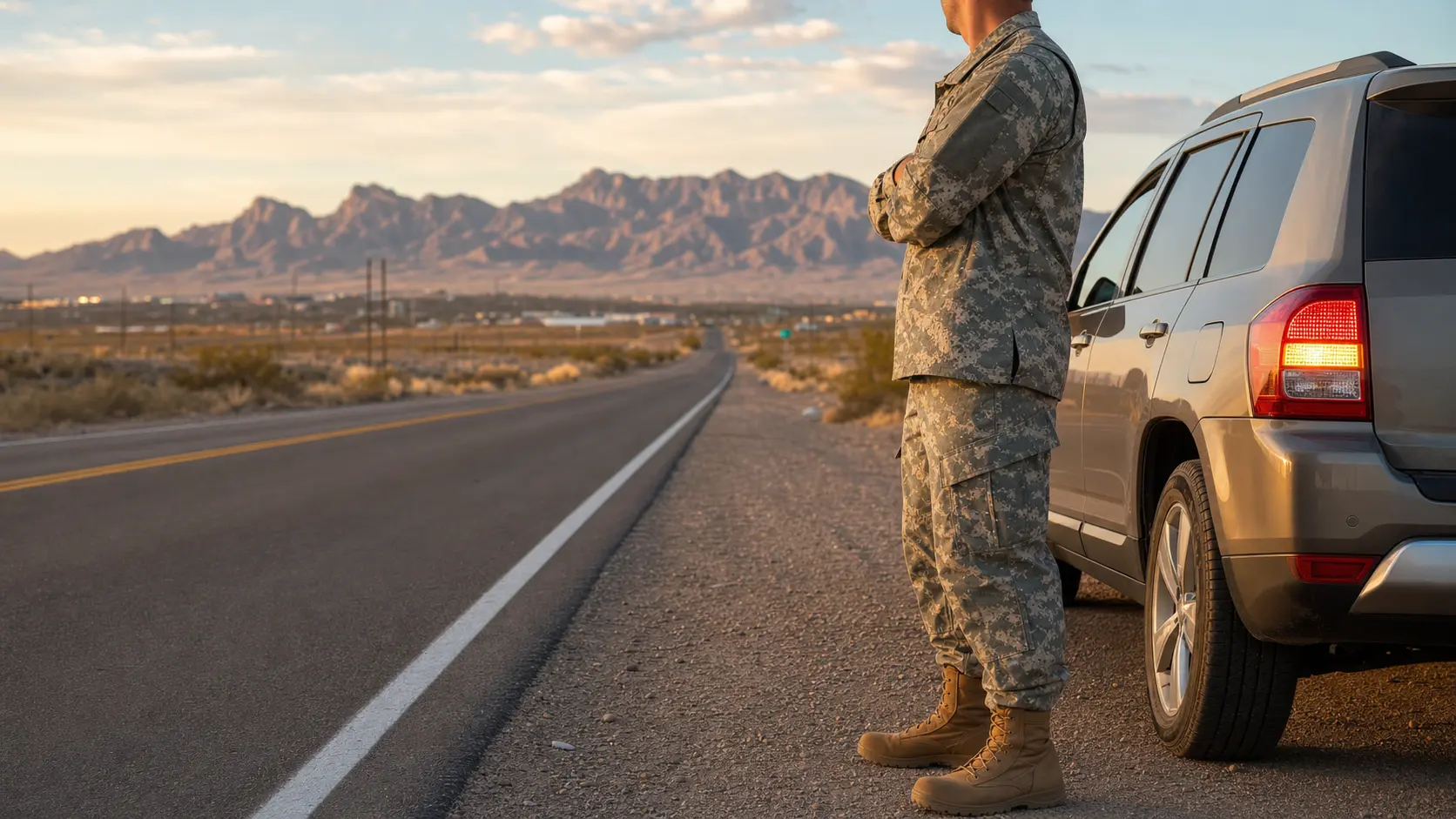
Fort Bliss soldiers and the families who follow them to El Paso, Anthony, Chaparral, and across the surrounding region face the same accident risks as every other resident, plus a layer of legal complexity most local attorneys do not regularly handle. A standard car crash on Loop 375. A drunk driver on I-10 returning from White Sands. A construction site contractor injury on a base support project. Each of these can produce a strong civil claim when handled correctly, and a deeply diminished recovery when not.
If you serve, or if a soldier in your family has been hurt, the right legal team understands both Texas personal injury law and the military rules that shape how soldiers recover.
Why Fort Bliss Service Member Cases Are Different
Several layers stack onto every Fort Bliss accident claim.
The Feres doctrine. A Supreme Court rule barring most lawsuits by active-duty service members against the federal government for injuries incident to service. The doctrine does not apply to claims against private parties, civilian drivers, or businesses off post.
TRICARE coverage. The military health system covers initial care, but the federal government retains the right to be reimbursed from any third-party recovery. Mishandling TRICARE subrogation can wipe out a significant portion of a settlement.
Off-post versus on-post. Where the accident happened changes which laws apply. Off-post incidents on Texas roads typically proceed under Texas civil law. On-post incidents may involve federal jurisdiction and the Federal Tort Claims Act.
Deployment and operational tempo. Pending litigation, depositions, and court appearances all intersect with training schedules, deployments, and PCS moves. The Servicemembers Civil Relief Act provides protections that must be invoked correctly.
Multiple jurisdictions. Many Fort Bliss soldiers live in New Mexico (Anthony, Chaparral, Sunland Park) but work in Texas, or vice versa. Cross-border crashes raise jurisdiction and choice-of-law questions that an experienced attorney must navigate.
Common Accident Scenarios for Fort Bliss Soldiers and Families
Off-post car crashes. I-10, US-54, Loop 375, Patriot Freeway, Dyer Street, and Airway Boulevard all carry significant Fort Bliss traffic. Drunk drivers, distracted civilians, and unsafe commercial vehicles produce serious injury claims every month.
Drunk drivers leaving entertainment districts. Cincinnati Avenue, downtown, and bars near Airway Boulevard see impaired drivers heading home toward base housing or East El Paso. Soldiers and family members coming off duty or off the freeway are common victims. Our overview of Texas DWI laws and penalties covers the criminal side, and we handle the civil claims that follow.
Trucking and commercial vehicle crashes. I-10 between El Paso and Las Cruces carries heavy commercial traffic. Soldiers driving to TDY assignments or family members commuting between New Mexico and Texas often collide with negligent commercial drivers. Our guide to understanding truck accident claims walks through the layers of liability.
Construction zone crashes. Ongoing I-10 widening and Spaghetti Bowl projects create hazards that drivers underestimate. Soldiers on PCS moves are sometimes unfamiliar with current configurations.
Premises injuries off post. Slips, falls, dog bites, and pool incidents at El Paso area apartments, grocery stores, and entertainment venues. Military families living off post have the same premises liability rights as any other Texas residents.
Contractor injuries on or near base. Soldiers and civilian contractors working on construction, transportation, or logistics support contracts can be hurt by negligent contractor conduct. These claims often proceed against private companies, not the military.
The Feres Doctrine Explained
The 1950 case Feres v. United States created a federal common law rule that active-duty service members generally cannot sue the federal government for injuries incident to military service. The rule has been criticized for decades but remains controlling law.
What Feres does cover:
- Training accidents on military installations
- Injuries during combat or operations
- Some medical malpractice by military physicians (now partly addressed by the Stayskal Act)
- Other harms arising from the inherent activities of military service
What Feres does not cover:
- Civilian drivers who hit soldiers off post
- Off-base businesses whose negligence injures soldiers
- Federal contractors whose negligence harms service members
- Injuries to family members, even on post
- Off-duty incidents unrelated to service
The first question in any Fort Bliss case is whether the negligent party was the federal government acting in a military capacity, or someone else. If someone else, Feres usually does not apply.
How TRICARE Subrogation Works
TRICARE covers active-duty soldiers' medical care without out-of-pocket cost at the point of service. When a third party caused the injury, federal law requires the United States to be reimbursed for that care from any civil recovery.
Practical implications:
- The soldier's medical bills are paid up front by the government
- The government asserts a lien against any settlement or verdict
- The lien must be resolved before final disbursement to the soldier
- Attorneys can sometimes negotiate the lien downward, increasing the soldier's net recovery
- Family members covered by TRICARE face similar but slightly different subrogation rules
Skilled handling of TRICARE subrogation often produces a meaningfully larger net recovery than the gross settlement amount alone would suggest.
Compensation Available in a Fort Bliss Accident Case
For off-post negligence claims against civilian defendants, Texas law allows recovery of the full range of damages.
- Past and future medical expenses (offset against TRICARE subrogation)
- Lost military and civilian wages
- Lost earning capacity, particularly relevant for career-ending injuries
- Pain and suffering
- Mental anguish
- Loss of consortium for spouses
- Loss of companionship for parents and children
- Punitive damages in cases of gross negligence
For wrongful death cases involving the loss of a soldier or family member, Texas's wrongful death and survival statutes provide additional categories of recovery for surviving relatives.
What to Do After a Fort Bliss Area Accident
The first steps are the same as any other Texas crash, with some additional military-specific considerations.
- Call 911 and request police. A civilian police report is essential for off-post crashes. Military police should be called for any on-post incident.
- Document the scene with photographs of vehicles, debris, road conditions, and any visible injuries. Get witness names and phone numbers.
- Seek medical attention promptly. TRICARE will cover initial care for active-duty soldiers. Family members should follow standard TRICARE procedures for emergency and non-emergency care.
- Notify your chain of command of any injury that may affect duty status. Failure to report can complicate later disability and benefits claims.
- Contact JAG if appropriate. JAG cannot represent you in civil litigation, but they can advise on related issues and confirm Feres-related questions.
- Do not give a recorded statement to civilian insurers. Insurance adjusters will use anything you say to limit liability. Decline polite requests for recorded statements until you have spoken with an attorney.
- Call Lovett & Murray. We offer free consultations at 915-757-9999. We coordinate with TRICARE, JAG, and your chain of command as needed.
Servicemembers Civil Relief Act Protections
The Servicemembers Civil Relief Act provides several protections for active-duty soldiers involved in civil litigation.
- Stays of proceedings. Soldiers on active duty can request a stay of civil cases when service materially affects their ability to participate.
- Default judgments. Special procedures protect soldiers from default judgments while deployed.
- Interest rate caps. Pre-service obligations are capped at 6 percent interest during active service.
- Statute of limitations tolling. The clock on filing deadlines is paused during active military service.
These protections must be invoked correctly. An attorney familiar with the Servicemembers Civil Relief Act ensures the soldier's rights are preserved through deployment, training, and other duty disruptions.
Injured Near Fort Bliss? Lovett & Murray Is Here to Help
Fort Bliss soldiers and families serve this country. When civilian negligence injures a soldier or military family member, you deserve legal representation that understands both the military framework and Texas personal injury law from day one.
Lovett & Murray has spent more than 30 years representing accident victims across El Paso, West Texas, and Southern New Mexico, including hundreds of military families connected to Fort Bliss and White Sands Missile Range. We handle car accidents, truck collisions, premises injuries, and wrongful death claims. We work with TRICARE subrogation specialists, coordinate with JAG when needed, and accommodate training schedules, deployments, and PCS timelines.
We work on a contingency fee. You pay nothing unless we recover compensation for you.
Contact Lovett & Murray today for a free consultation. Call 915-757-9999 or reach out online. Our bilingual team is ready to serve the soldiers and families who serve us.
See our articles more often on Google.