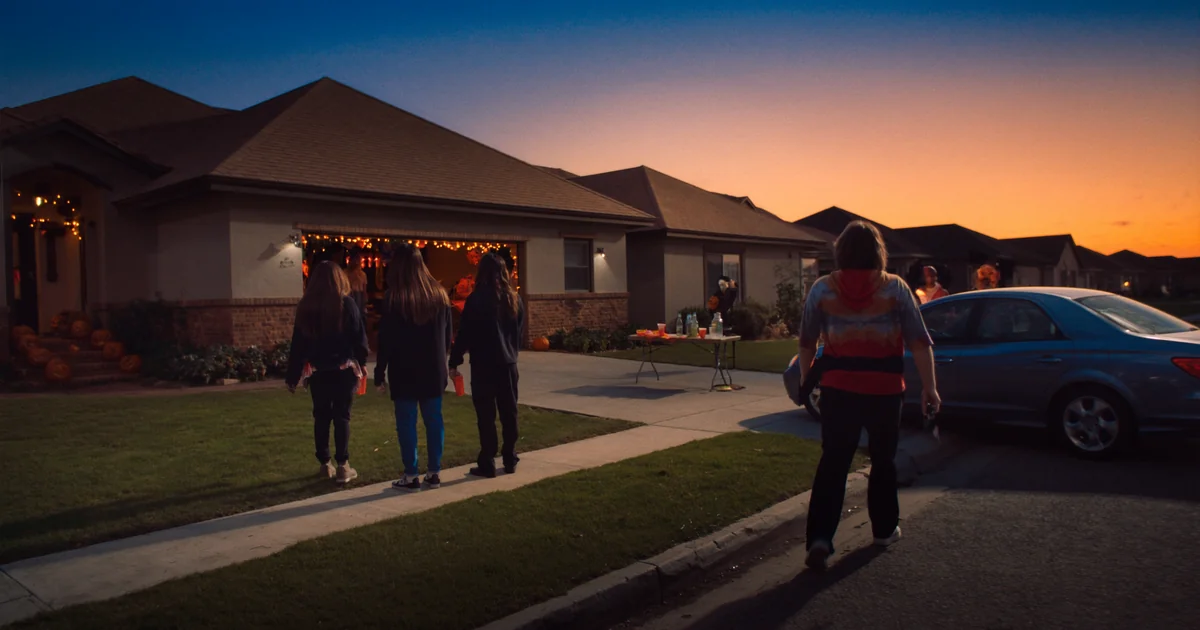
Halloween falls on a Saturday in 2026, and in El Paso that changes the shape of the night. Trick-or-treating starts early in the neighborhoods off Montana Avenue, in Kern Place, in the Lower Valley, and out in Horizon City. By nine the porch lights are going off and the second half of the night begins: costume parties in houses across the city, the bars near Cincinnati Street by the University of Texas at El Paso, downtown, and the crowds that come and go across the Bridge of the Americas and the Paso del Norte crossing.
Then, a few hours later, everyone drives home. And because daylight saving time ends that same weekend, the night runs an hour longer than the calendar suggests.
If you or someone in your family was hit by an impaired driver on Halloween, you may be wondering whether the driver is the only person responsible. Sometimes they are not. This post explains the two Texas doctrines that determine when someone other than the driver can be held accountable, and it is honest about how narrow one of them is.
Why Halloween Night Is Different
The risk on Halloween is not simply that people drink. People drink on plenty of nights. What makes Halloween unusual is the combination.
Two populations share the same streets. Children on foot are out at the exact hours when adult parties are starting. On residential streets there are pedestrians in dark costumes crossing mid-block, between parked cars, in groups, and moving unpredictably.
Costumes reduce visibility on both sides. Masks limit a driver's peripheral vision and a pedestrian's ability to hear a car. Dark costumes are close to invisible in the gaps between streetlights.
Parties are dispersed. Unlike a holiday centered on a downtown district, Halloween parties happen in neighborhoods. That means impaired drivers on residential streets, not just on arterials, and residential streets are where children are.
The night runs long. Bars close late, house parties later, and this year the clocks fall back overnight, which adds an hour to the window.
Rideshare surges and people talk themselves out of it. When surge pricing hits on a peak night, people who fully intended to get a ride reconsider. That decision is where a lot of these crashes begin.
Texas Dram Shop Law: When a Bar or Restaurant Can Be Responsible
Texas holds licensed alcohol providers to a legal standard, and that standard is set out in the Texas Alcoholic Beverage Code.
A provider can be liable when two things are true. First, at the time the alcohol was sold, served, or provided, it was apparent to the provider that the person was obviously intoxicated to the extent that they presented a clear danger to themselves and others. Second, that intoxication was a proximate cause of the injuries.
Several things follow from that language.
"Obviously intoxicated" is an observable standard. The question is not what a blood test later showed. It is what a reasonable server could see: slurred speech, stumbling, spilling, aggression, falling asleep, an inability to complete a transaction.
"Clear danger" is a high bar. Texas courts require more than simply being over the legal limit. The evidence has to show visible impairment at the point of service.
Chapter 2 is the exclusive path. Texas law makes the dram shop statute the exclusive cause of action against an alcohol provider for the acts of an intoxicated person. You cannot get around its requirements by pleading ordinary negligence.
There is a trained server defense. Texas provides a safe harbor when an employer required its employees to attend an approved seller training program, the employee actually attended, and the employer did not directly or indirectly encourage the violation. Whether that defense actually holds up depends on the employer's records and its practices, which is why these cases turn on documentation.
The evidence that decides a dram shop case is fragile and short-lived: point of sale records showing how many drinks were rung up and when, surveillance video from inside the bar and from the parking lot, credit card receipts, server and bartender identities, staffing records, and the criminal investigation file. Most bar surveillance systems overwrite on a cycle measured in days or weeks. If a dram shop claim is going to be made, a preservation letter has to go out almost immediately.
Texas Social Host Liability Is Much Narrower Than People Assume
This is where a lot of families are surprised, and where they deserve a direct answer.
In many states, a private host who serves an obviously drunk adult guest can be liable when that guest drives and hurts someone. Texas is not one of those states, at least not in the ordinary case.
The Texas rule is aimed at minors. The social host provision generally applies when an adult 21 or older, who is not the minor's parent, guardian, or spouse, knowingly serves or provides alcohol to a minor under 18, or knowingly allows the minor to be served or provided alcohol on premises the adult owns or leases. If that minor then causes harm because of intoxication, the adult can be liable for the damages.
Serving an adult guest generally does not create host liability. A homeowner who hosts a Halloween party where adult guests drink too much and one of them drives is, in most circumstances, not liable under Texas dram shop or social host law for what that guest does on the road.
The parent exception is narrow. The statute carves out a minor's own parent, guardian, or spouse. It does not carve out the parent who hosts a party for their child's friends.
Criminal exposure is separate and real. Independent of civil liability, Texas law makes it a criminal offense to make alcohol available to a minor. A host can face criminal charges even in a situation where the civil analysis is complicated.
The practical advice for anyone hosting this year is simple. If there is any chance minors will be present, no alcohol should be accessible to anyone under 21, and supervision should be active rather than assumed. A teenager who finds the cooler in the garage is exactly the scenario the Texas rule was written for.
Two Other Ways a Host Can Still Be Responsible
The narrowness of Texas social host law does not mean a host is untouchable. Two separate doctrines apply, and both are frequently overlooked.
Negligent entrustment. If a person hands the keys to a vehicle to someone they know or should know is likely to drive unsafely, the person who provided the vehicle can be independently liable for the resulting crash. Giving car keys to a guest who is visibly drunk is the textbook example. This is not a dram shop claim and it does not depend on who poured the drink. It depends on who provided the car.
Premises liability. Halloween parties produce a lot of injuries that never involve a vehicle at all. Extension cords across dark walkways, fog machines that obscure a step, unlit stairs, fire pits, open pools, unsecured decorations, and yard hazards that are invisible after sunset. A property owner or occupier owes a duty to guests that depends on their status on the property, and a host who creates a hazard and does not warn about it can be responsible. Our premises liability practice handles these claims regularly.
Company parties add another layer. A Halloween party hosted by an employer, held at a business, or paid for out of a company budget can bring the business into the analysis. The rules for employer responsibility are different from those for a private host, particularly where alcohol was served at a company event as part of a business purpose.
If an Impaired Driver Hurt You on Halloween
A drunk driving crash produces two separate proceedings. The criminal case is the state's case against the driver, and you are a witness in it, not a party. The civil case is yours, and it is where compensation comes from. They run on different tracks and different timelines.
What to do:
- Call 911 and stay at the scene. Ask that officers document any signs of impairment. Field sobriety testing, a breath or blood specimen, and the officer's observations become extremely valuable evidence in the civil case.
- Get medical attention the same night. Adrenaline and shock hide injuries, and a gap in treatment is the first thing an insurer will use against you.
- Photograph everything. Vehicle positions, lighting, the roadway, and the scene generally. In a Halloween crash, the lighting conditions are often part of the case.
- Get witness names. On a residential street on Halloween night there are usually many people who saw it. They will not be there tomorrow.
- Find out where the driver had been. If the driver came from a bar or restaurant, say so in the police report and tell your attorney immediately. That single fact is what makes a dram shop claim possible, and the window to preserve the video is measured in days.
- Do not talk to the other side's insurer. They may call the next morning, sometimes before you have seen a doctor.
- Call an attorney quickly. Dram shop claims, negligent entrustment claims, and claims against multiple insurers all require early action.
For background on how Texas treats impaired driving offenses generally, see our overview of Texas driving while intoxicated laws and penalties. If a family lost someone, our wrongful death practice explains who may bring a claim under Texas law.
Talk to Lovett & Murray After a Halloween Drunk Driving Crash
An impaired driver often carries minimum insurance limits that do not come close to covering a serious injury. That is why identifying every responsible party matters so much. The bar that kept serving. The adult who supplied alcohol to a teenager. The person who handed over the keys. The employer whose event it was. Each of those is a separate potential source of recovery, and each requires evidence that exists only for a short time.
Lovett & Murray has represented injured people and grieving families in El Paso for more than 30 years. We know how to move quickly on surveillance video and point of sale records, and how to build a car accident claim that accounts for every policy in play.
Consultations are free. We work on a contingency fee, so you pay nothing unless we win. Our team is bilingual in English and Spanish.
Contact us today or call 915-757-9999. If the driver who hit you came from a bar, please call within days rather than weeks.
See our articles more often on Google.