If you are reading this because your child was hurt on Halloween night, we are sorry. There is nothing routine about it, and no article can address what that evening was like for your family. What we can do is set out plainly what Texas law expects of drivers, how a child's own conduct is treated, and what the next steps look like, so that you are not trying to figure out the legal side while you are sitting in a waiting room.
If you are reading this before Halloween, the practical parts of this post are worth five minutes now rather than later.
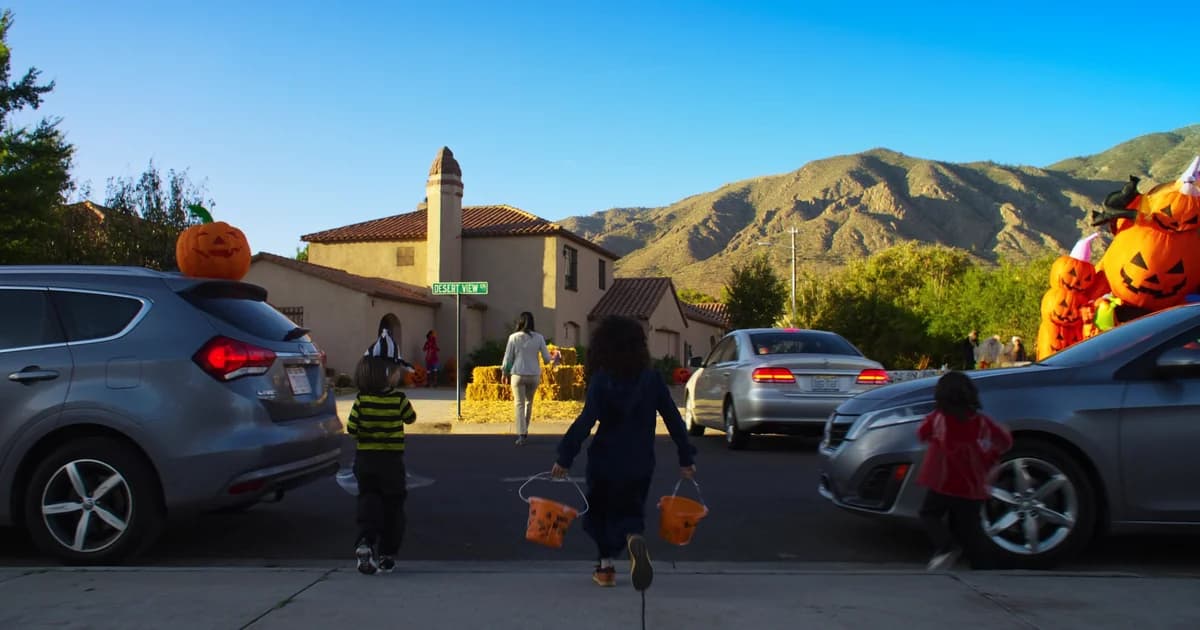
Halloween in El Paso puts more children on foot in the street, at dusk, than any other evening of the year. Neighborhoods off Montana Avenue and around Kern Place, the streets in the Lower Valley, the older parts of the northeast, Ysleta and Socorro, and the newer subdivisions in Horizon City all fill up with families walking block to block between about six and nine in the evening. Traffic keeps moving through those same streets the entire time.
Why Halloween Is Uniquely Dangerous for Young Pedestrians
Halloween is consistently among the most dangerous evenings of the year for child pedestrians, and the reasons are structural rather than anyone's carelessness.
Children cross where there is no crosswalk. Trick-or-treating is a zigzag. The natural path is diagonal, mid-block, and back and forth across the street, which is the opposite of how the road is designed to be crossed.
Parked cars create blind spots. On Halloween the curbs are lined with vehicles that are not usually there. A child stepping out from between two parked SUVs is invisible until they are already in the lane.
Costumes work against visibility. Dark fabric, capes, and full masks make a child harder to see and make it harder for the child to see and hear. Masks narrow peripheral vision at exactly the moment when peripheral vision matters most.
Excitement overrides caution. A six year old who knows the rule about looking both ways will still run toward a house with a good display. That is not a failure of parenting. It is how children that age are built.
The light is at its worst. Dusk is the hardest lighting condition for a driver's eyes. Headlights are not yet fully effective, and contrast is low.
Drivers are distracted by the scene itself. Drivers slow, watch the sidewalks, look for their own kids, and take their eyes off the road to do it.
Adult parties start while children are still out. The two halves of Halloween overlap by an hour or more.
What Texas Law Requires of Drivers Around Children
The rules that matter here are specific, and most drivers do not know the strongest one.
Due care and proper precaution around children. The Texas Transportation Code requires an operator to exercise due care to avoid colliding with a pedestrian, to give warning by sounding the horn when necessary, and to exercise proper precaution upon observing a child or an obviously confused or incapacitated person on a roadway. That is an affirmative, heightened obligation. A driver who sees children on a residential street is not permitted to simply proceed at the posted speed and rely on the children to stay out of the way.
Speed must match conditions. Texas requires drivers to control their speed as necessary to avoid a collision and to reduce speed when a special hazard exists with respect to pedestrians or road conditions. A residential street full of trick-or-treaters is a textbook special hazard. Twenty-five miles per hour can be too fast.
Crosswalk right of way. Drivers must yield to a pedestrian lawfully in a crosswalk on the driver's half of the roadway, and to a pedestrian approaching closely from the other half.
Outside a crosswalk, the duty does not disappear. Texas requires pedestrians crossing outside a crosswalk to yield to vehicles, and insurers lean on that rule hard after a mid-block crash. It does not eliminate the driver's separate duty of due care, and it does not apply to a young child the way it applies to an adult.
Passing a stopped vehicle. A driver who goes around a car that has stopped, when that car may have stopped for a pedestrian, is taking on the risk of whatever is in front of it.
Where and When These Crashes Happen
The pattern is consistent enough that it is worth knowing.
- Mid-block, between parked cars, is the most common location by a wide margin.
- The first hour after sunset is the highest risk window, when foot traffic peaks and the light is worst.
- Driveways and backing vehicles. A driver reversing out of a driveway on a night with children crossing behind the vehicle is a recurring and preventable scenario.
- Wide residential streets that invite speed, especially collector streets carrying through traffic in older neighborhoods.
- Corners with no sidewalk, which force children into the roadway.
If you want the broader picture of how these cases work in this city, our post on pedestrian accidents in El Paso covers the general framework.
What to Do in the First Hours After a Child Is Hit
If this has already happened, here is the order that matters. Nothing on this list is more important than your child.
- Call 911 and let paramedics evaluate your child. Do this even if your child gets up, even if they say they are fine, and even if the driver offers to take you to the hospital. Children mask pain, and head and abdominal injuries frequently present hours later.
- Do not move a child who may have a head, neck, or back injury unless they are in immediate danger where they are.
- Ask that police document the conditions. The lighting, the costume, the speed, the position of parked cars, and any statements the driver makes at the scene. A thorough report is the backbone of the claim.
- Photograph everything if someone can. The street, the streetlights, the vehicle and its position, the resting place of any dropped items, and the sight lines from where the driver would have been.
- Get names and numbers from neighbors. Halloween crashes have more witnesses than almost any other kind. Those witnesses go inside and are gone by morning.
- Ask nearby homes about doorbell cameras that same night. Residential camera footage is frequently overwritten within days, and on a street full of houses there may be several angles. This is often the single most valuable evidence in the case, and it exists only if someone asks in time.
- Keep the costume and the shoes. Do not wash them. Reflectivity, tearing, and impact marks can all matter later.
- Do not give a statement to the driver's insurer, and do not accept an early offer. The first call frequently comes within a day.
- Start a simple record. Symptoms, appointments, missed school, sleep, behavior changes, and what your child says about pain. Two months from now nobody will remember the details, and this record is what shows how the injury actually affected your child.
How Texas Treats a Child's Own Conduct
Almost every parent in this situation asks some version of the same question, usually quietly: was it my fault, or was it his, for running out.
Texas law answers that more gently than parents expect.
Children are not held to an adult standard. A child's conduct is measured against what an ordinarily prudent child of the same age, intelligence, capacity, and experience would have done under similar circumstances. A seven year old is compared to a seven year old.
Very young children cannot be negligent at all. Texas courts have long held that a child below a certain young age is legally incapable of contributory negligence.
The parent's supervision is a separate question. Insurers sometimes suggest that a parent was not watching closely enough. That argument runs into real limits under Texas law and should not be accepted at face value.
Comparative fault still applies to the adults involved. Texas uses modified comparative fault with a 51 percent bar, and how comparative fault works in Texas will shape any negotiation. It is a reason to have someone experienced doing the negotiating.
If the driver left the scene, that changes the practical path but not your family's rights. Our post on hit and run accidents in El Paso explains how those claims proceed, including when your own coverage steps in.
The Claim Itself: Coverage, Court Approval, and Deadlines
More than one policy may apply. The driver's liability coverage is the first place a claim goes. Your own household auto policy may also matter: personal injury protection coverage often applies to a family member struck as a pedestrian regardless of fault, and uninsured or underinsured motorist coverage can apply when the driver has too little insurance or fled the scene.
A minor's settlement generally requires court approval. Texas protects children by requiring that a settlement made on a child's behalf be approved by a court, often through a friendly suit, with a guardian ad litem appointed in many cases to independently evaluate whether the terms serve the child. Funds are typically placed in a restricted account or structured for the child's benefit. This process exists to make sure a child's future needs are accounted for, not just this month's medical bills.
Future needs are the heart of a serious child injury case. A brain or orthopedic injury in a growing child can affect schooling, development, and earning capacity for decades. Valuing that properly requires medical and vocational input rather than a quick estimate. Our serious injury practice is built for these cases.
Deadlines are not as generous as they look. A child's own claim is generally tolled until age 18. A parent's separate claim for medical expenses is not treated the same way, and any claim involving a government vehicle or entity carries much shorter notice deadlines, sometimes six months or less.
Talk to Lovett & Murray
If your child was hurt on Halloween night in El Paso, you should not have to manage an insurance company while you are managing your child's recovery. Our team can take that part off your hands, starting with the video and witness evidence that disappears first.
Lovett & Murray has represented El Paso families for more than 30 years. Consultations are free and there is no obligation. We work on a contingency fee, which means you pay nothing unless we win your case. Our team is bilingual in English and Spanish, so every member of your family can understand what is happening.
Contact us today or call 915-757-9999. If there are doorbell cameras on the street where it happened, please call us this week rather than next month.
See our articles more often on Google.