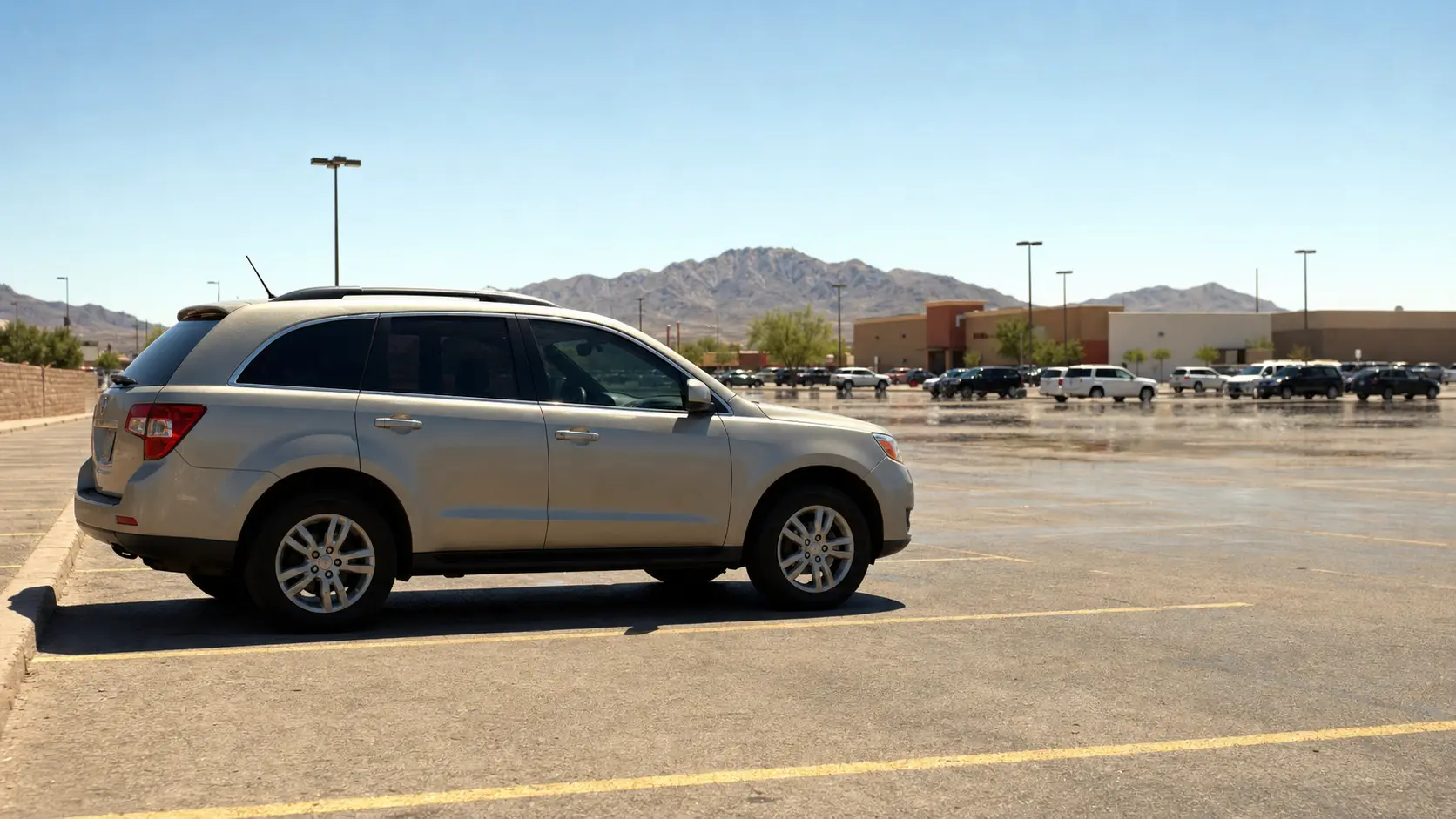
El Paso summer afternoons hit 100 degrees on the cool days. A locked car in a Walmart parking lot reaches 140 degrees in 30 minutes. A child the parent meant to drop off at daycare but did not. A daycare van the staff forgot to check after a field trip. A few minutes longer than the parent realized. These tragedies are not uncommon. They appear in El Paso every summer, sometimes more than once.
If a hot car death has touched your family, the weight of the moment cannot be measured. The legal options that follow are limited but real, and the people responsible should be held accountable. Texas law provides paths to recovery that often extend beyond what families initially understand.
How Quickly El Paso Heat Kills
Children die in hot cars faster than most adults understand. The physics are unforgiving.
Interior heat accumulation. Even with outside air at 90 degrees, a closed car interior reaches 125 degrees within 15 minutes. At 100 degrees outside, common in El Paso from June through August, interiors exceed 140 degrees within 30 minutes. Direct sunlight on dark interiors pushes the numbers higher still.
Children's vulnerability. Children's bodies heat up three to five times faster than adults due to higher surface-to-mass ratio and less developed sweating capacity. A child can move from normal body temperature to fatal hyperthermia in less than an hour.
The 104-degree threshold. Heatstroke begins when core body temperature reaches 104 degrees. Organ damage starts almost immediately. Brain damage and death can follow within minutes of the threshold being crossed.
Cracked windows do not help. The temperature inside a vehicle with windows cracked one or two inches is essentially identical to one with all windows closed.
No shade rule is safe. A car parked under a tree or shade structure still heats far beyond safe levels in El Paso summer conditions.
National Highway Traffic Safety Administration data documents hot car deaths in three rough categories: children forgotten by caregivers, children who gained access to unlocked vehicles, and children intentionally left in vehicles. All three categories appear in El Paso cases.
Texas Criminal Law on Children in Hot Cars
Texas Penal Code Section 22.10 makes it a Class C misdemeanor to leave a child younger than 7 years old in a motor vehicle for more than five minutes when the child is not attended by someone 14 or older. The criminal penalty is up to a $500 fine, but the charge can escalate dramatically when the child is injured or killed.
When a child dies or is seriously injured, additional charges become available:
- Injury to a child under Texas Penal Code Section 22.04, ranging from state jail felony to first-degree felony depending on injury severity and intent
- Manslaughter under Section 19.04 when reckless conduct caused death
- Criminally negligent homicide under Section 19.05 when criminal negligence caused death
- Murder in some intentional cases
Criminal cases are prosecuted by the state. Civil cases are pursued by the victim's family and proceed on a lower burden of proof. A defendant can be acquitted of criminal charges and still face civil liability.
For broader DWI and criminal-civil overlap, our coverage of Texas DWI laws and penalties explains the parallel framework.
Civil Liability for Hot Car Tragedies
Several categories of defendants can face civil liability in hot car cases.
Daycares and child care facilities. Cases include children forgotten in vans after pickup or field trips, children left in personal vehicles by staff, and failure to follow head-count procedures. Most states require daycare facilities to maintain specific protocols for vehicle transport and arrival verification.
Schools and school districts. Public school cases are limited by the Texas Tort Claims Act. Private schools face standard premises liability and negligence rules. Both can face liability for inadequate procedures, untrained staff, or failure to respond when a child does not arrive at expected destinations.
Summer camps and youth programs. Similar to daycares in legal exposure. Many require waivers, but waivers do not eliminate liability for gross negligence or safety violations.
Rideshare drivers. Drivers transporting children for parents under their accounts can face liability if children are left in the vehicle.
Vehicle manufacturers. Some hot car cases support product liability claims when vehicles lacked rear-seat occupant detection systems available in newer models, or when door-locking systems failed to alert the operator.
Parents. In some cases, parents face both criminal charges and civil exposure, particularly in cases involving older children or where intent rather than forgetting played a role. Family dynamics make these cases legally and emotionally complex.
Premises owners. Property owners who knew of a hot car situation and failed to respond can face premises liability in some circumstances.
What to Do If You See a Hot Car Emergency
Texas Civil Practice and Remedies Code Section 78.001 provides civil immunity for rescuers who:
- Have a reasonable belief of imminent harm to a child or vulnerable individual
- Determine the vehicle is locked or there is no other reasonable way to remove the person
- Make a reasonable effort to find the vehicle owner before entering
- Call 911 before or as soon as practicable after entering
- Use no more force than reasonably necessary
If you encounter a child or pet visibly in distress in a locked vehicle in El Paso:
- Call 911 immediately. Provide the location, vehicle description, and license plate.
- Look for the owner. Brief checks of nearby stores or businesses can locate the owner faster than breaking a window.
- Document conditions. Photograph the vehicle, the time, and visible conditions of the child or pet.
- Take action if needed. If the child or pet is clearly in distress and the owner cannot be located quickly, breaking a window is protected under Texas law when the statutory conditions are met.
- Stay with the child until emergency responders arrive.
What Happens After a Tragedy
Families facing the loss of a child to vehicular heatstroke need both immediate support and longer-term legal guidance. The legal questions that arise often include:
The criminal investigation. Police, child protective services, and prosecutors all become involved. Family members may face questioning while in deep grief.
Media attention. El Paso media regularly covers hot car deaths. Family members should consult an attorney before giving any interviews.
Civil rights. The right to pursue civil claims against daycares, schools, employers, or other responsible parties exists regardless of the criminal proceedings.
Memorial decisions. Funeral arrangements, ongoing communication with other family members, and the question of how to address the family's experience publicly.
A compassionate attorney can shoulder the legal weight while the family focuses on the grief that comes first.
Damages Available in a Texas Hot Car Case
In a fatal case, surviving family members can pursue:
- Medical and funeral expenses
- Lost financial support and household services
- Mental anguish for surviving parents and siblings
- Loss of companionship and society
- Punitive damages in cases of gross negligence
The Texas Wrongful Death Act gives standing to surviving spouses, children, and parents. Settlements and verdicts in daycare and school hot car cases regularly exceed $1 million, and seven-figure recoveries are common when institutional negligence is clear.
For the broader framework, see our coverage of wrongful death claims in Texas.
Lovett & Murray Stands With Families After the Worst Days
There is no preparing for the loss of a child. There is also no fair compensation. What civil law can provide is accountability, financial security for what comes next, and the public record of what went wrong so that the next family does not face the same loss.
Lovett & Murray has spent more than 30 years representing El Paso families through the hardest legal cases imaginable. We handle hot car cases, daycare negligence, school district claims, wrongful death cases, and premises liability matters. We work with grief specialists, forensic medical experts, and child care industry consultants to build cases that produce both compensation and meaningful accountability.
We work on a contingency fee. You pay nothing unless we recover compensation for you.
Contact Lovett & Murray today for a free, confidential consultation. Call 915-757-9999 or reach out online. Our bilingual team is ready to support your family through what comes next.
See our articles more often on Google.