By Friday afternoon of Labor Day weekend, Interstate 10 through central El Paso is already stacked up past the Spaghetti Bowl. Families are packing for Ruidoso and Cloudcroft. Soldiers at Fort Bliss have a four day pass. The patios downtown in the Union Plaza district and the bars near the University of Texas at El Paso fill early on Friday and do not empty until closing on Sunday night. It is the last long weekend of summer, and El Paso treats it that way.
That is exactly what makes it one of the most dangerous weekends of the year to be on the road here. More vehicles, more hours of drinking, more out of town drivers who have never navigated the Loop 375 interchanges, and a holiday Monday that stretches the pattern an extra day. The Texas Department of Transportation treats the Labor Day period as a heightened impaired driving enforcement window statewide, and both the El Paso Police Department and the El Paso County Sheriff's Office add patrols.
If a drunk driver hits you this weekend, what happens in the next few days shapes your entire claim. Below is what holiday enforcement in Texas actually looks like, what to do in the first 48 hours, why the criminal case against the driver is not your case, when a bar can be held responsible under Texas dram shop law, and what your options are if the driver carried little or no insurance.
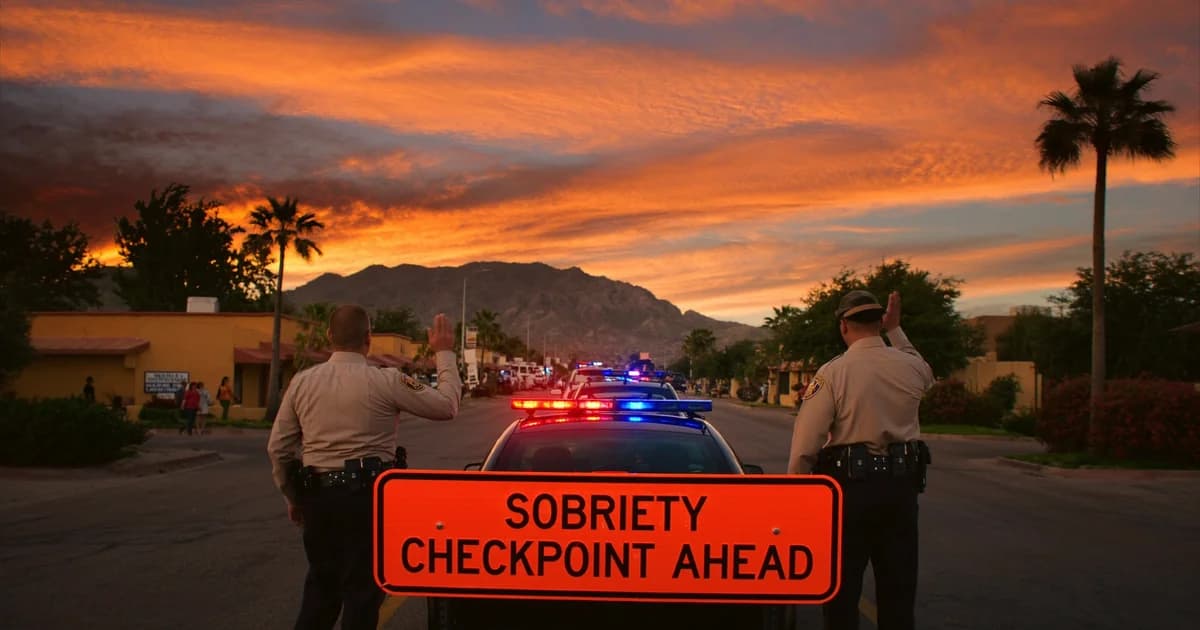
Texas Does Not Use Sobriety Checkpoints, So What Is Actually Happening
Many El Paso drivers assume the holiday enforcement push means checkpoints. It does not. Texas is one of a minority of states that does not authorize DWI checkpoints, and Texas courts have held that suspicionless roadblocks are not permitted absent legislative authorization the Legislature has never passed. If someone tells you they were stopped at a Labor Day checkpoint here, they were almost certainly stopped for a specific observed reason.
What El Paso does use matters to your case:
Saturation patrol. Extra officers work corridors with a history of impaired driving crashes, especially late night arterials and the streets leading out of entertainment districts. More officers means more stops for weaving, speeding, and equipment violations, which is how most impaired drivers are caught.
No refusal initiatives. During designated holiday periods, prosecutors and on call judges are available around the clock so officers can obtain a warrant for a blood draw when a driver refuses a breath test. That blood result becomes hard evidence in your civil claim later.
More crash investigation resources. Serious holiday crashes are likelier to draw a full reconstruction response, which produces measurements, scene photographs, and vehicle data downloads that an ordinary fender bender never generates.
So a Labor Day crash often creates a much stronger evidence record than a crash on a random Tuesday. That record still has to be requested and preserved. It does not come to you on its own.
Where Impaired Driving Crashes Cluster in El Paso
These crashes follow the roads people take home from where they were drinking, and in El Paso the pattern is consistent: downtown and Union Plaza feeding onto Interstate 10 and up Mesa Street after closing time, the blocks near the University of Texas at El Paso where late night foot traffic mixes with vehicles, the central Interstate 10 corridor where an impaired driver merging at speed does enormous damage, Loop 375 and the Border Highway where higher speeds and dark stretches turn a drifting vehicle into a rollover, and the long straight arterials of Montana Avenue, Dyer Street, and Alameda Avenue where left turn and wrong way crashes concentrate.
Wrong way crashes deserve their own mention. They are rare, they are almost always tied to impairment, and they are disproportionately deadly because both vehicles are closing at highway speed. Late night wrong way entries onto Interstate 10 and Loop 375 are a specific El Paso risk on long holiday weekends.
What to Do in the First 48 Hours
-
Call 911 and say you believe the other driver is impaired. That one sentence changes how the responding officer works the scene. It prompts field sobriety testing and, where warranted, a breath or blood test. Without it you may end up with a report that never mentions alcohol.
-
Do not confront the other driver. Stay in your vehicle if it is safe, or move well away from traffic.
-
See a doctor the same day. Adrenaline hides injuries for hours, and neck, back, and head injuries often do not announce themselves until morning. A same day record ties your injury to the crash. Our guide to medical treatment after a car accident covers what that should look like.
-
Photograph more than seems necessary. Vehicle positions, skid marks or their absence, the other vehicle's interior if visible from outside, the nearby bar or parking lot, and the time stamp on your own phone.
-
Collect witness names and numbers before they leave. Officers do not always take every witness, and a bystander who watched the other driver stumble to their car matters to both cases.
-
Write down where the other driver said they had been. A bar name and a time can open a dram shop claim that would otherwise never be discovered.
-
Give no recorded statement. The other driver's adjuster will call quickly and sound helpful. You are not required to talk to them. Read what recorded statements do to your claim first.
The Criminal DWI Case Is Not Your Case
Two separate processes begin when a drunk driver hurts you. The criminal one is the State of Texas charging the driver, and a conviction brings fines, license consequences, probation, or jail. None of that money comes to you. A judge can order restitution, but restitution is usually limited and rarely covers a serious injury.
The civil case is yours. It is the only one that pays your medical bills, lost wages, future care, and pain. You file it, you control it, and you can settle it without anyone's permission.
Do not wait for the criminal case to finish. Criminal cases in El Paso County can take a long time, and your two year civil deadline runs the entire time. Waiting is one of the most expensive mistakes injured people make.
A conviction helps, and an acquittal does not sink you. Criminal court requires proof beyond a reasonable doubt. Your civil case requires only a preponderance of the evidence, meaning more likely than not. Drivers who are never convicted are frequently still found liable.
The criminal file is evidence. The offense report, blood test result, dashcam and bodycam footage, and the officer's testimony can all support your claim. Some of it must be requested formally and some has retention limits. For background, see our overview of Texas driving while intoxicated laws and penalties.
Texas Dram Shop Law: When a Bar Shares Responsibility
Under the Texas Dram Shop Act, a bar, restaurant, or other licensed alcohol provider can be liable when two things are true. At the time of service, the person served was already obviously intoxicated to the extent that they presented a clear danger to themselves and others, and that intoxication was a proximate cause of the harm.
"Obviously intoxicated" is the whole fight. A high blood alcohol reading taken hours later is not enough by itself. You have to show what the server could see at the moment of service, which is proven with point of sale records and tabs showing how many drinks were sold and how fast, interior and parking lot security video, server and bartender testimony, other patrons who saw slurring or stumbling, and the driver's own statements about the night.
Nearly all of that evidence has a short life. Bar security video in El Paso is commonly overwritten on a loop measured in days or a few weeks. Point of sale data gets archived. Servers change jobs. That is the strongest argument for calling a lawyer early, because a preservation letter sent in week one can save evidence that is simply gone by week six.
Texas social host liability is much narrower. A private host who serves adults is generally not liable, with the main exception being an adult who provides alcohol to a minor under 18. The backyard barbecue usually creates no claim. The bar that kept serving an obviously intoxicated customer often does.
When the Drunk Driver Has No Insurance or Not Enough
Texas is an at fault state and requires minimum liability coverage, but minimum coverage is genuinely minimal. A serious injury can exhaust a minimum policy before you leave the hospital. When that happens, look at:
- Your own uninsured and underinsured motorist coverage. Texas insurers must offer it, and you have it unless you rejected it in writing. It pays when the at fault driver has no insurance, flees, or carries less than your damages require. See uninsured motorist claims, and be aware that your own insurer becomes an adversary in this process, which surprises people.
- A dram shop claim. A commercial alcohol provider carries its own liability policy, often far larger than a personal auto policy.
- An employer. If the driver was on the clock, in a company vehicle, or leaving a work function, a commercial policy may apply.
- Your health coverage. It does not make you whole, but it keeps treatment moving while the liability claim develops.
Finding every available policy is deliberate work. It does not happen by filing a claim and waiting.
Talk to Lovett & Murray Before You Talk to an Adjuster
A Labor Day weekend crash in El Paso is rarely a simple claim. There may be a criminal case running alongside yours, a bar with its own carrier and its own lawyers, an uninsured motorist claim against your own insurer, and evidence sitting on a security recorder that will be erased before the month is out.
For more than 30 years, Lovett & Murray has represented injured people across El Paso County, from Interstate 10 collisions to wrongful death claims after impaired driving crashes. We offer a free consultation. We work on contingency, so you pay no attorney fee unless we win your case. Our team is bilingual in English and Spanish, so every family in El Paso can talk with us in the language they are most comfortable in. And we are here in El Paso, not in an out of state call center.
If a drunk driver hurt you or someone in your family this Labor Day weekend, contact us for a free case evaluation or call 915-757-9999. The sooner we start, the more of the evidence is still there to find.
See our articles more often on Google.