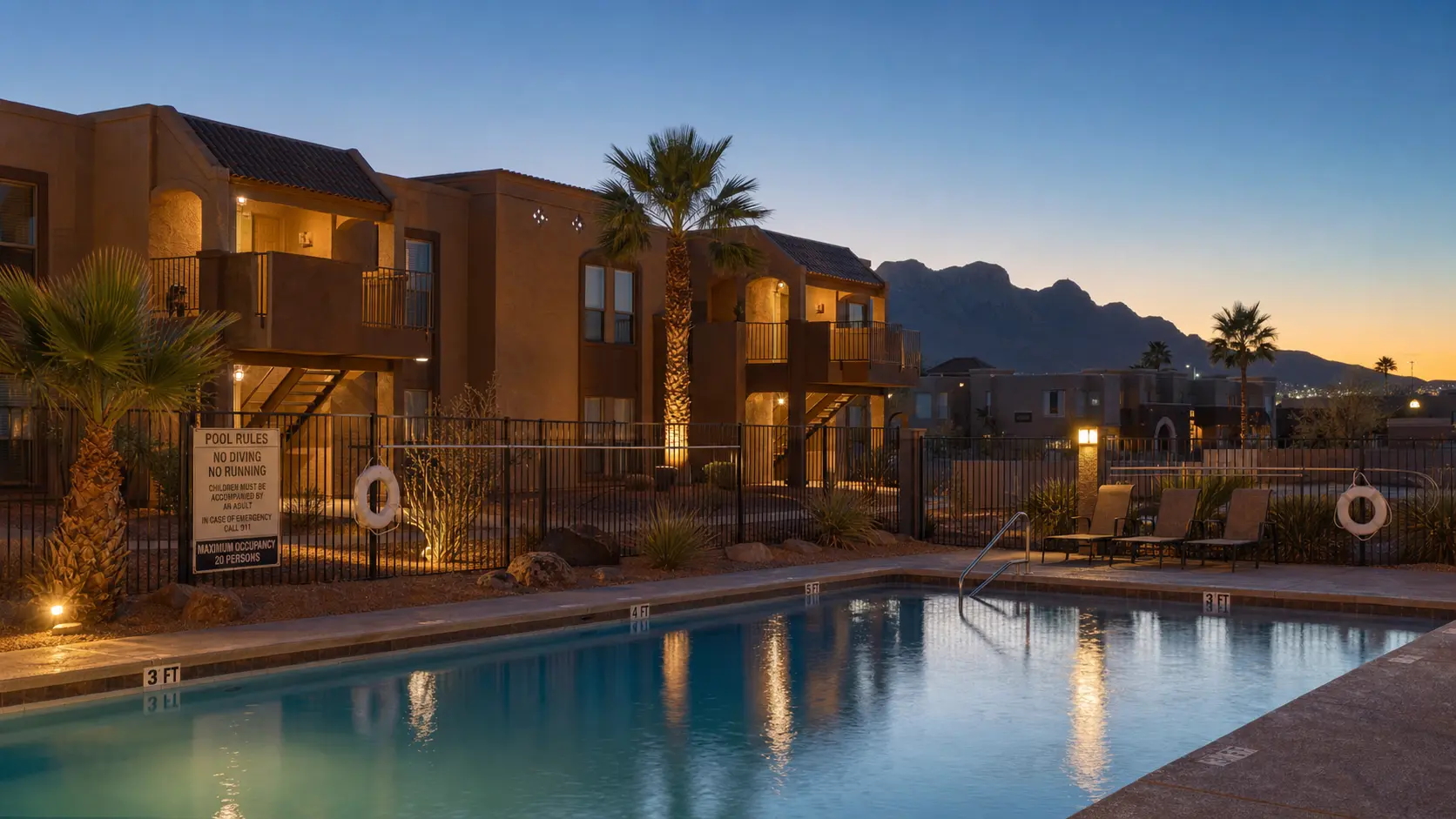
El verano en El Paso significa piscinas de apartamentos que abren para la temporada, piscinas de hoteles llenas de viajeros y fiestas en el patio trasero que se extienden hasta la noche. La mayoría de las veces esas escenas pasan sin incidentes. Cuando no es así, las consecuencias son inmediatas e irreversibles. El ahogamiento es la principal causa de muerte no intencional para niños de 1 a 4 años a nivel nacional, y los meses de El Paso de tres dígitos de calor empujan a las familias hacia el agua para aliviarse durante todo el verano.
Si un ahogamiento ha tocado a su familia, está enfrentando el peor día de su vida con las decisiones legales más importantes aún por delante. La ley de responsabilidad del propietario de Texas le da a las familias opciones que los dueños rara vez ofrecen.
Dónde Ocurren los Ahogamientos en El Paso
Los patrones se repiten en toda la región de El Paso cada verano.
Piscinas de complejos de apartamentos. Las horas de operación a menudo van desde el amanecer hasta la noche, sin un salvavidas en el sitio. Muchos complejos usan puertas con cierre automático que han fallado mecánicamente o han sido sostenidas abiertas por los residentes. La altura inadecuada de las cercas y los espacios debajo de las cercas crean puntos de entrada para los niños pequeños.
Piscinas de hoteles y moteles. Los viajeros en la I-10 paran a pasar la noche, y los niños desconocidos exploran nuevos entornos. Las piscinas interiores y exteriores de los hoteles cada una conllevan riesgos distintos, y la escasez crónica de personal mantiene a los salvavidas fuera del borde.
Piscinas públicas y municipales. El Paso opera piscinas municipales que atraen a miles de visitantes. Las piscinas propiedad de la ciudad introducen los plazos de notificación de la Ley de Reclamos por Agravios de Texas que las familias a menudo pasan por alto.
Piscinas residenciales en el patio. Los propietarios enfrentan responsabilidad cuando las cercas, cubiertas, alarmas o puertas con cierre automático fallan o están ausentes. Las parrilladas festivas donde el anfitrión sirve alcohol y la supervisión disminuye son un patrón de caso recurrente.
Piscinas de gimnasios y centros recreativos. Los miembros y sus invitados asumen que la instalación está adecuadamente supervisada. Cuando los salvavidas están ausentes o sin capacitación, la responsabilidad puede extenderse al operador corporativo.
Piscinas de asociaciones de propietarios y condominios. Las asociaciones de propietarios y las juntas de condominios que controlan las piscinas de áreas comunes enfrentan los mismos deberes del propietario que cualquier operador comercial.
Conceptos Básicos de la Responsabilidad del Propietario en Texas
El deber que un propietario debe depende del estado legal de la persona lesionada en el momento del incidente.
Invitado. Una persona en la propiedad por el beneficio del dueño, como un inquilino de apartamento, huésped de hotel o miembro de gimnasio. El dueño debe el deber más alto: inspeccionar los peligros, repararlos y advertir sobre aquellos que no se pueden reparar de inmediato.
Permisionario. Un invitado social o alguien en la propiedad con permiso pero no para el beneficio comercial del dueño. El dueño debe advertir sobre los peligros conocidos pero no está obligado a inspeccionar nuevos.
Intruso. Una persona en la propiedad sin permiso. El dueño debe solo el deber de no dañarlos intencionalmente, con una excepción importante. Los niños atraídos a la propiedad por una característica atractiva, como una piscina, están protegidos por la doctrina de atracción peligrosa. Los dueños deben tomar medidas razonables para prevenir la entrada previsible de niños a características peligrosas.
La mayoría de los casos de piscinas de apartamentos, hoteles y piscinas públicas proceden bajo una teoría de invitado, que proporciona las protecciones más amplias.
Características de Seguridad Requeridas en Piscinas en El Paso
La ley estatal de Texas y el código de construcción de la Ciudad de El Paso imponen requisitos específicos de seguridad a los dueños y operadores de piscinas. Las fallas para cumplir a menudo establecen negligencia per se en un caso civil.
- Cercas de al menos cuatro pies de altura sin espacios que permitan la entrada de niños
- Puertas con cierre automático que cierran y se bloquean automáticamente
- Cubiertas de piscina o alarmas para algunos entornos residenciales
- Marcas de profundidad a intervalos claramente visibles
- Equipo salvavidas aprobado que incluye una pértiga de alcance o gancho de pastor y un anillo de flotación
- Señales de no clavados donde el agua poco profunda haría peligrosos los clavados
- Salvavidas durante las horas publicadas en las instalaciones que están obligadas a tenerlos
- Cumplimiento de cubiertas de drenaje bajo la Ley federal Virginia Graeme Baker de Seguridad de Piscinas y Spas, que aborda el riesgo de atrapamiento
Documentar cuáles de estos faltaban o no funcionaban en el momento del incidente es uno de los primeros pasos más importantes en cualquier caso.
Fallas Comunes que Conducen a Reclamos por Ahogamiento
A lo largo de los casos que evalúa nuestro equipo, las mismas fallas aparecen una y otra vez.
Puertas rotas o sostenidas abiertas. Los mecanismos de cierre automático fallan, los residentes sostienen las puertas abiertas con ladrillos o sillas, y la gerencia lo sabe pero no hace nada.
Cercas insuficientes. Piscinas cercadas solo en tres lados, espacios debajo de la cerca de eslabones de cadena o cercas demasiado bajas para mantener fuera a los niños pequeños.
Sin supervisión. Los salvavidas anunciados en los sitios web de las instalaciones están ausentes, o los supervisores abandonan el borde por períodos prolongados.
Equipo de seguridad faltante. Pértigas de alcance y anillos de flotación requeridos robados o nunca instalados.
Atrapamiento por drenaje. Las piscinas más antiguas sin cubiertas de drenaje que cumplan pueden atrapar a un nadador bajo el agua. Estos casos a menudo involucran lesiones graves incluso cuando no son fatales.
Lesiones por clavados. Áreas poco profundas sin marcar, señales de no clavar faltantes o piscinas diseñadas sin la gradación de profundidad adecuada.
Alcohol servido por anfitriones u operadores. Un operador de instalaciones que sirve alcohol y luego ignora a los nadadores intoxicados puede enfrentar responsabilidad adicional.
Para peligros más amplios del propietario más allá de las piscinas, nuestra descripción general de responsabilidad por resbalones y caídas en El Paso cubre el mismo marco legal aplicado a otros entornos.
Piscinas de Propiedad del Gobierno y la Ley de Reclamos por Agravios de Texas
Si el ahogamiento ocurrió en una piscina municipal, el caso procede contra una entidad gubernamental, y se aplica la Ley de Reclamos por Agravios de Texas. Tres cosas son importantes.
Plazos de notificación. La Ciudad de El Paso requiere notificación escrita de ciertos reclamos dentro de tan solo 90 días. Algunas entidades gubernamentales de Texas requieren notificación dentro de seis meses. Pasar este plazo termina el caso antes de que comience.
Topes de responsabilidad. La Ley pone topes a los daños recuperables contra los demandados gubernamentales. Los topes son más altos en casos fatales pero aún limitan la recuperación.
Teorías limitadas de responsabilidad. Los defectos del propietario y ciertas teorías de operaciones están disponibles. Otros reclamos de negligencia pueden estar prohibidos por inmunidad.
Un abogado con experiencia en la práctica de la Ley de Reclamos por Agravios de Texas debe ser consultado dentro de los días posteriores a cualquier ahogamiento en una piscina pública.
Qué Hacer Después de un Ahogamiento o Casi Ahogamiento en Piscina
Múevase rápido. La evidencia en la piscina cambia en cuestión de horas.
- Llame al 911 de inmediato y comience la RCP si la víctima no responde. Continúe hasta que lleguen los paramédicos.
- Tome fotografías de cada característica de seguridad presente o ausente. Altura de la cerca, función de la puerta, equipo salvavidas, marcas de profundidad, presencia de supervisión, señalización. Las fotos del borde de la piscina y cualquier obstrucción también importan.
- Documente la hora y las condiciones. Número de personas presentes, clima, claridad del agua, presencia de salvavidas, hora del día.
- Identifique a los testigos de inmediato. Nombres y números de teléfono. Los desconocidos se van rápido después de una tragedia.
- Preserve el video. La mayoría de las piscinas de apartamentos, hoteles y públicas tienen cámaras de seguridad. Las grabaciones a menudo se sobrescriben en días. Una carta escrita de preservación de un abogado puede detener la sobreescritura.
- Reciba atención médica incluso por casi ahogamiento. Los efectos secundarios del ahogamiento pueden desarrollarse horas después. Las lesiones cerebrales por hipoxia a menudo requieren un seguimiento extenso.
- No dé una declaración grabada a ninguna compañía de seguros. Las aseguradoras de responsabilidad de los propietarios llaman rápidamente y enmarcan a la familia como responsable. Llame a un abogado primero. Lovett & Murray ofrece consultas gratuitas al 915-757-9999.
Compensación en un Caso de Ahogamiento en Piscina en Texas
La ley de Texas permite la recuperación de la gama completa de daños.
Para un ahogamiento fatal bajo el estatuto de muerte injusta de Texas:
- Gastos funerarios y de entierro
- Apoyo financiero perdido y servicios del hogar
- Angustia mental para el cónyuge, los padres y los hijos sobrevivientes
- Pérdida de compañía y sociedad
- Daños punitivos en casos de negligencia grave
Para un ahogamiento no fatal con lesión cerebral u otro daño grave:
- Gastos médicos pasados y futuros
- Costos de cuidado a largo plazo
- Capacidad de ingresos perdida
- Dolor y sufrimiento
- Angustia mental
- Pérdida de consorcio para los cónyuges
Las lesiones cerebrales por hipoxia a menudo requieren cuidado de por vida que cuesta varios millones de dólares. Los valores de los acuerdos y veredictos reflejan esas necesidades a largo plazo.
¿Lesionado por un Ahogamiento en Piscina? Lovett & Murray Está Aquí para Ayudar
Los casos de ahogamiento en piscina son sensibles al tiempo y a la evidencia. Los dueños de propiedades y sus aseguradoras se mueven rápidamente para limitar la responsabilidad. Los complejos de apartamentos reparan las cercas y reemplazan los cierres de las puertas en cuestión de días. Las cadenas de hoteles emiten declaraciones a través de un abogado corporativo antes de que las familias incluso hayan salido del hospital.
Lovett & Murray ha pasado más de 30 años representando a familias en todo El Paso, el oeste de Texas y el sur de Nuevo México en los casos más difíciles imaginables. Manejamos reclamos de responsabilidad del propietario, casos de muerte injusta y lesiones del propietario en complejos de apartamentos, hoteles, instalaciones públicas y hogares privados. Preservamos la evidencia, construimos el caso rápidamente y perseguimos a cada parte responsable.
Trabajamos con honorarios contingentes. Usted no paga nada a menos que recuperemos compensación para usted.
Contacte a Lovett & Murray hoy para una consulta gratuita. Llame al 915-757-9999 o comuníquese en línea. Nuestro equipo bilingüe está listo para ayudar a su familia a través de lo que viene.
Vea nuestros artículos con más frecuencia en Google.