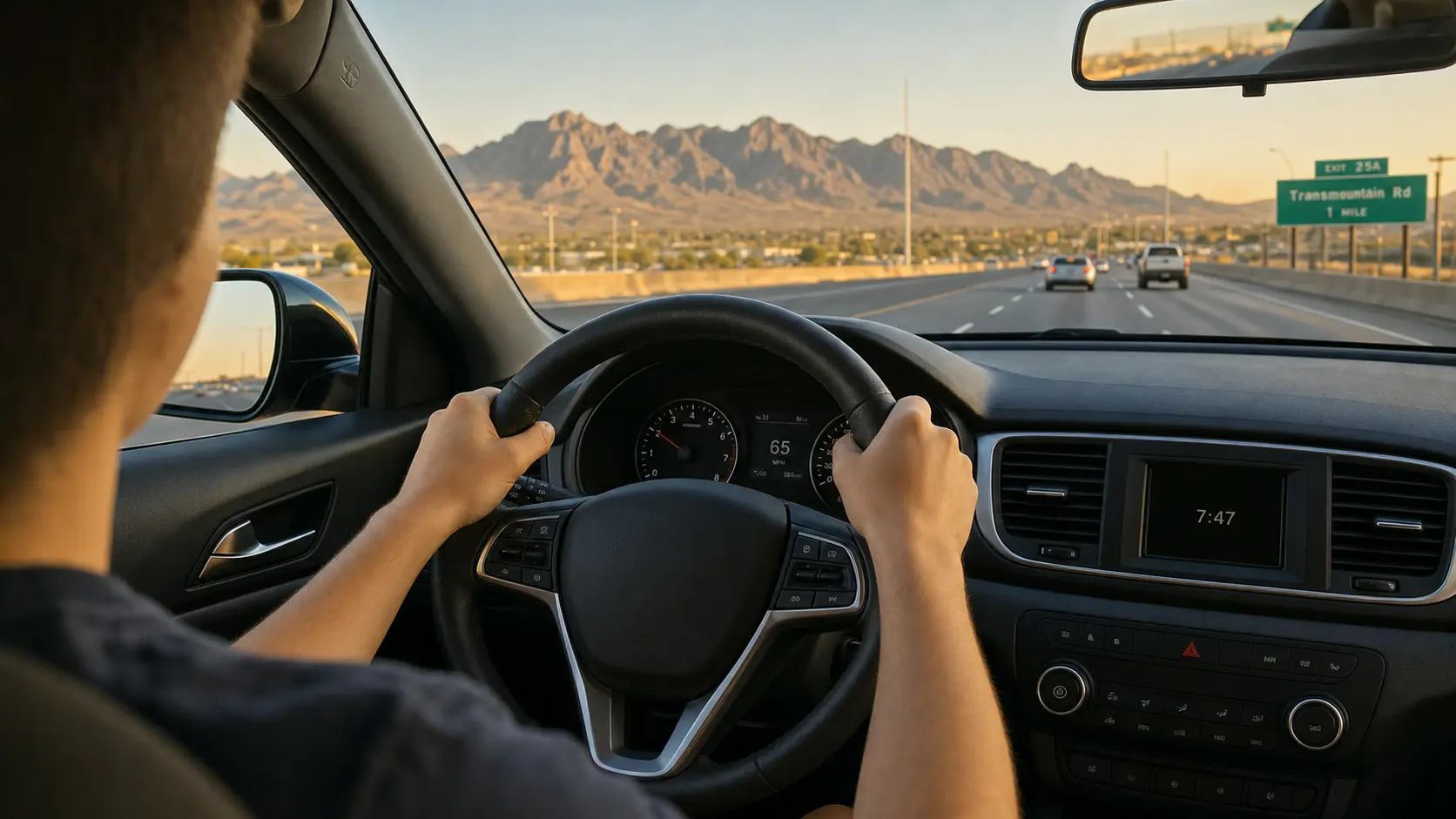
Las vacaciones de verano en El Paso significan más conductores adolescentes en la carretera, más viajes en grupo a White Sands, más recorridos nocturnos a Whataburger y más tiempo al volante sin un padre en el asiento del pasajero. También significan el tramo más peligroso del calendario para conductores jóvenes. Entre el Día de los Caídos y el Día del Trabajo, los choques fatales que involucran a conductores adolescentes aumentan en todo el país. Los investigadores de seguridad vial llaman a este período los 100 Días Más Mortales.
Si usted es padre o madre de un conductor adolescente en El Paso, el oeste de Texas o el sur de Nuevo México, las próximas semanas merecen toda su atención. Conocer los riesgos, las leyes y qué hacer si ocurre un choque puede cambiar el resultado para su familia.
Por Qué el Verano Es Tan Peligroso para los Conductores Adolescentes de El Paso
Los 100 Días Más Mortales no son un eslogan publicitario. Los datos de la Fundación AAA para la Seguridad en el Tráfico muestran que el número promedio de choques fatales que involucran a conductores de 16 a 17 años aumenta aproximadamente un 30 por ciento durante este período en comparación con el resto del año. Varios factores se combinan en El Paso para elevar aún más esa cifra.
Más conducción, menos supervisión. Las clases terminaron. Los adolescentes conducen a trabajos de verano, a casas de amigos por toda la ciudad, a Cielo Vista Mall y en viajes largos por la US-54 hasta Ruidoso o por la I-10 hasta South Padre Island. Con los padres trabajando, gran parte de esa conducción ocurre sin un adulto en el auto.
Conducción nocturna. La Licencia de Conducir Graduada de Texas restringe la conducción entre la medianoche y las 5 a. m. para los titulares de licencia provisional, pero los horarios de verano se extienden más tarde. La fatiga, la baja visibilidad y el mayor porcentaje de conductores ebrios después del anochecer multiplican el riesgo.
Pasajeros. La investigación de AAA es consistente en este punto. Agregar incluso un pasajero adolescente al auto de un conductor adolescente aumenta significativamente el riesgo de choque. Agregar dos o más lo eleva aún más. Los viajes en grupo al cine, a Hueco Tanks o a White Sands a menudo significan cuatro adolescentes en un solo auto.
Teléfonos. Texas prohíbe por completo el uso de dispositivos de comunicación inalámbrica para conductores menores de 18 años. A pesar de esto, la conducción distraída sigue siendo una de las principales causas de choques de adolescentes en nuestra región. Un breve vistazo a un mensaje de texto a velocidad de carretera cubre la longitud de un campo de fútbol.
Calor extremo y distancias largas. Las temperaturas de verano en El Paso superan regularmente los 100 grados. Las llantas explotan con más frecuencia. Los motores se sobrecalientan. Los conductores inexpertos entran en pánico cuando un vehículo comienza a fallar a 75 mph en la carretera abierta entre El Paso y Las Cruces.
Leyes de Conducción para Adolescentes en Texas Que Todo Padre Debe Conocer
Texas utiliza un sistema de Licencia de Conducir Graduada de tres etapas, diseñado para introducir gradualmente a los adolescentes en los privilegios completos de conducción. Comprender estas reglas le ayuda a establecer expectativas en casa y protege la posición legal de su familia si ocurre un choque.
Etapa 1: Licencia de Aprendiz (15 años). Un adolescente con licencia de aprendiz solo puede conducir cuando es supervisado por un conductor con licencia de 21 años o más en el asiento del pasajero delantero. El adolescente debe tener esta licencia durante al menos seis meses antes de pasar a la siguiente etapa.
Etapa 2: Licencia Provisional (16 a 17 años). Una licencia provisional conlleva restricciones reales:
- Prohibido conducir entre la medianoche y las 5 a. m., excepto por trabajo, escuela o emergencia médica
- No más de un pasajero menor de 21 años que no sea un familiar
- Prohibido el uso de cualquier dispositivo de comunicación inalámbrica, incluso manos libres
- Prohibido conducir mientras se viola cualquier otra disposición del Código de Transporte de Texas
Estas restricciones permanecen vigentes hasta que el adolescente cumple 18 años.
Etapa 3: Licencia Completa (18 años). Las restricciones se levantan, pero las primas del seguro de auto y el riesgo de accidente permanecen elevados durante varios años más.
Texas también prohíbe que los conductores menores de 21 años tengan cualquier cantidad detectable de alcohol en su sistema. Las sanciones comienzan con el primer trago, no con el límite legal del 0.08 por ciento que se aplica a los adultos.
Las Causas Más Comunes de Choques de Conductores Adolescentes en El Paso
Cuando evaluamos casos de choques de adolescentes, los mismos patrones aparecen una y otra vez en toda la región de El Paso:
Exceso de velocidad. Los tramos largos y rectos de la I-10 y la Loop 375 invitan a velocidades excesivas. Los límites publicados de 75 y 80 mph significan que las velocidades reales de viaje frecuentemente superan las 90. Los conductores inexpertos tienen menos capacidad para recuperarse cuando algo sale mal a esas velocidades.
Seguir demasiado cerca. Los conductores adolescentes consistentemente calculan mal la distancia de frenado. Las colisiones traseras en Mesa Street, Montana Avenue y a lo largo del tramo de la I-10 que atraviesa el centro de la ciudad constituyen una gran parte de los reclamos por choques de adolescentes.
No ceder el paso en las intersecciones. Intersecciones peligrosas de El Paso como Montana y Airway, McRae y Vista del Sol, y Mesa y Sunland Park presentan choques repetidos de adolescentes cuando los conductores calculan mal los espacios o no detectan el tráfico que se aproxima. Nuestro análisis detallado de las intersecciones más peligrosas del este de El Paso cubre esto en detalle.
Distracción. Los teléfonos encabezan la lista, pero el problema del segundo pasajero adolescente es igual de grave. La conversación, la música y mostrarse videos entre sí desvían la atención de la carretera.
Conducción bajo los efectos. Incluso con leyes de tolerancia cero, los adolescentes beben y conducen. Las fiestas de verano, las celebraciones de graduación y los viajes fuera de la ciudad aumentan el riesgo. Si su hijo adolescente fue atropellado por un conductor ebrio, nuestra descripción general de los reclamos por accidentes de DWI en Texas explica cómo interactúan los casos civiles y penales.
Qué Hacer Si Su Hijo Adolescente Está en un Accidente
Los momentos posteriores a un choque dan forma a todo el caso. Repase estos pasos con su hijo antes de que los necesite.
- Asegúrese de que todos estén seguros. Salga del tráfico si es posible y llame al 911. No mueva a nadie con una posible lesión de cuello o espalda a menos que haya peligro inmediato.
- Documente la escena. Fotos de cada vehículo, la carretera circundante, las señales de tráfico, las marcas de derrape, los escombros y cualquier lesión visible. Nombres, números de teléfono y placas de cada testigo.
- No admita la culpa. Los adolescentes a menudo se disculpan por los nervios. Un simple "lo siento" puede usarse en su contra más adelante. Limítese a los hechos al hablar con el otro conductor o con la policía.
- Reciba atención médica. Incluso si su hijo se siente bien, la adrenalina del choque oculta las lesiones. Las conmociones cerebrales, los daños en tejidos blandos y las lesiones internas a menudo aparecen horas o días después. Documente cada visita.
- Llame a un abogado antes de dar cualquier declaración grabada. Los ajustadores de seguros llaman rápidamente, a menudo en cuestión de horas, buscando declaraciones que puedan usar para reducir o negar el reclamo. Hable primero con un abogado. Lovett & Murray ofrece consultas gratuitas al 915-757-9999.
Sus Opciones Legales Como Padre
Si otro conductor causó el choque que lesionó a su hijo adolescente, usted tiene los mismos derechos a compensación que cualquier víctima adulta. Puede buscar:
- Gastos médicos, incluida la atención futura por lesiones continuas
- Salarios perdidos por tiempo perdido en programas escolares, pasantías o trabajo de verano
- Daños por dolor y sufrimiento
- Daños materiales al vehículo
- Daños punitivos cuando el otro conductor actuó imprudentemente, como conducir ebrio o participar en carreras callejeras
Si su hijo adolescente conducía y es parcialmente responsable, la regla de culpa comparativa modificada de Texas aún permite la recuperación siempre que su parte de responsabilidad sea del 50 por ciento o menos. Nuestra guía sobre la culpa comparativa en Texas explica cómo los tribunales asignan porcentajes y qué significa eso para su acuerdo.
Si su hijo adolescente causó el choque, su póliza de seguro de auto es la primera línea de defensa. La parte lesionada también puede demandarlo directamente bajo el principio de entrega negligente si puede demostrar que usted permitió que su hijo condujera a pesar de saber que no estaba apto, no estaba capacitado o tenía un historial de comportamiento imprudente.
Cómo Proteger a Su Familia Este Verano
La prevención más efectiva ocurre antes de que su hijo adolescente salga del garaje. Algunos hábitos hacen una diferencia desproporcionada:
- Hable sobre los teléfonos cada vez. Establezca la expectativa de que el teléfono va en la guantera, no en el portavasos
- Limite la conducción nocturna durante los primeros meses de la licencia provisional, especialmente los fines de semana
- Limite los pasajeros solo a familiares durante el primer año de conducción en solitario
- Inspeccione las llantas antes de cualquier viaje largo. El calor de El Paso castiga las llantas con poca presión y desgastadas. Una parada rápida en un taller de llantas en Dyer Street o Mesa vale la pena
- Revise la ruta juntos para cualquier viaje de más de una hora
- Dé el ejemplo. Los adolescentes modelan la conducción que ven en sus padres
¿Lesionado Este Verano? Lovett & Murray Está Aquí para Ayudar
Si un choque ya le ocurrió a su familia, el siguiente paso importa. Los ajustadores de seguros se mueven rápido. La evidencia en la escena desaparece rápidamente. Los testigos siguen adelante. Necesita un abogado experimentado en lesiones personales de El Paso trabajando para su familia desde el principio.
Lovett & Murray ha pasado más de 30 años representando a víctimas de accidentes en todo El Paso, el oeste de Texas y el sur de Nuevo México. Manejamos casos de conductores adolescentes, accidentes de auto y todo tipo de colisión que el verano trae a nuestra región. Conocemos cómo operan las compañías de seguros locales, sabemos cómo investigar los problemas de la Licencia de Conducir Graduada y sabemos cómo construir casos que resistan en el juicio cuando sea necesario.
Trabajamos con honorarios contingentes. Usted no paga nada a menos que recuperemos compensación para usted.
Contacte a Lovett & Murray hoy para una consulta gratuita. Llame al 915-757-9999 o comuníquese en línea. Nuestro equipo bilingüe está listo para ayudarle a proteger a su familia este verano.
Vea nuestros artículos con más frecuencia en Google.