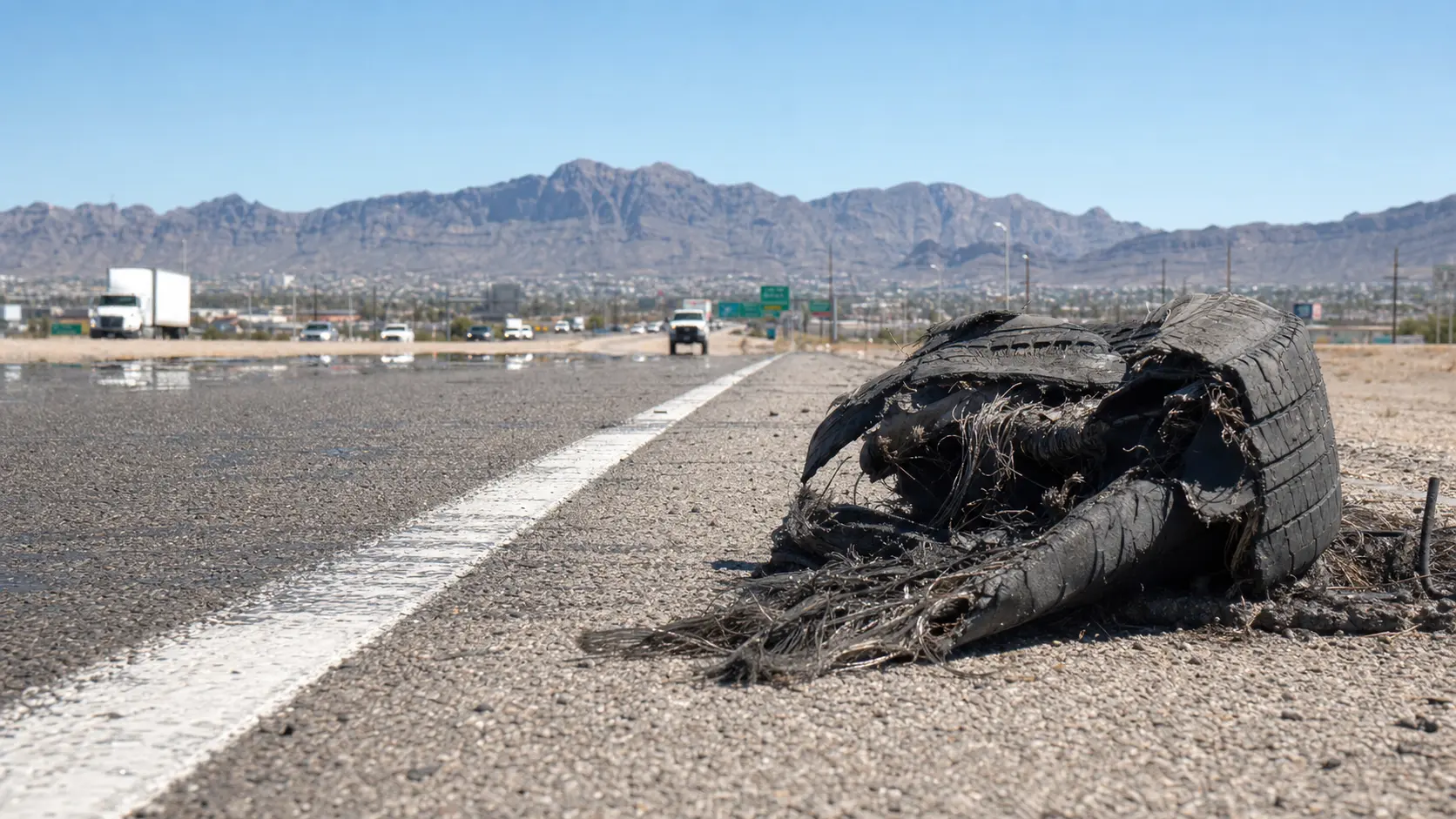
Una llanta reventada a 75 mph en la I-10 al oeste del centro no es una llanta ponchada. Es una pérdida repentina del control, un volante que se resiste y tres segundos más para reaccionar antes de que una barrera de contención u otro vehículo terminen el momento. El pavimento de El Paso alcanza temperaturas superficiales superiores a 150 grados la mayoría de las tardes de verano. Ese calor encuentra cada punto débil en una llanta que los meses más frescos ocultaron.
Si usted o un ser querido ha resultado lesionado en un choque por llanta reventada, las preguntas legales correctas son más grandes que "quién chocó a quién." ¿Quién fabricó la llanta? ¿Quién la instaló? ¿Quién omitió la inspección? La ley de Texas le permite buscar a cada parte responsable, y un abogado experimentado en lesiones personales de El Paso sabe dónde buscar.
Por Qué el Calor del Verano de El Paso Destruye las Llantas
Las llantas están diseñadas para operar dentro de un rango de temperatura y presión. El Paso supera ambos rangos mucho más de lo que la mayoría de los conductores cree.
Temperatura del pavimento. El aire a 100 grados se traduce en temperaturas superficiales del asfalto de 150 a 170 grados. Las llantas que circulan sobre esa superficie absorben el calor y lo combinan con la fricción de la velocidad y la carga.
Presión insuficiente. La presión del aire aumenta con la temperatura. Los conductores que ajustan la presión en una mañana fresca y nunca la vuelven a revisar a menudo circulan varias libras por debajo de la especificación para julio. Las llantas con poca presión se flexionan más, generan más calor interno y fallan más rápido.
Profundidad de la banda de rodadura. La banda desgastada circula más caliente y proporciona menos protección para los cinturones internos. Una llanta que era aceptable en marzo puede ser insegura en junio.
Edad. El caucho se degrada con el tiempo, incluso en una llanta que parece estar bien. La mayoría de los fabricantes recomiendan el reemplazo a los seis años, independientemente de la profundidad de la banda. Muchos vehículos de El Paso aún usan llantas de diez años que nunca fueron reemplazadas porque la banda parecía aceptable.
Velocidad. La I-10, la Loop 375 y la US-54 tienen límites publicados de 75 y 80 mph. Las velocidades reales de viaje frecuentemente superan las 85. Cada 10 mph adicionales multiplican significativamente el estrés en la llanta.
El patrón que produce la mayoría de los choques por reventón es el mismo en caso tras caso. Una llanta desgastada o envejecida, con poca presión, en calor extremo, a velocidad sostenida de carretera, falla en un tramo largo donde el conductor no tenía acotamiento para escapar.
Modos Comunes de Falla de Llantas en el Oeste de Texas
No todos los reventones se ven iguales. Los investigadores clasifican las fallas según el tipo de daño que producen, y cada tipo apunta a una parte responsable diferente.
Separación de la banda de rodadura. La banda se desprende de los cinturones que están debajo. Este es uno de los defectos más comunes en los casos contra fabricantes. El calor, la edad y las fallas de fabricación contribuyen.
Reventón de la pared lateral. La pared lateral se rompe, a menudo por daños de impacto, un bache o un golpe en la acera que comprometió la estructura semanas o meses antes.
Falla de los cinturones. Los cinturones de acero dentro de la llanta se desplazan o se separan, sacando la banda de balance y causando una falla rápida a velocidad.
Falla del talón. La llanta se separa de la rueda, generalmente debido a un montaje incorrecto o a una rueda dañada.
Punzaduras por peligros en la carretera. Clavos, tornillos, escombros en el camino. Estos pueden provocar fugas lentas que producen presión insuficiente, que luego produce un reventón millas después.
Un ingeniero forense de llantas generalmente puede identificar el modo de falla a partir de la evidencia física en la llanta fallida. Por eso es tan importante preservar la llanta después de un choque. Nuestra descripción general de qué hacer después de un accidente de auto cubre la preservación de evidencia en detalle.
Ley de Texas sobre la Responsabilidad por Llantas Reventadas
La responsabilidad después de un reventón puede ir en varias direcciones, y un caso sólido a menudo nombra a varios demandados.
El conductor. Texas exige a los conductores mantener sus vehículos en condiciones seguras de operación. Un conductor que sabía que una llanta estaba desgastada, con poca presión o dañada y eligió conducir de todos modos puede ser considerado negligente. El dueño del vehículo, si es diferente del conductor, puede compartir esa responsabilidad.
Una empresa de transporte. La Administración Federal de Seguridad de Autotransportes requiere que los operadores de vehículos comerciales inspeccionen las llantas antes de cada viaje. Un reventón causado por una inspección omitida o falsificada expone al transportista a reclamos más allá del conductor. Nuestra guía sobre los reclamos por accidentes de camiones comerciales recorre las capas adicionales de responsabilidad y seguro.
Un fabricante de llantas. Bajo el Capítulo 82 del Código de Práctica y Recursos Civiles de Texas, un fabricante puede ser responsable por un producto defectuoso. Los defectos pueden estar en el diseño, en la fabricación o en la comercialización, incluidas las advertencias proporcionadas. Los grandes retiros de llantas en los últimos años han involucrado tanto llantas de pasajeros como de camionetas ligeras.
Un instalador de llantas. El montaje incorrecto, el balanceo deficiente, la alineación fallida o el omitir una verificación de torque pueden hacer que una llanta falle. Una tienda de llantas que realiza el trabajo de manera negligente puede ser responsable del choque resultante.
Un fabricante de vehículos. En algunos casos, los defectos de la suspensión del vehículo o las fallas de diseño de las ruedas contribuyen a una falla que parece relacionada con la llanta en la superficie.
Qué Hacer en la Escena de un Reventón de Llanta
Los minutos posteriores a un reventón dan forma a cada paso posterior. Avance con cuidado por lo siguiente.
- Póngase a salvo. Sostenga firmemente el volante. Suelte el acelerador. No frene bruscamente. Diríjase hacia un acotamiento abierto o una salida y deténgase lo más lejos posible de la carretera. Encienda las luces de emergencia.
- Llame al 911. Incluso si el vehículo está operable, solicite un reporte policial. El reporte establece la ubicación, las condiciones y los hechos básicos de la falla.
- Fotografíe la llanta desde todos los ángulos. Banda de rodadura, pared lateral, interior, exterior, la rueda y la carretera detrás de su punto de parada. Busque escombros o marcas de derrape. Use un teléfono con los metadatos de ubicación y hora activados.
- Identifique a los testigos. Obtenga los nombres y números de teléfono de cualquier persona que haya visto el vehículo antes, durante o después de la falla. Otros conductores a menudo se detienen brevemente, pero se van antes de que llegue la policía.
- Preserve la llanta. Dígale al conductor del remolque y a cualquier taller de reparación por escrito que la llanta es evidencia y no debe ser desechada. Una llanta desechada por un depósito de remolque a menudo termina con el caso de responsabilidad por producto antes de que comience.
- Busque atención médica. La adrenalina oculta las lesiones. Las conmociones cerebrales, los daños en tejidos blandos y las lesiones internas aparecen horas o días después. Documente cada visita.
- Llame a un abogado antes de cualquier declaración grabada. Los ajustadores de seguros llaman rápidamente y enmarcan la falla como culpa del conductor para evitar pagar. Lovett & Murray ofrece consultas gratuitas al 915-757-9999.
Su Compensación en un Caso de Llanta Reventada
La ley de Texas permite la recuperación de la gama completa de daños en un choque grave por llanta reventada:
- Gastos médicos, pasados y futuros
- Salarios perdidos y capacidad de ingresos perdida
- Daños materiales
- Dolor y sufrimiento
- Angustia mental
- Pérdida de consorcio para los cónyuges
- Daños punitivos en casos que involucran negligencia grave u ocultación intencional de un defecto
El valor combinado de estos daños a menudo excede lo que cubrirá una póliza personal de auto. Por eso los reclamos de responsabilidad por producto contra los fabricantes de llantas y vehículos son esenciales para la recuperación completa en casos catastróficos. Nuestro análisis de los tipos de compensación en casos de accidentes de auto explica cómo funciona cada categoría.
Cómo Protegerse Este Verano
La mayoría de los reventones se pueden prevenir con algunos hábitos.
- Revise la presión mensualmente con un manómetro de calidad, por la mañana antes de conducir. Iguale la especificación del fabricante en la etiqueta del marco de la puerta, no la presión máxima impresa en la llanta
- Inspeccione la profundidad de la banda de rodadura. Texas permite llantas hasta 2/32 de pulgada, pero cualquier cosa por debajo de 4/32 es insegura en el calor del verano
- Mire las paredes laterales. Las grietas, los abultamientos o los cordones visibles son signos de reemplazo inmediato
- Reemplace las llantas por fecha. Busque el código DOT de cuatro dígitos en la pared lateral. Los últimos cuatro dígitos son la semana y el año de fabricación
- Reduzca la velocidad en los tramos más largos de la I-10. 75 mph es más seguro que 85 para la salud de las llantas, especialmente en viajes largos a Las Cruces o más allá
¿Lesionado por una Llanta Reventada? Lovett & Murray Está Aquí para Ayudar
Los casos de llantas reventadas requieren acción rápida. La evidencia desaparece en días. Los fabricantes y las empresas de transporte tienen abogados e investigadores en la escena antes de que la grúa se vaya. Necesita un abogado experimentado en lesiones personales de El Paso protegiendo su evidencia y su reclamo desde el principio.
Lovett & Murray ha pasado más de 30 años representando a víctimas de accidentes en todo El Paso, el oeste de Texas y el sur de Nuevo México. Manejamos casos de llantas reventadas, accidentes de auto, colisiones de camiones y reclamos de responsabilidad por producto contra fabricantes de llantas y vehículos. Trabajamos con ingenieros forenses, expertos en fallas de llantas y reconstructores de accidentes para construir casos que recuperen lo que usted merece.
Trabajamos con honorarios contingentes. Usted no paga nada a menos que recuperemos compensación para usted.
Contacte a Lovett & Murray hoy para una consulta gratuita. Llame al 915-757-9999 o comuníquese en línea. Nuestro equipo bilingüe está listo para ayudarle a proteger su evidencia y su futuro.
Vea nuestros artículos con más frecuencia en Google.