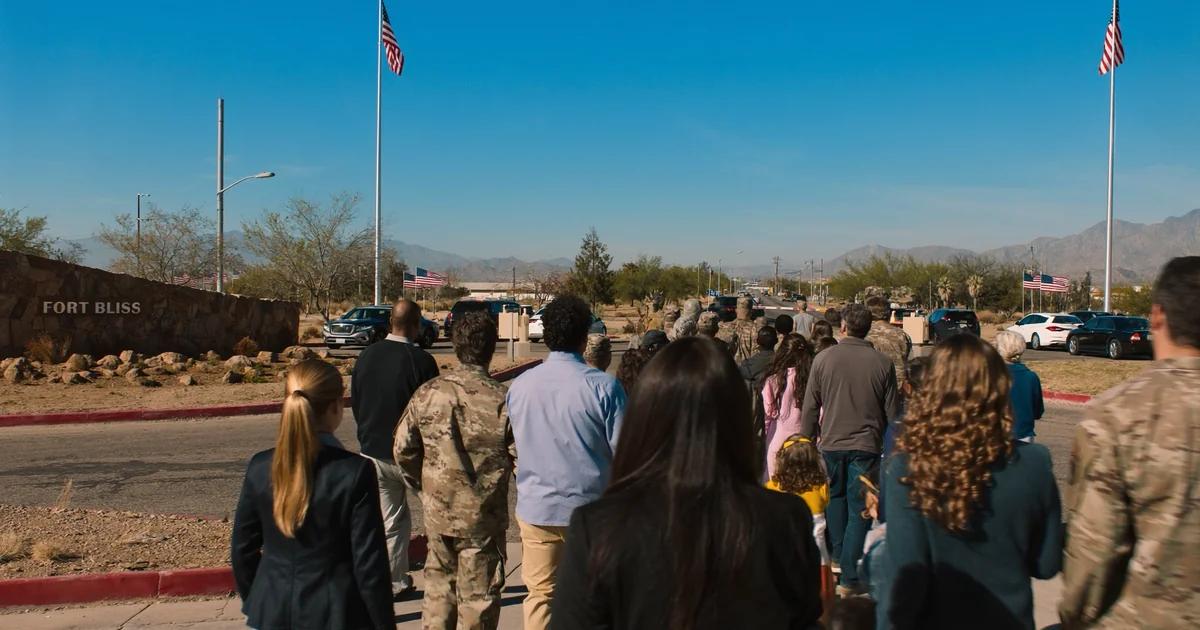
Veterans Day in El Paso is not an abstraction. Fort Bliss is woven into the geography of this city. Dyer Street runs along its western edge, the Patriot Freeway carries soldiers and their families past the gates every morning, and the neighborhoods around Airway, Fred Wilson, and Chaffee are full of households where somebody wears the uniform. On the eleventh of November, the parades and the ceremonies are for them.
The rest of the year, those same families deal with something far less ceremonial. A spouse gets rear-ended on Dyer Street on the way to pick up a child. A teenager is hit crossing Fred Wilson Avenue. A soldier's car is struck inside the gate by a contractor's truck. And within a week, the family discovers that the ordinary advice about Texas car accident claims does not quite fit their situation, because parts of their life are governed by federal law and parts of it are not.
This article explains the differences that matter most. It covers when a claim becomes a federal matter, why the location of the crash is less important than most people assume, how TRICARE and military hospital care affect what you keep at the end of a case, and why the deadlines in a military related claim can be shorter and stranger than the ordinary Texas rules. It is general information, not advice about your specific case, and military claims are an area where that distinction genuinely matters.
Why a Fort Bliss Claim Is Not an Ordinary Texas Claim
Most El Paso injury claims run on a familiar track. Somebody is negligent, an insurance company is on the other side, Texas law supplies the rules, and the deadline to file suit is generally two years from the date of injury.
Military related claims can leave that track in several places at once:
- The defendant may be the United States government, which cannot be sued the same way a private person can.
- The injured person's status matters. Active duty, dependent, retiree, civilian employee, and contractor are all treated differently.
- The medical bills may be paid by the government, which creates a repayment interest that has to be handled before anything is finalized.
- The client may not stay in El Paso. Orders move families in the middle of a case.
- The investigating agency may not be a Texas agency, which changes how you obtain the report and the evidence.
None of this means a military family has a harder case. It means the case has moving parts that an ordinary claim does not, and each of those parts has its own timeline.
On Post or Off Post: Why the Gate Matters Less Than You Think
The first question people ask is whether the crash happened on the installation. It is a reasonable question, but it is usually not the one that decides anything.
Off post, on a public street. A crash on Dyer Street, Airport Road, US-54, or Loop 375 is generally an ordinary Texas claim against the driver who caused it, handled through that driver's liability insurance under normal state rules.
On post, but between two private drivers. A collision inside the gate between two people in their own vehicles, running personal errands, is still fundamentally a claim between two private parties. What changes is procedural. The report comes from the installation rather than from the El Paso Police Department or the Texas Department of Public Safety, obtaining it can require a written request under the Freedom of Information Act, and access to the scene for photographs is controlled.
Anywhere, when a federal employee on duty caused it. This is the fact that actually shifts the case into federal territory. A government vehicle, a soldier driving on official duty, or a Department of Defense civilian employee acting in the scope of their job can put the United States on the other side of the claim, whether that happened at the Cassidy Gate or on Montana Avenue.
So the question is not really "where did it happen." It is "who caused it, and what were they doing at the time."
Filing a Claim Against the Federal Government
When the United States is the responsible party, the Federal Tort Claims Act is usually the road in. It is worth understanding in plain terms.
The Federal Tort Claims Act is a limited waiver of the government's immunity. It allows people to recover for injuries caused by federal employees acting within the scope of employment, under circumstances where a private person would be liable under the law of the state where it happened.
You cannot just file a lawsuit. Before any suit, a written administrative claim has to be presented to the correct federal agency. That is typically done on a Standard Form 95, and it has to state a specific sum of money. Filing with the wrong agency, or leaving the sum blank, causes real problems.
The agency gets time to investigate. After the claim is presented, the agency reviews it and may deny it, settle it, or simply not respond. Only after that stage is complete can a lawsuit go forward, and it goes to federal court rather than to a county court in El Paso.
The deadlines are not the Texas deadlines. Federal claims run on their own clock, and it does not match the two year rule most Texans have heard about. Missing the administrative step can end an otherwise strong case permanently, no matter how clear the liability is. Because these limits are strict and depend on facts specific to each case, talk to a lawyer early rather than rely on any general number you read online, including in this article. Our overview of Texas statutes of limitations covers the ordinary state rules, which may not be the ones that apply to you.
The Feres Doctrine and Why Families Are Treated Differently
One rule surprises almost every military family who encounters it. Under a long standing Supreme Court decision known as the Feres doctrine, service members generally cannot sue the United States for injuries that arise incident to military service. It is a broad rule and it has been criticized for decades, but it remains the law.
What that rule does not do is just as important:
- It does not bar a claim by a spouse, child, or other dependent who is injured.
- It does not bar claims by retirees, veterans, civilian employees, or contractors in the same way.
- It does not bar a claim against a private driver, a private business, or a product manufacturer, even when the injured person is on active duty.
That last point is the one that costs people money. A soldier hit by a drunk driver on Airway Boulevard has an ordinary Texas claim against that driver, and being in uniform does not take it away. Whether the Feres doctrine applies at all depends on details, so a service member told "you cannot sue" should get a second opinion. Our military personnel practice exists largely because of how often that conversation goes wrong.
TRICARE, Military Hospitals, and Who Gets Repaid
Military families rarely see a hospital bill, which creates a false sense that medical costs are not part of the claim. They are.
When TRICARE or a military treatment facility provides care for an injury someone else caused, federal law gives the United States the right to recover the reasonable value of that care from the party at fault. Practically, that means part of any settlement may be owed back to the government.
This matters in three ways:
It affects the real value of a settlement. A number that sounds reasonable can shrink substantially once the government's interest is satisfied. You need that figure before you agree to anything, not afterward.
It has to be identified early. Care may come from more than one source, including on post facilities and El Paso civilian providers billing through TRICARE.
Adjusters will not do it for you. An adjuster offering a quick check to a young military family will not explain the government's recovery rights.
Deployment, Permanent Change of Station, and Moving Targets
The other reality of a Fort Bliss case is that the people in it move.
Witnesses leave first. The soldiers who saw the crash at the gate, the neighbor who heard it, the unit members who watched a spouse struggle after a head injury, all of them can be gone within months. Statements need to be taken while people are still in El Paso.
Clients deploy. Depositions, medical examinations, and hearings can usually be scheduled around military obligations, and there are legal protections for people in active service. Those accommodations work far better when the lawyer knows in advance.
Records scatter. Treatment that starts at a military facility here may continue in another state after a permanent change of station. Someone has to keep gathering it.
What to Do After a Crash Involving a Fort Bliss Family
- Get medical care and make sure the injury is documented in writing, at a military treatment facility or a civilian emergency room.
- Get the report, whoever wrote it. If military police responded, ask how to request the report and start that process immediately.
- Write down unit information for witnesses, not just phone numbers. Phone numbers change with a move. A unit and a full name can still be traced.
- Do not give a recorded statement to any insurer before you understand whether a federal claim process is involved.
- Tell your lawyer about upcoming orders as soon as you know about them.
- Ask early whether a federal administrative claim is required, because that single question decides how the entire case is built. Our article on Fort Bliss soldier injury claims walks through more of these situations.
Talk to an El Paso Attorney Who Knows Fort Bliss Cases
For more than 30 years, Lovett & Murray has represented soldiers, spouses, children, veterans, and civilian workers connected to Fort Bliss. We know the difference between a claim that belongs in a Texas courtroom and one that has to start with a federal agency, and how much of that has to be decided in the first weeks.
Our consultations are free. We work on contingency, which means you owe nothing unless we win your case. Our team is bilingual in English and Spanish, and our office is here in El Paso, close to the families we represent.
If you or someone in your family was hurt on post, near a gate, or anywhere in El Paso, contact us today or call 915-757-9999. Military claims have deadlines and steps that ordinary claims do not. Finding out which ones apply to you costs nothing.
See our articles more often on Google.