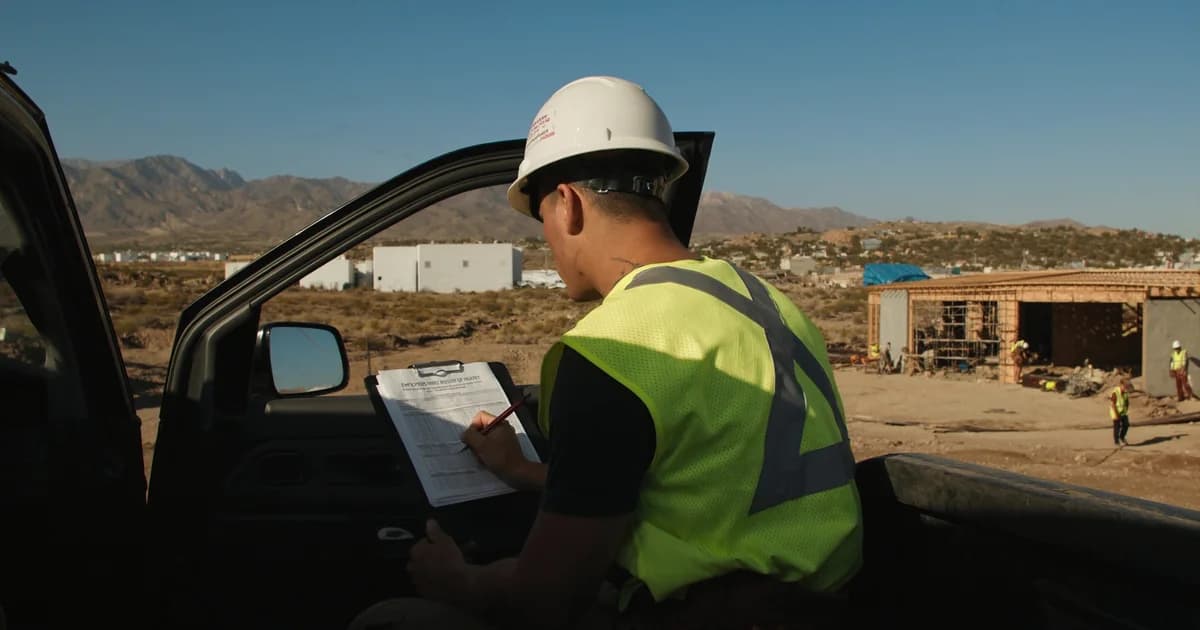
By late September, the freight side of El Paso is already accelerating into its busiest stretch. The warehouses and distribution centers out by the Zaragoza and Ysleta ports of entry are staffing up. Delivery routes get longer. Retail and stocking crews at Cielo Vista and the east side centers add seasonal hires. Construction crews push to close out projects before the weather turns, and the manufacturing floors on both sides of the border run harder.
More hours, more lifting, more forklift traffic, more people who started the job three weeks ago. Injuries follow, and a large share of them go unreported because the worker is new, needs the hours, does not want to be seen as a problem, or assumes a sore back will resolve on its own.
That decision, waiting, is what quietly ends most Texas workplace injury claims. Texas workers compensation runs on hard deadlines that start the day you are hurt, and the system does not care that you were trying to be tough about it. This article covers the reporting and filing windows that actually control your claim, why your employer's subscriber status changes everything, when you can sue instead of file, and why the end of the year is when so many El Paso claims expire.
The Deadlines That Control a Texas Workers Compensation Claim
Three time limits matter, and they are not the same limit.
Report to your employer within 30 days. Under Texas law you generally must notify your employer within 30 days of the injury, or within 30 days of the date you knew or should have known that your condition was related to your work. For a repetitive trauma injury, a hearing loss, or a chemical exposure that develops over time, that second clock is the one that applies. Failing to report in time without good cause can bar your benefits.
Your employer must report to its carrier. Once notified, an employer that carries coverage is required to report an injury involving more than a day of lost time to its insurance carrier promptly. If your employer never files that report, that is a problem you need to know about early, not months later.
File your claim within one year. You generally have one year from the date of injury to file a claim with the Texas Department of Insurance, Division of Workers' Compensation. For an occupational disease, the year runs from when you knew or should have known the illness was work related. Telling your supervisor is not the same as filing a claim. Both steps have to happen.
Two practical rules follow from this. Report in writing, by email or text if nothing else, so the date exists somewhere other than in a supervisor's memory. And keep your own copies, because when a claim gets disputed the fight is almost always about notice.
Why So Many Claims Expire at Year End
The statute has no December deadline. The calendar creates one anyway.
January and February injuries reach their one year mark. A worker hurt in the winter who kept working, treated on their own health insurance, and hoped it would settle down is running out of time right as the year closes.
Employers change coverage at renewal. Many Texas policies renew on January 1. An employer can drop coverage, change carriers, or move to an occupational injury benefit plan. Whether your employer had workers compensation on the day you were hurt is the fact that matters, and it gets harder to establish once the policy has turned over.
Seasonal and temporary workers lose the thread. If you worked through the holidays for a staffing agency, a warehouse, or a retailer, by spring you may not have a supervisor's name, a pay record, or a working phone number for anyone who saw the injury. Staffing arrangements also raise the question of who your employer legally was, the agency or the site, and that answer controls the claim.
People finally seek treatment. Workers commonly push through pain until a deductible resets, until a slow season arrives, or until the injury simply stops them. By then the reporting window may be long gone.
Non subscriber and third party claims run on a different clock. Those are lawsuits, subject to the general two year personal injury limitations period described in our guide to the Texas statute of limitations. Two years feels long until you spend eighteen months assuming you had a comp claim.
First Question: Is Your Employer a Subscriber?
Texas is the only state where most private employers may decline to carry workers compensation coverage. Employers that opt out are called non subscribers, and the difference between the two situations is enormous.
If your employer subscribes, workers compensation is generally your exclusive remedy against that employer. You get medical benefits and income benefits under statutory formulas. You do not get pain and suffering, and you generally cannot sue your employer for negligence no matter how careless it was.
If your employer does not subscribe, you do not have a comp claim at all. You have a negligence lawsuit against your employer, and Texas strips the non subscriber of several traditional defenses. The employer generally cannot argue that your own negligence caused the injury, that you assumed the risk of the job, or that a coworker rather than the company was at fault. You still have to prove the employer was negligent, but you are proving it with the employer's usual defenses removed, and the damages available are full personal injury damages rather than statutory benefits.
Employers are required to notify employees of their coverage status, and it is usually posted. If you are not sure, ask in writing, and treat a vague answer as a reason to get advice quickly. Some employers offer an occupational injury benefit plan that looks like workers compensation and is not, with its own private deadlines that can be much shorter than the state's.
Third Party Claims Are Often Where the Real Recovery Is
Workers compensation covers medical care and part of your lost wages. It does not compensate you for pain, for permanent limitation, or for what the injury does to the rest of your life. Those damages exist only in a lawsuit, and the exclusive remedy rule protects your employer, not everyone else.
Common third party claims in El Paso workplace injuries:
- Another driver. Delivery drivers, route sales workers, and anyone injured on the road while working. The comp claim and the auto claim run at the same time.
- A property owner or general contractor. On a multi employer job site, the entity controlling the premises may be responsible for the hazard that hurt you. See our overview of workplace injuries for how these overlap.
- A subcontractor or another trade. The crew that left the opening unguarded or dropped the material is not your employer.
- An equipment manufacturer. A machine with an inadequate guard, a defective lift, or a failed component is a product liability claim.
- A vendor or freight partner. Loading dock injuries frequently involve a trucking company or a third party logistics provider rather than the warehouse itself.
If you receive workers compensation benefits and then recover from a third party, the carrier will generally assert a right to be reimbursed out of that recovery. How that interest is negotiated has a direct effect on what actually reaches you, and it is one of the main reasons to have someone handling both tracks together.
What Waiting Actually Costs
It costs the medical connection. A gap between the injury and the first treatment is the argument every adjuster makes. The longer the gap, the easier it is to blame something else.
It costs the witnesses. Warehouse and construction crews turn over constantly. The coworker who saw it happen may be gone in three months.
It costs the evidence. Site security video runs on a short overwrite loop. Equipment gets repaired, replaced, or scrapped. Incident reports and maintenance logs are much easier to obtain while the relationship is current.
It can cost the claim outright. Miss the 30 day notice without good cause, or the one year filing deadline, and the merits stop mattering. Our post on workplace injuries in El Paso covers the process in more detail.
What to Do Now
- Report it in writing today if you have not, even if the injury is weeks old. Late notice is better than no notice, and good cause is sometimes available.
- Get evaluated by a doctor and describe the work connection clearly, including the task and the date.
- Find out whether your employer subscribes. Ask in writing. Save the answer.
- Write down what happened while you remember it, including who was present, what equipment was involved, and where the cameras are.
- Keep every document. Pay stubs, schedules, texts with supervisors, clinic paperwork, and any incident report you were asked to sign. Take a photo of anything you sign.
- Do not sign a general release from an employer or a benefit plan administrator before someone explains what you are giving up.
Talk to Lovett & Murray About Your El Paso Workplace Injury
The hardest part of a Texas work injury is that the most important decisions happen in the first weeks, before most people think they need a lawyer. Whether your employer subscribes, whether a third party is responsible, whether the notice was documented, and whether the deadlines are still open all get decided early and quietly.
For more than 30 years, Lovett & Murray has represented injured workers across El Paso County, in warehouses, on job sites, on delivery routes, and on the road. We offer a free consultation. We work on contingency, so you pay no attorney fee unless we win. Our team is bilingual in English and Spanish, and our office is here in El Paso.
If you were hurt on the job this year and are not sure where your claim stands, contact us for a free case evaluation or call 915-757-9999. Find out what your deadlines are before they pass, not after.
See our articles more often on Google.