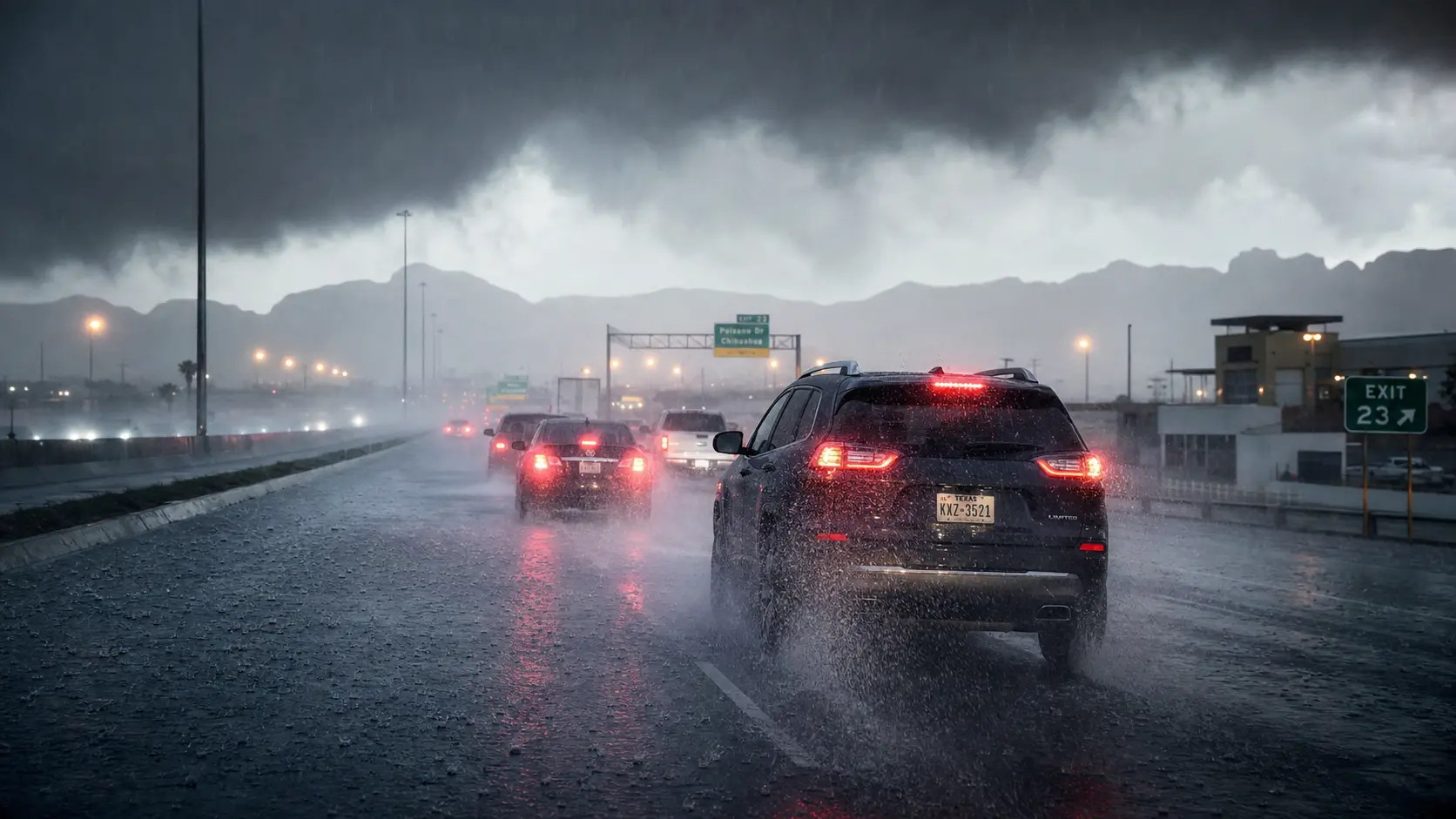
A clear El Paso morning can turn into a flooded Spaghetti Bowl by mid-afternoon. The North American Monsoon pulls moisture into our region from mid-June through late September, and the storms that form over the Franklin Mountains can drop more than an inch of rain in under an hour. Desert ground does not absorb that volume. Storm drains overflow. Underpasses fill. Drivers who have spent months on dry pavement suddenly find themselves on a road that behaves like glass.
If you or a loved one has been hurt in a weather-related crash this summer, you have legal rights. Understanding how Texas courts handle monsoon-season liability can be the difference between a denied claim and a full recovery.
When Monsoon Season Hits El Paso
The North American Monsoon is a seasonal shift in wind patterns that draws Gulf and Pacific moisture across the desert Southwest each summer. The National Weather Service forecast office in Santa Teresa, New Mexico tracks the season and issues alerts for El Paso, Las Cruces, and the surrounding counties. A few patterns are consistent:
- Storms typically build in the afternoon and evening, fed by intense daytime heating
- Rainfall can be extreme but localized, with one neighborhood seeing two inches while another stays dry
- Lightning, hail, dust storms, and microbursts often accompany the rain
- Flash flooding develops quickly in arroyos, low-lying roadways, and underpasses
July and August are typically the peak months. By the time the first significant storm hits, road surfaces have collected months of oil and rubber residue. Water sits on top of that residue and turns the pavement into a hydroplaning hazard within minutes.
The Most Dangerous Roads During El Paso Storms
Certain stretches of road consistently flood or become hazardous when monsoon storms hit. If you commute or travel in El Paso, knowing where the trouble spots are can save your life.
The Spaghetti Bowl. The I-10, US-54, and Patriot Freeway interchange downtown is famous for ponding and limited visibility during heavy rain. Multi-vehicle crashes are common as drivers misjudge the speed and distance of vehicles ahead.
I-10 underpasses west of downtown. The dip near Mesa Street and the stretches near Sunland Park Drive routinely accumulate standing water deep enough to disable vehicles.
Loop 375 around Ascarate and the East Side. Low-lying sections fill quickly. Construction zones along the corridor amplify the danger.
Trans Mountain Road. Runoff from the Franklin Mountains crosses the road during heavy storms, carrying mud, rock, and debris. Visibility around the curves drops sharply.
Doniphan Drive and Country Club Road in the Upper Valley. Drainage in these neighborhoods is older. Flooding closes parts of the route every monsoon season.
Border Highway and Paisano Drive. Low elevation and proximity to the river increase flood risk on these corridors.
For drivers regularly on I-10, our breakdown of I-10 construction zone risks covers how active work zones make weather hazards worse.
Texas Law: Who Is Liable for a Weather-Related Crash?
Many drivers assume a rainstorm crash is nobody's fault. Texas law disagrees. Drivers are required to operate their vehicles safely for the conditions present, not just at the posted speed limit. A driver who maintains 70 mph on a flooded section of I-10 and hydroplanes into another car is negligent, even if 70 mph would have been legal in dry weather.
Liability in monsoon-season cases usually involves one or more of the following parties.
The other driver. Most claims center here. Excessive speed for conditions, following too closely, failure to use headlights, and failure to slow at standing water are common forms of negligence. The Texas Transportation Code requires drivers to use headlights anytime windshield wipers are active in continuous use.
A commercial driver or trucking company. Eighteen-wheelers, delivery vans, and rideshare drivers are held to professional standards. A trucking company that pushed a driver to keep moving through a known storm can be liable beyond the driver's own coverage. Our guide to commercial truck accident claims walks through the additional layers.
A government agency. The Texas Tort Claims Act allows limited claims against the city, county, or state when a known dangerous condition existed and the agency failed to warn or close the road. Notice deadlines under the Act can be as short as six months, depending on which entity is involved. Missing the notice deadline ends the case.
A construction contractor. Active work zones often modify drainage temporarily. A contractor whose work caused or worsened flooding may share responsibility.
A vehicle or tire manufacturer. In serious cases, defective tire tread design or a vehicle's failure to engage safety systems in wet conditions may support a product liability claim.
What to Do After a Monsoon Season Accident
The minutes after a weather-related crash matter even more than usual. Storms erase evidence. Water recedes, vehicles get towed, drainage that was overwhelmed at the time of the crash returns to normal an hour later. Move quickly through these steps:
- Get to safety. If your vehicle is in traffic or in rising water, move to higher ground. Turn on hazard lights and call 911. Do not attempt to walk across flooded roadway. Just six inches of moving water can knock a person down.
- Document the conditions. Photograph and video the rain, standing water, the road surface, debris, lane markings, and any signage. Capture the time and location with your phone's metadata enabled. Conditions will change within the hour.
- Identify witnesses. Get names and phone numbers. Strangers who saw the crash often leave the scene quickly in bad weather and can be impossible to track down later.
- Seek medical attention. Adrenaline masks injuries. Concussions, soft tissue damage, and internal injuries often appear hours or days later. A documented medical visit protects your claim.
- Call an attorney before giving any recorded statement. Insurance adjusters call within hours. They will frame weather as an unavoidable cause to reduce payment. An attorney protects your statement and your evidence. Call Lovett & Murray at 915-757-9999 for a free consultation.
Government Liability for Flooded Roads in El Paso
This is the area of monsoon-season law most people get wrong. Drivers assume the government is untouchable. That is not always true.
Texas governmental immunity has carve-outs. A claim may proceed when:
- A specific dangerous condition existed at the location, such as a known flooding spot
- The agency knew or should have known about the condition
- The agency failed to take reasonable steps to warn drivers or close the road
- The failure caused the crash
In El Paso, that can mean the City of El Paso for surface streets, the Texas Department of Transportation for interstates and state highways, the County of El Paso for unincorporated roads, or a special drainage district for failures in stormwater systems. Each entity has its own notice requirements. The window to file written notice can be as short as 90 days for some city claims. Six months is the maximum for many state claims.
If you suspect a government failure played a role in your crash, do not wait for the insurance dispute to play out. The notice clock starts at the date of the crash, not the date the insurance company denies the claim.
Your Compensation in a Monsoon Season Crash
Texas law allows recovery for the same categories of damages in a weather-related crash as in any other:
- Medical expenses, past and future
- Lost wages and lost earning capacity
- Property damage
- Pain and suffering
- Mental anguish
- Loss of consortium for spouses
- Punitive damages in cases involving gross negligence
If the other driver had minimum policy limits, your own uninsured and underinsured motorist coverage may need to make up the difference. Our team reviews every insurance policy in play to find every dollar available.
Injured in a Storm? Lovett & Murray Is Here to Help
Weather makes the crash. People and policies decide what happens next. If a monsoon-season accident has injured you or a loved one, you have rights, and the deadlines to enforce them are shorter than most people realize.
Lovett & Murray has spent more than 30 years representing accident victims across El Paso, West Texas, and Southern New Mexico. We handle weather-related crash cases, car accidents, truck collisions, and government claims arising from flooded roadways. We move quickly to preserve evidence before the next storm washes it away.
We work on a contingency fee. You pay nothing unless we recover compensation for you.
Contact Lovett & Murray today for a free consultation. Call 915-757-9999 or reach out online. Our bilingual team is ready to help you through monsoon season and beyond.
See our articles more often on Google.